- Thursday, 28 May 2026

Urgent Ante-dengue Steps Needed

Climate change and environmental factors have been largely attributed to the natural calamities and health hazards. Currently Nepal is facing the brunt of the dengue fever. According to the World Health Organisation (WHO), dengue is an endemic in Nepal. Since August 2022 the country is experiencing a surge in dengue cases. It is affecting all the seven provinces in the country and is known to be the largest dengue outbreak with regard to the cumulative number of cases reported nationwide per year. According to WHO, the current data suggests that the dengue cases in Nepal are increasing in magnitude and expanding out of the lowland areas, which suits the breeding of the Aedes mosquitoes. This is potentially due to climate changes and rapid urbanisation.
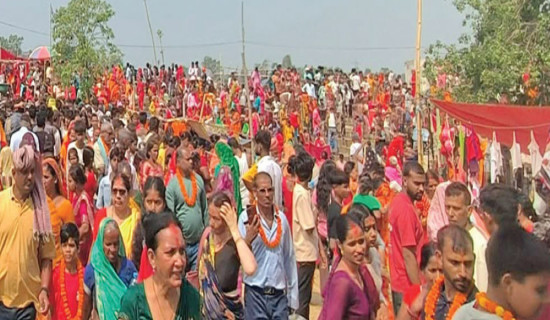
Since 2019, the festival seasons in Nepal were beset with the rapidly rising coronavirus infections all over the country. Therefore, the celebrations were very much subdued as the people were reluctant to go out of their homes. This year, people are celebrating festivals freely. However, the fear of dengue has been bothering the people. The COVID-19 has taken a backseat as several households all over the country have at least one family member suffering from the disease.
Control measures
“Dengue may spread till the end of this month. This is an epidemic. It affects all age group but more severe symptoms on young age groups. During recovery one needs to be careful about warning signs like bleeding, vomiting and shortness of breath. Rest and fluid intake is a must. We all should prepare dengue control measures for next year,” says Dr Kamal Raj Thapa, Head of Department, Chest and Critical Care department, Sumeru Hospital.
Dengue is a viral infection transmitted to humans through the bite of mosquitoes belonging to the Aedes species. The spread of this disease can be widespread, but the risk can be influenced in the local context by climate parameters as well as social and environmental factors. According to the Epidemiology and Disease Control Division (EDCD) of the Ministry of Health, dengue is caused by a virus of the Flaviviridae family and there are four distinct, but closely related, serotypes of the virus that cause dengue. Recovery from infection is believed to provide lifelong immunity against that particular serotype. Cross-immunity to other serotype after recovery is only partial, and temporary. Subsequent infections by other serotypes increase the risk of developing severe dengue. Therefore, it seems that after getting dengue once, one should be careful not to be reinfected.
According to EDCD, the first case of dengue in Nepal was reported in 2004. Since then, there have been frequent reports of the disease. In 2019 there was an outbreak leading to 17,992 cases in 68 districts in all seven provinces and a total of six deaths. According to EDCD, as of 15th October, a total of 40,029 dengue cases were identified. Till date, 48 deaths due to dengue have been verified. The infections have been reported in all the seven provinces and 77 districts, with Bagmati Province reporting the highest number (31,005) followed by Lumbini Province (4,370), Sudurpaschim Province (1,248) and other provinces lesser than these.
Out of the top 10 districts reporting dengue cases, the highest numbers of cases are being reported from Kathmandu (12,252), Lalitpur (8,714), Makwanpur (4,050), Bhaktapur (2,730), Dang (2,005), Chitwan (1,460) and Rupandehi (1,175). According to WHO, as dengue is recurrent in Nepal there is a high risk of reinfection which could lead to serious complications if not managed promptly and correctly. It could lead to high morbidity and mortality. As there is no specific treatment, early detection and clinical guidance can reduce the severity and mortality of the infected patients. The risk of severe dengue is high in a second infection with different serotypes.
Recently there are reports of cases where entire families are suffering from dengue. It must be noted here that the disease does not spread from human-to-human contact but via mosquito bites from infected patients. This has the potential of spreading it in clusters. WHO advises that the best way of prevention is to reduce breeding sites, infected population and minimise individual exposure. Keeping households, communities, hospitals, schools and all work places clean and removing possible breeding sites are the best way of prevention, but this seems a Herculean task.
Protective measures
Personal protective measures of application of repellents in exposed body parts and clothes covering the whole body are very important measures one should take in warding off mosquito bites in order to avoid getting infected with. However, many people refuse to apply the repellents because they do not like the odour. Also, people struggling to put a full meal for the family every day cannot afford to buy repellents. Since Aedes mosquitoes are active at dawn and dusk, personal protective measures are recommended particularly at these times of the day.
The government should also use the mass media to educate the people on preventive measures against dengue by spraying, applying repellents, using mosquito nets and installing screens on windows and doors. It is equally important for the individuals to take these measures seriously and take the precautionary measures to keep themselves safe at least in their homes and their workplaces. Public awareness of the fact that being infected repeatedly by different serotypes is almost nil in Nepal. Therefore, the safety measures are not taken seriously. The government must immediately start taking measures to make people aware of this fact and provide services to prevent more infections and deaths.
(Namrata Sharma is a journalist and women rights advocate. namrata1964@yahoo.com Twitter handle: @NamrataSharmaP)