- Saturday, 4 April 2026

Jatjatin: Entertaining Indra to make it rain
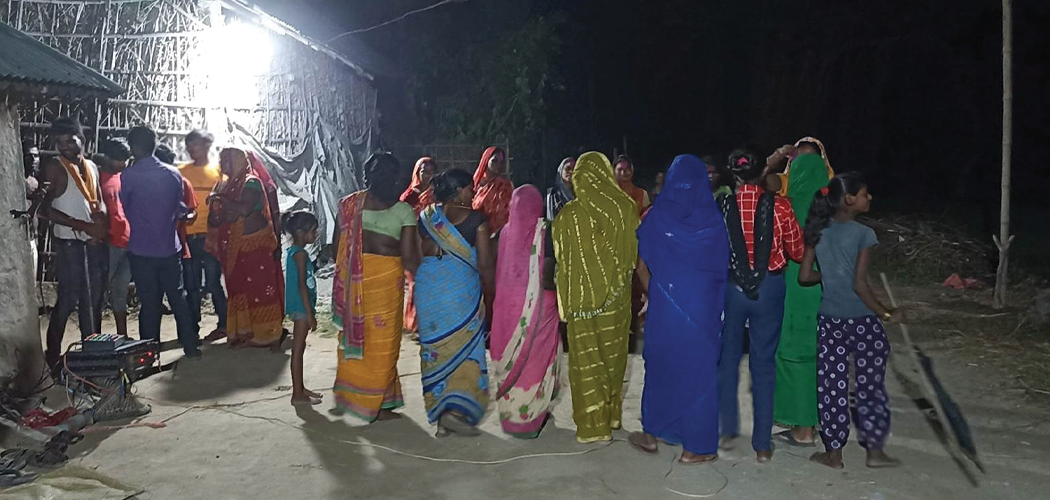
By Jaykrishna Yadav, Inaruwa, Aug. 23: The paddy planted in the fields of Sunsari have all dried up. It has hardly rained a drop here in the past month and the temperatures are as high as they have ever been in living memory. The locals feel that this may have something to do with the Hindu God of rain Indra and thus, to appease him, women have started performing Jatjatin.
Shiva Narayan, a local of Chhitaha, Gadhi Rural Municipality–3, told The Rising Nepal that women from all over the village gathered in one place and performed the Jatjatin play Sunday night to make it rain.
According to one villager Bhola Devi Yadav, Jatjatin is a kind of play wherein women act out a fight through folk songs. It begins with a group of women putting a crushed frog in a pot full of cow dung and faeces and urine of various animals. They mix it all together and dump this putrid concoction in the yard of a lady deemed unnecessarily quarrelsome by the community.
The supposedly quarrelsome woman then pretends to be angry and starts cursing the excrement throwers. After a while, she stops and the first group of women divide themselves into two teams. The teams are led by two young women called Jat and Jatin. The two groups then begin singing and dancing.
This performance is believed to entertain Indra who is then expected to make it rain as a sign of his pleasure.
Men are not allowed to participate in Jatjatin, which lasts a few hours, but children are allowed to watch.
The women gathered for Sunday’s Jatjatin shared that it was a narrative play which included stories of marriage, spouses going abroad, mutual disagreements and happy unions. It is a play that is closely associated with social realities, they said.
Meanwhile, farmers have also been carrying out worship ceremonies for other deities to make it rain. They have been offering sweets, special paper horses, bells and animal sacrifices.
Moti Lal Yadav, a resident of Babia, Inaruwa Municipality–9, said that everyone had turned to the gods because they had no one else. “It either does not rain or rains so much that it floods,” he said. “We are living through climactic extremes; we risk our crops failing and are facing numerous diseases.” “The ultimate divine power is our last hope,” he said.
Local Siyaram Yadav said that the situation was dire. “If we do not have rain soon, we will not have any crops this year.”
The priests of the district’s Bhagwati, Durga, Radha Krishna, Kali and Shiva temples as well as Saptari’s Kankalini Temple told The Rising Nepal that they see many worshippers coming and making votive offerings and the temples to pray for rain.
People of the district believe that rapid population growth and mass deforestation have disrupted the water cycle and are behind the present lack of rain.