By Siraj KhanBanke, Apr 17 : A fire broke out from the house of Sitaram Jaisi at Tikalipur Village in Ward No. 2, in Rapti-Sonari Rural Municipality, Banke district, on the afternoon of April 15. According to Dhakeri Police Station in-charge of Tek Bahadur KC, they had called fire engines from Kohalpur and Nepalgunj to extinguish the fire. However, until the fire engines from Nepalgunj and Kohalpur arrived in the village, the fire spread and destroyed a total of 11 houses and four sheds.“The weather was windy due to which the fire expanded to other structures. There is no fire engine at Rapti-Sonari because of which the fire couldn’t be controlled early,” said Deputy Superintendent of Police (DSP) Ain Bahadur Malla, chief of Kohalpur Area Police Office.The rural municipality has decided to provide a compensation of Rs. 150,000 to all the families as a support for building new houses. Banke District Disaster Management Committee has also pledged to compensate the victims.Meanwhile, locals argued that they wouldn’t have to be compensated repeatedly if the rural municipality had its own fire engine.“We have no option but to wait for the fire to spread and cause significant damage until the fire engine arrives from Nepalgunj or Kohalpur. Because the fire engine has to come from far, the properties are reduced to ashes in front of our eyes before they reach the village,” said Janak Tharu, a local of Rapti-Sonari.During the summer season, fire incidents are a common occurrences across Banke’s eastern region – Rapti-Sonari and Narainapur. These two rural municipalities are far from Nepalgunj and Kohalpur, the reason why fire engines reach take time to reach there. Narainapur Rural Municipality had recently procured a fire engine after continuous pressure from the locals. “After the fire engine was bought, it has been easy to put out fire incidents and prevent widespread damage. Earlier, several properties turned to ashes as the fire engines couldn’t arrive in time,” said Istiyak Ahamad Sah, chairman of the municipality.Meanwhile, locals of Rapti-Sonari continue to wait for a fire engine as it doesn’t fall under the municipality’s priority in the officials’ five-year tenure.“The municipality spent budgets under different sectors but didn’t prioritize fire incidents, a recurring major disaster at the local level,” said Tharu, a local.
By Our CorrespondentSarlahi, Apr `17 : Due to the extreme heat, people's lives in the Terai districts including Sarlahi has been severely affected.Residents of Terai Madhes have experienced extreme heat due to hot winds as a result of recurrent sunny days. The temperature in the Terai region has increased day by day.The maximum temperature in Sarlahi was recorded 39 degrees Celsius at noon on Friday. People have difficulty in getting out of the house at day time due to extreme heat. The activities of people in the markets of the district like Lalbandi, Hariwan, Bayalbas, Barhathwa, and Malangwa have decreased a lot. Locals in the rural areas of the district have been further affected by the dust blowing in the foggy summer.Surging heat has led to an increase in the number of heat-related illnesses in health facilities. Dr. Guneshwor Jha, a resident of headquarters Malangwa, has urged the people not to go out except for urgent work as it is getting intolerable due to hot air which has a serious impact on health.He urged to take more care of children and the elderly as pollution has increased. Dr. Jha has suggested eating enough foods that give coolness to the body like cold liquid, cucumber, melon, pulses, and cereals.
BY AMAR RAJ NAHARKITanahun, Apr 17 : A woman from Tanahun has been able to earn both name and money from goat rearing in the village.Gayatri Pudasaini Adhikari has earned both name and money by operating a goat farm in Churekholsi of Vyas Municipality-4, Tanahun.She has been increasing her investment since she started earning good income from goat farming.According to Adhikari, she is earning around Rs. 50,000 monthly from the business.Adhikari, who has already invested Rs. 5 million, plans to invest an additional Rs. 4.1 million within the current fiscal year to earn a monthly profit of Rs. 200,000.A total of 90 Boer goats, including 43 nannies, 23 kids are in her Ganga Devi Goat Farm, she said.She has been rearing goats in around 36 companies of land, including 24 companies of her own land and 12 companies of rented land.Napier, Super Napier, Smart Napier, Stylo, Bashar, Rayokhanayo, Kimbu, and other varieties of grass have been planted.She informed that out of 36 companies, two companies have structure and the rest have grass cultivation.Husband Narayan Adhikari, father-in-law Devi Prasad Adhikari and mother-in-law Gangadevi Adhikari have assisted her in goat rearing.Adhikari said that four locals along with her family are employed in the farm.She said that she came up with the idea of rearing goats in the village after finding out that the country has been forced to import goats from India due to high demand for meat."We decided to rear Boer goats commercially as it would help stop the outflow of money to import goats to meet the local demand," Adhikari said.She said that she initially bought Boer Billy goat at a cost of Rs. 300,000, including transportation, from Australia.She said that she has reared Boer goats commercially by purchasing pure Boer goat kids from Bandipur Goat Research Centre and National Animal Breeding Center, Pokhara.Adhikari said that she started to rear Boer goats by removing local goats as it would be sold at a higher price and there would be more profit soon.Gayatri has succeeded in setting an example that one can earn income from agriculture by inspiring others to rear goats of advanced breeds, said Bishwo Raj Neupane, ward chairman of Vyas Municipality-4.Adhikari's farm is currently focused on producing improved breeds of kids rather than goats for meat.Rudrasen Thakuri, a technician at the Veterinary Hospital and Veterinary Expert Center, Tanahun, said that she was successful in getting a grant of Rs. 200,000. Gayatri Adhikari said that she was excited when her firm was listed to receive an Rs. 2.05 million grant from Nepal Livestock Sector Innovation Project, Pokhara.She said that work was being done in the current fiscal year as per the provision of investing the same amount as the grant received.The government should provide subsidies to the farmers to increase production of maize and other agro crops as they have to be imported from abroad, she said.
BY A STAFF REPORTERKathmandu, Apr 17 : Securities worth Rs. 143.58 billion were listed at Nepal Stock Exchange (NEPSE) during the eight months of the current fiscal year 2021/22. Such securities comprise debenture worth Rs. 46.16 billion, bonus shares worth Rs. 37.16 billion, government bond worth Rs. 29.50 billion, the ordinary share worth Rs. 17.83 billion, right share worth Rs. 9.18 billion and a mutual fund worth Rs. 3.75 billion, according to the macroeconomic report of Nepal Rastra Bank (NRB). Securities Board of Nepal (SEBON) approved the total public issuance of securities worth Rs. 13.75 billion during the review period.The SEBON has given permission to the concerned companies to issue debenture worth Rs. 4.8 billion, right share worth Rs. 3.11 billion, mutual fund worth Rs. 3.0 billion and ordinary shares worth Rs. 2.84 billion in the review period. The share of BFIs and insurance companies in stock market capitalization is 66 percent. Such a share for hydropower companies is 10.6 percent, investment companies 7.1 percent, manufacturing and processing industries 4.1 percent, hotels 1.4 percent, trading companies 0.4 percent, and the share of other companies is 10.3 percent.The paid-up value of 6.61 billion shares listed at NEPSE stood at Rs. 651.21 billion in mid-March 2022.The number of companies listed at NEPSE reached 228 in mid-March 2022, out of which 144 are Bank and Financial Institutions (BFIs) and insurance companies, 47 hydropower companies, 19 manufacturing and processing industries, 6 investment companies, 5 hotels, 4 trading companies, and 3 others. The number of companies listed at NEPSE was 217 in mid-March 2021.
Economic transformation has been one of the much-talked-about issues before and after various political changes Nepal has gone through. But achieving economic transformation has not been possible owing to a lack of strong political will and commitment. Economic transformation involves moving labor from low to higher productive activities in the sector they are involved in. For a country like Nepal where the majority of the population has been engaged in subsistence agriculture, the process of economic transformation requires to begin with modernization and commercialization of agriculture to increase production and productivity. This helps reduce dependency on agriculture by shifting the excess population to agro-based industries and other potential service and manufacturing sectors.It is worrying that despite being an agricultural nation, Nepal has been importing agricultural products worth billions of rupees annually. In the fiscal year 2020/21, the country imported rice grains alone worth Rs. 50 billion. In the past, the nation used to export food items, including rice. The import value of live animals and meat items is equally higher. This shows that the import of agro-based products which we can easily produce in the country is alarmingly driving a deficit of trade and balance of payment. Realizing the fact, Finance Minister Janardan Sharma has said that the Nepali economy needs urgent transformation, mostly in agriculture and state mechanisms. According to him, revolutionary changes are needed to transform the agriculture sector in order to make it able to substitute imports that have reached Rs. 300 billion a year. The country’s foreign currency reserves are also facing a lot of pressure as it is importing even those goods that could be grown here. Sharma, who has initiated budget-related discussions, believes that the national economy could be strengthened by taking different measures such as development in agriculture, reduction in imports of petroleum products, increase in the generation and consumption of hydroelectricity and tourism. The government is planning to reduce the consumption of fossil fuels by 20 percent and shift the subsidy given to LP gas to the electric cooking appliances to substitute import of the cooking gas. The Nepal Oil Corporation is currently supplying the LP gas to consumers bearing a loss of Rs. 932 per cylinder. As the country is facing a balance of payment deficit and depletion in foreign reserves posing a threat to aggravating the economic crisis, it is urgent to intensify the process of economic transformation. The agriculture sector should be accorded the topmost priority which could lead to the transformation of other sectors gradually. For the transformation of subsistence agriculture into a modern and commercial one, and also to help industrial development, the government and the political parties should step up monumental measures in regard to the utilization of land and ownership patterns. Agricultural transformation and productivity enhancement is not possible under the current landholding and utilization form. Therefore, the political parties and the government bring about revolutionary changes in it without calculating any political gains and losses. In addition, the government should also focus on modernization and mechanization of agriculture and managing quality agro-services and inputs. Attracting youths into agriculture and advancing this as a decent profession in the perception of society is essential.
Emilija T. Gjorgjievska , The results of the first round of the French presidential election have echoed the late Peter Mair’s ground-breaking claim, published in 2013, that the ‘age of party democracy has passed. The expert on European politics did not assume that parties would disappear—rather new parties or movements would arise in contemporary democracies, such as we have witnessed with La République En Marche (LRM), the Five Star Movement in Italy or the Pirates and ANO in the Czech Republic. A common thread is what Mair called the ‘hollowing’ of democracy, reflected in a void of disengagement between citizens and their states.The latest electoral result adds to this worrying trend. France’s two long-dominant center-right and center-left parties, Les Républicains (in the most recent incarnation) and Le Parti Socialiste respectively, traded power for most of the six decades and more since the ‘fifth republic’ was established, have collapsed. Between them, they won only 2.3 million out of more than 35 million votes cast.TechnopopulismBut much longer-term societal and political transformations, as elaborated by Christopher Bickerton and Carlo Invernizzi Accetti, have led to a new way of doing politics—‘tech populism’. The fragmentation of contemporary societies makes it very convenient for party leaders to build electoral strategies by staking a claim to expertise, as with Emmanuel Macron using LRM as his vehicle, or by appealing to ‘the people, as with Marine La Pen and her Rassemblement National—the candidates left standing to contest the second round. Indeed, in the logic of tech populism, the two pitches are combined.What should prevent the detachment of individual citizens from their societies are political parties which serve citizens and build social trust, rendering concrete abstract notions of the state, civil society, and their interrelationship. Starting within their own organizations, parties demystify the notion of political accountability. In the absence of structured party democracy, with strong intermediary bodies and a requirement of account-giving, contemporary political leaders who morph into governmental elites can just keep doing ‘whatever it takes to gain and regain power.Dominant political leaders are operating self-referential rules, ostensibly justified by the technical exigencies of effectiveness, modernization, and fast adaptation to external demands, all in the service of ‘the people’. Macron is forever inventing new ways to do European or national politics, whether by reliance on purportedly neutral external expertise—in his administration’s frequent resort to consultancy from McKinsey & Co—or in his transformation of the traditional civil service, replacing the National School of Administration (ENA) with a new Institute of Public Service (ISP) whose graduates’ skills could be put at the service of the private sector as well.This recalls in many ways the approach advanced in the United Kingdom by the former prime-ministerial adviser Dominic Cummings. A managerial, ‘business’ logic seeks to mitigate risks and avoid conflicts, rather than accept public scrutiny or challenge by the political opposition. Indeed a ‘beyond left and right’ bypass of party value systems would be preferred, without recognizing the significance of political alternation.This very much echoes how Mark Rutte won (again) last year’s election in the Netherlands, adopting an ostensibly pragmatic and non-ideological approach that has won him favorable comparisons with the former German chancellor, Angela Merkel. It is a way of doing politics that absorbs rivals on the left, rather than engaging in political contests, leading to a ‘normalization’ of policies for which his own center-right party would not normally stand.The logic of tech populism, whether via the elevation of technical expertise to the political level or the appeal from there to ‘the people’ as if this were free of ideology, leaves an empty space in politics in which leaders no longer accountable to parties can design and run political competitions based on their own beliefs and competences, which can quickly be adapted to a changing environment. Le Pen’s new focus on le pouvoir d’achat (the cost-of-living crisis) in her 2022 campaign, rather than on identity and immigration as in 2017, follows this logic. Alienation Feeding this logic of doing politics, however, has its consequences. One is further alienation among citizens, reflected in abstention from voting and indicators of gradual erosion of social trust. While self-empowerment is evident in the form of social movements, protests and so on, the collective empowerment in which political parties should have the central role is simplified to electoral cycles and strategies in which citizens remain disengaged. Rather than articulate their own collective choices, they are stuck with the choices the political leaders have already made for them.This risk to contemporary democracies requires reinventing the role of party organizations and a new impetus for collective actions which would reflect the needs of societies and their citizens. Such party democracy would assume that political leaders are recruited from within and are held to account by the party itself, including by its base in its members. The logic of account-giving would require parties once more to translate such abstractions as the rule of law or the common good into concrete, intermediated spaces in modern political systems operating at the service of the citizens.(The author is a lecturer in contemporary European politics at Charles University in Prague.)
Parmeshwar DevkotaAs the local election is nearing, political parties are intensifying their activities nationwide. They are busy holding closed-door parleys to pick the candidates recommended by the lower committees. At the same time, the parties have also formed strategic alliances to gain more votes. This has naturally impelled the foot soldiers to launch a door-to-door campaign to woo the hearts of electorates, thereby setting the tempo for the May 13 local elections.The poll fervour has gripped both rural and urban constituencies. Local intelligentsia, teachers, labourers and farmers are assessing the past activities of the parties. The common voters seem to be making up their minds to shift their political allegiance.A person vying for the ticket of ward chairman in a municipality on the outskirts of the Kathmandu Valley admitted that if his party picked him as the candidate for the same post, he would borrow a huge amount of money to splurge in the polls. When asked if he would use the money to influence the voters, he replied in the negative. But he added that the voters demand to spend for sports clubs, community welfare and charity institutions. This is like a financial trap set up by the voters, he lamented. He went on to say that even the family members of the candidates have a tendency to get involved in collecting donations. He indicated that without money, nobody was ready to move for the election campaign. Recently, CPN Maoist Centre chairman Pushpa Kamal Dahal Prachanda, speaking in a TV talks show, complained that the elections have unbearably become an expensive affair. Some online media have claimed that some political leaders are seeking donations from potential mayoral candidates. If the party tickets are sold to those with fat wallets, it will have a detrimental impact on political culture and democracy. This will eventually spawn Socratic pessimism. In his book ‘A Critical History of Greek Philosophy’, W.T. Stace argues that Socrates was pessimistic about democracy. According to him, demagogues, smooth-talking people and wealthy and charismatic ones alone prevail in the elections because they can easily bribe the meek and uneducated voters. Common voters will elect a sweet-shopper rather than a doctor, eroding the basic freedom of the civilians. So, the political parties and leaders must work to establish a value system. They should judge their workers by their past performance. Candidates must be selected on the basis of their dedication rather than the financial contributions they make to the parties. It is our responsibility to prove that Socrates was wrong. The voters should also stop forcing candidates to pay for votes. They should evaluate candidates based on their past deeds, political ethics, commitment to the wellbeing of society and establishment of a value system. Candidates and voters must strive to prove that democracy is the best form of governance that alone can lead the nation towards stability and prosperity.
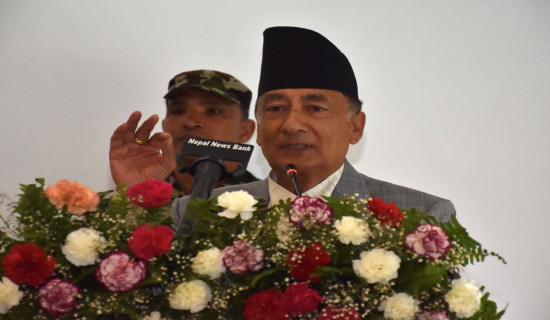
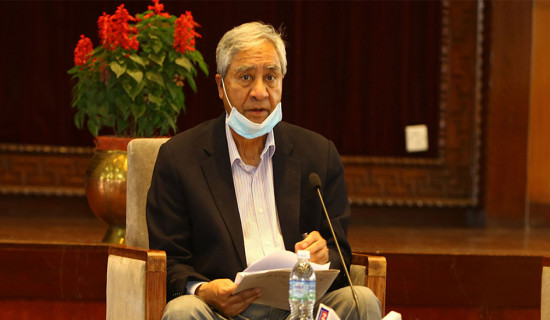
Addressing the 16th annual general assembly of Manmohan Memorial Hospital in the Capital City on Saturday, Pandey added the coalition was required in defense of constitution, federalism and inclusive democracy.
It opted for this as e-payment was cumbersome and sometimes there were glitches in the system, said TIA Manager Prem Nath Thakur.
On the occasion, Oli said the citizenship bill tabled by the UML-led government could not pass despite it was brought targeting the citizens without citizenship.
Minister for Foreign Affairs Dr. Narayan Khadka said the Japanese government's assistance to Nepal was very important for the development of Nepal.
"I have a plan to utilise the remaining piece of land for growing fruits such as oranges and lemon," Rai said, adding, "I have already started rearing goats here."
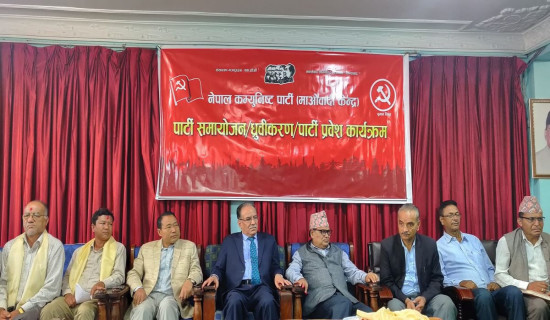
"We have strictly instructed the party committees at the local levels for not forging an electoral alliance with the CPN (UML) even in the event that electoral alliance is not forged among the ruling parties,"
"This election is a battle for us. If we win, the nation will win and the vice versa," he said, "If the Maoist Center loses the election, it will be like the loss of the republican set up, which in turn will be the loss on part of the oppressed women, dalit, indigenous nationalities, persons living with a disability."
The national flag carrier, Nepal Airlines, is conducting a direct flight from Kathmandu to Riyadh city of Saudi Arabia from April 22. The Nepal Airlines (NA) informed that the wide-body A 330 plane was launching the flight to Saudi Arabia.