- Monday, 8 June 2026

TRN Online
BP Koirala: Dual Legacy
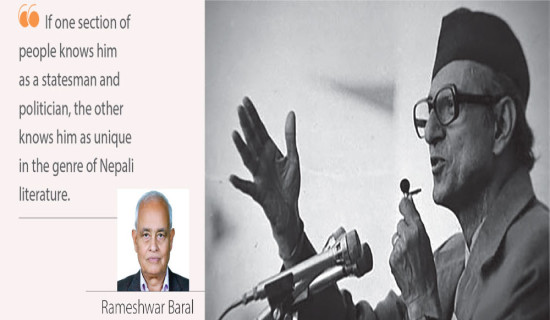
BP Koirala, a prominent figure in Nepal's history, is remembered under multiple titles. He dwelled within two versatile realms,each an unparalleled and independent avatar: one in politics and the other in literature. He came from a family that was against the Rana regime's rule for over a century. As a statesman, politician, and Nepal’s first elected prime minister, his name stands in opposition to the Ranas. However, politics is one aspect of his personality that contributes to an overview of his literary works. He was also a prolific writer, with several novels and short stories. They reflect his distinctive perspective and insight on Nepali society and cultu
Retain Youth For Agricultural Development
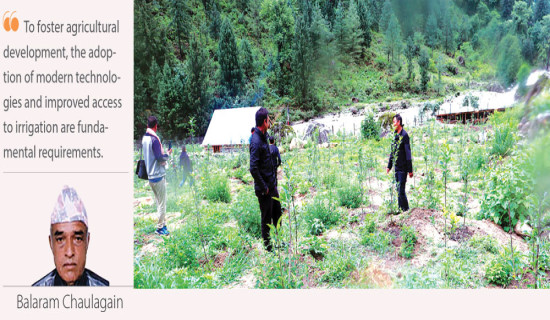
The revitalization of Nepal's agricultural sector hinges on its capacity to retain the youth demographic, particularly those aged 21 to 35 years. A significant number of these individuals choose to pursue education abroad or seek employment as migrant labourers, resulting in a substantial brain drain. It is imperative to harness this pool of human resources within the country to drive the broader development of agro-based activities. In a scenar
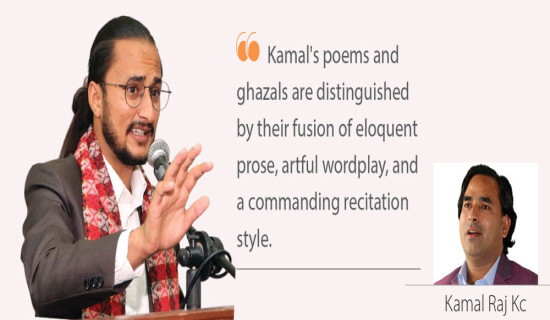
Ghazal Virtuoso Kamal: A Life Immersed In Literature
Renowned among literature enthusiasts, Ghazal maestro Kamal Prasad Bhandari, whose name resonates deeply in the world of poetic artistry, reveals that his life finds its purpose within the realms of literature. With a devoted commitment to the written word, Kamal has breathed life into his creations, enchanting audiences with the magic of his verses. Synonymous with the realm of Nepali ghazals, the name 'Kamal Sangharsh,' aka Kamal Prasad Bhandari, emerges prominently. Hailing from Mangalsen Municipality-6 in Achham district of Sudurpaschim, Kamal stands as a multifaceted individual who not only mastered the art of ghazal composition but also clinched the top spot in attendance, poetry, and essay competitions during his school years. His prowess was further validated when he emerged victorious in the inter-school poetry contes

An Intriguing Read Without Flaws
"FRUITS OF THE BARREN TREE," penned by Leknath Chhetri, offers readers a deep exploration of the hardships faced by the people of Darjeeling as they strive for their distinct identity. The narrative unfolds in the picturesque village of Relling, a community held in the grip of the Green Party. This political entity is at the forefront of the Gorkhaland movement, an ardent call for a separate state catering to the Nepali-speaking Indian population. However, this fervent pursuit of autonomy puts the Green Party on a collision course with the Red Party, the reigning political force in West Bengal. The clash of ideologies ignites simmering tensions between these two formidable factio
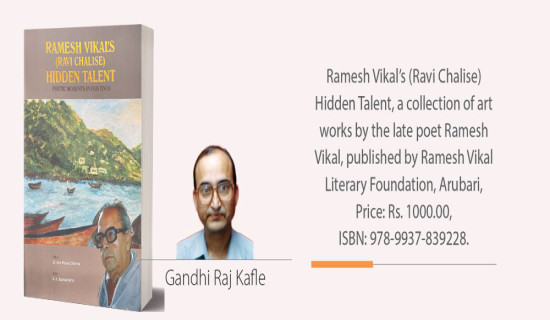
Unseen Artistry Of Ramesh Vikal
Hidden talents often remain concealed for extended periods, and even after the passing of writers or artists, their established talents continue to shine. An illustrative case of this phenomenon can be found in the life story of the renowned poet Ramesh Vikal. He was widely famous in Nepali literature for his versatility as a novelist, short story writer, humor and satire essayist, playwright, and children's author. Yet, hidden from the public eye, there was a lesser-known facet of his abilities. This concealed talent, distinct from his well
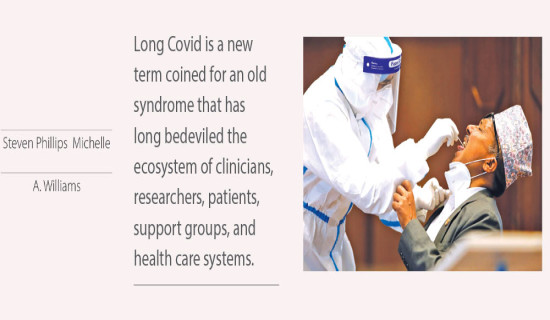
Long Covid Is New Name For Old Syndrome
Long Covid goes by many names. Today, it is no longer a new public health enigma, but the outlook for sufferers is no better than when the condition was first recognized in early 2020. Although its prevalence has recently decreased to 6% of the U.S. adult population, there has been no significant progress in understanding its causes, prevention, or treatment. Long Covid still looms as the national health disaster many predicted. Everyone — patients, support groups, clinicians, researchers, and health care systems — is frustrated by lack of meaningful progress in research and patient care. On the research side, the U.S. government rapidly anticipated and tried to blunt the force of this national calamity by investing in basic and clinical research. Hopes were raised in December 2020 when Congress provided $1.15 billion over four years to the NIH to launch its long Covid research initiative called RECOVER. The Centers for Disease Control and Prevention additionally initiated its Innovative Support for Patients with Covid-19 Infections Registry (INSPIRE). Veterans Affairs
Anti-cervical Cancer Drive
As cervical cancer is one of the major causes of death among women worldwide, its prevention is essential. Cervical cancer is the fourth most common cancer among girls and women globally, according to the World Health Organisation (WHO). In 2020, as many as 604,000 new cases and 342,000 deaths were recorded worldwide. Women in the low and middle income countries are more vulnerable to this disease than others, with nearly 90 per cent of the
Is Our Economy Still In Trouble?
We are connected with global economy, developmental patterns, and technology in this global interdependence. So, we cannot refrain from global socio- political and economic landscape. This has been so true since the advent of globalisation, privatisation and market economy that created wave in the beginning of the 21st century. The socio-economic impact of one region can automatically does have on the other. As recent alarming reports thrive indicating the global economy on constant shrink since the outbreak of the COVID-19, experts predicted, further devastating impacts were accelerated after Russian-Ukraine war. These events did hav
Poll Reform Bill To Enhance Inclusion
Electoral system shows how a country has adopted free, fair and credible elections, substantially and procedurally. Substantial laws are always important to guide election process in a democratic country. The Constitution of Nepal, promulgated in 2015, has the provision of mixed electoral system of proportional representation (PR) and direct elections called first-past-the-post (FPTP). However, the nation had already exercised the mixed electoral system during the elections to the Constituent Assembly (CA) under the Interim Constitution 2007. The guiding document of the electoral laws in is the national charter which inserts provision of inclusion under mixed electoral system. Inclusion is not merely a representation, rather it is a broader aspect of empowering
An Era Of Cooperation
In today's interconnected world, the bonds between states and non-state actors have become increasingly vital. Complex interactions define our global landscape. While these engagements may be multifaceted, urgent need for cooperation and mutual assistance has never been clearer. Recent events have brought this need into sharp focus. Libya, a nation grappling with major flooding, stands as a stark example. As I pen this article, the death toll in Libya has reached a staggering 6,000. As per reports, around 30,000 people have been displaced. Torrential rains in the country's northern region breached dams, pushing homes into the sea. Shockingly, approximately 10,000 individuals are still missing, either swept away by the sea or buried beneath the rubble. Similarly, Morocco faces its own tragedy:
Hot air balloon resumes operation with added facility
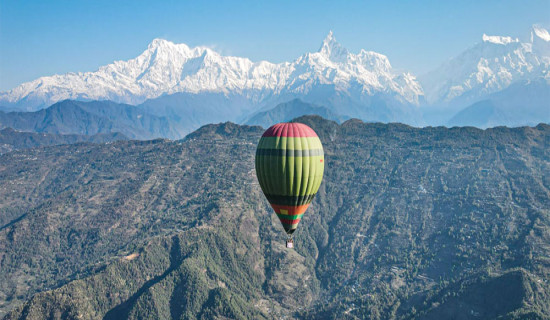
The hot air balloon service in Pokhara, which was closed due to monsoon, has resumed operations after three months. Bikram Bade, President of Balloon Nepal, said that the hot air balloon was brought back into operation from Thursday, September 14. The company, which was previously providing services with only one balloon, will now use two balloons in its flights. Another balloon has been added to the service to cater to the growing number of tourists demanding the balloon flight.
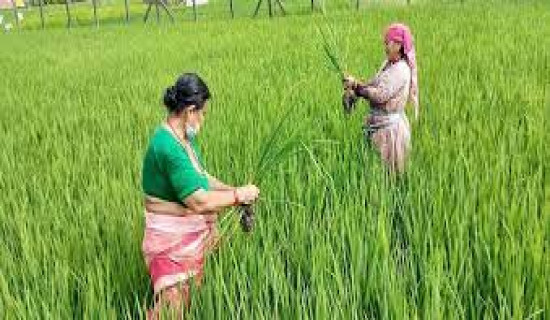
55% farming families unable to feed year-round
In Nepal, an agricultural country, it has been found that the number of farming families able to eat all the year round from their agricultural income is very low. According to the National Sample Census of Agriculture 2021/22 made public by the National Statistics Office recently, the number of households engaged in agriculture who are able to eat all the year round with the income from their agriculture products is only 45 per cent. Out of a total 6.67 million households in the country, around 4.13 million households (62 per cent) are involved in agriculture at present. Of these households, about 3.99 million households are engaged in agriculture and 132,000 households only are in livestock husbandry. The number of households engaged in agriculture was 3.71 million in 2011/12. The latest census showed that there are 2,274,000 (55 per cent) farming families who are unable to feed their families for the whole year from their
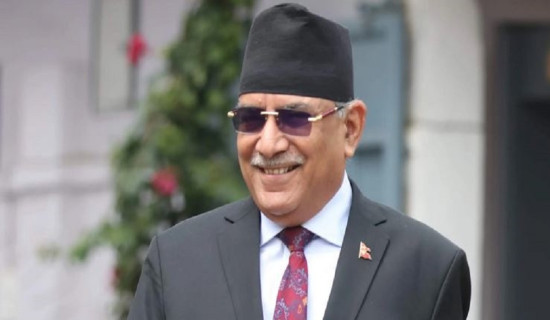
PM leaving for UN General Assembly tomorrow
Prime Minister Pushpa Kamal Dahal Prachanda is leaving for New York on Saturday, September 16, leading Nepali delegation to the 78th session of the United Nations General Assembly (UNGA) being held at the UN Headquarters in New York. The Prime Minister is scheduled to address the UNGA on September 21. The theme of the general debate of this year’s UNGA is ‘Rebuilding trust and reigniting global solidarity: Accelerating action on the 2030 Agenda and its Sustainable Development Goals towards peace, prosperity, progress and sustainability for all’. Prime Minister Prachanda will attend the opening session of the general debate of the UNGA and attend the reception being hosted by the President of the United States, Joe Biden, on September 19, informed the Ministry of Foreign Affairs (MoFA) in a statement on Thursday.
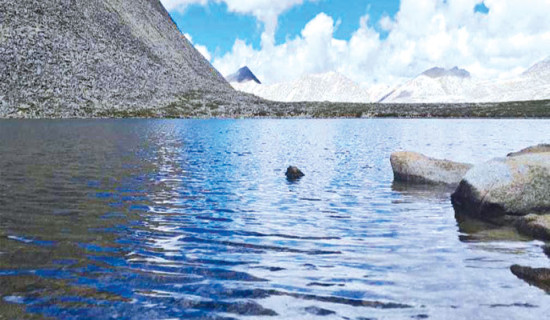
Dolpa’s newfound lake likely to be world’s highest
A newly-discovered lake in Dolpa district is likely to be the world’s highest lake. The lake, named ‘Pangbhor Lake’, was spotted by the youths of Chharka in Charkbhot, a remote human settlement nestled within Charktangsong Rural Municipality-1. To identify this, youths of Charka conducted a four-day survey in the area, revealing that the lake is indeed the ‘highest-known’ lake to date. Karma Dhendup Gurung, the Chairperson of Charka Youth Club, reported that the Pangbhor Lake is situated at an elevation of 5,550.9 metres above sea level. On August 30, Charka’s youths and teachers embarked on a four-day GPS survey of the lake, finally establishing it as the highest-known lake to date. As new lakes continue to be discovered one after another, Dolpa has solidified its reputation as the ‘district of lakes.’
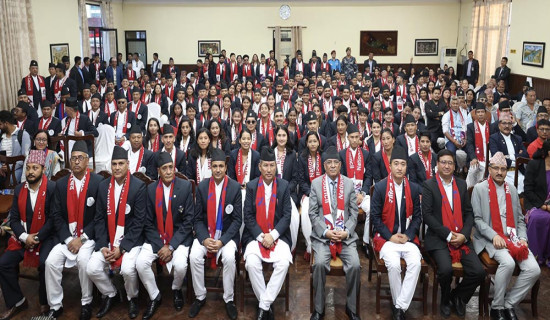
PM Prachanda sees off players for 19th Asian Games
Prime Minister Pushpa Kamal Dahal 'Prachanda' has extended best wishes to the team of Nepali players while seeing off at his office, Baluwatar, on Thursday.