- Thursday, 28 May 2026


The Rising Nepal
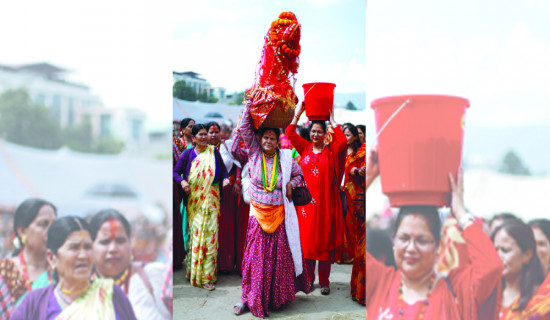
Sudurpaschim’s popular Gaura Festival concludes
Gaura Festival, the major festival of the Sudurpaschim Province, concluded on Saturday as it was marked in the province and Kathmandu with fanfare. The festival is celebrated mainly by women of the region who observe fasting for the prosperity of husbands and children.

No Padlocking, Please!
The incidents of padlocking and strikes have become a daily staple at the Tribhuvan University (TU), which has almost paralysed the academic and administrative works. Dissatisfied student unions, employees and teachers’ groups often stage strikes or padlock the administrative and other departments. Some of them sometimes go a step further to vandalise the university properties to expr
Industry set up to process pulses in Morang
With the aim of processing five types of legumes and pulses and selling them in the market, a new industry has come into operation at Budhiganga-5 Hattimudha in Morang with an investment of Rs. 500 million.

Dengue cases at epidemic level in Dhading
Dhading has seen an alarming rise in the number of dengue patients. Dengue infection was found in 114 patients who visited District Hospital Dhading for health check-ups.

Some Do's And Don'ts
In one of its cover stories, a weekly magazine, while reporting on ‘sexual harassment in the film industry, not only went to reveal the name of a sexual harassment survivor but also failed to write the perpetrator’s name.

Translating Nepali Literature In English
Along with the publications of different genres, one can experience a plethora of translations of Nepali writings into another language, especially English. According to Padam Prasad Devkota (2022), “The bulk of Nepali literature in English consists of translations and original compositions in English.”

Mystifying Marvels Of Giant Planets
The night skies of this month would exhibit exquisitely mystifying marvels of giant planets Jupiter, Saturn, and Neptune along with amazingly alluring appearances of planets Venus, Mars, and Uranus. The elusive planet Mercury would be lost in the solar glare.
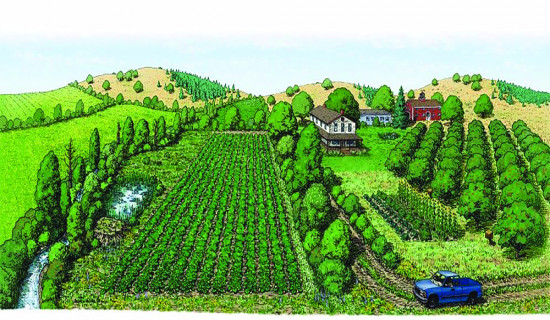
Biodynamic Agriculture Practices
According to Markandeya Purana, Brahma, the creator was regarded as the first inventor of Agriculture. According to the Purana, at the beginning of the creation of the earth, the soil yielded almost all types of food grains, vegetables, and fruits. However, as time passed, the soil became less productive. Thereafter, Brahma churned the soil and got various kinds of seeds.

Pitfalls In Education System
Equity in education is one of the catchphrases of many Nepali educators. Education inequality in Nepal has been increasing due to privatization and the widespread expansion of private schools. It is a reprehensible reality today that financially weak parents are forced to send their children to private schools even though the fees of private schools are increasing perversely.
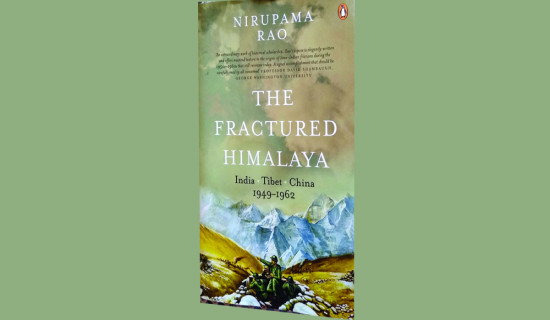
Perspectives on Rao’s Magnum Opus
Nirupama Rao (nee Menon), 28th Foreign Secretary of India with strong academic and cultural leanings, has come out with a masterly presentation entitled THE FRACTURED HIMALAYA: India, Tibet, China, 1949-1962 that provides a glimpse of India-China relations for 13 years soon after their respective emergence in the world in a new format, India shaking off colonial yoke in 1947 and China embracing Communism in 1949.
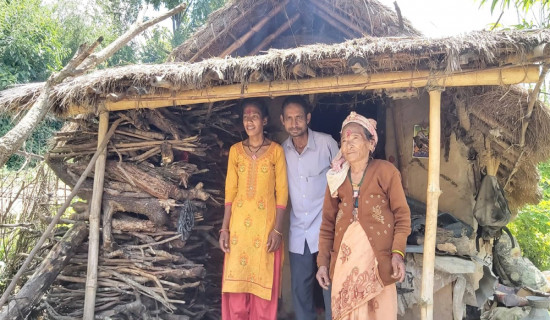
Pains of septuagenarian Laxmi: Poverty, HIV-positive son and daughter-in-law
Laxmi Sunar of Bhandarikanda, Musikot Municipality-6, of Rukum West has only one son and daughter-in-law. Both of them are suffering from HIV/AIDS. Sun, who has endured 70 years of her life in poverty, pain, suffering, and hatred, now has neither food to eat nor sufficient support to live.

SKY is the limit: Attacking Suryakumar redefines T20 batting
India’s Suryakumar Yadav makes unconventional look cool and his attacking instincts makes him a force to reckon with for the Twenty20 World Cup later this year in Australia.

Prem Geet 3’s Hindi trailer released
The trailer of the Nepali-Indo film Prem Geet 3 has been released in the Hindi language. The Hindi language trailer was released through the Indian company Zee Music on Thursday.

Gold price slides constantly
The price of gold has fallen continuously for the last week. The Federation of Nepal Gold and Silver Dealers' Association (FENEGOSIDA) said that the price which started to go down on August 25 also fell on Thursday.
Jute cultivation in Sunsari declining every year
Due to the lack of advanced varieties of seeds, fertilizer, and irrigation during jute planting and water during the time of harvest, jute cultivation has decreased every year.