- Thursday, 11 June 2026


By Indira Aryal
Revival of Valley’s stone spouts can help meet water demand
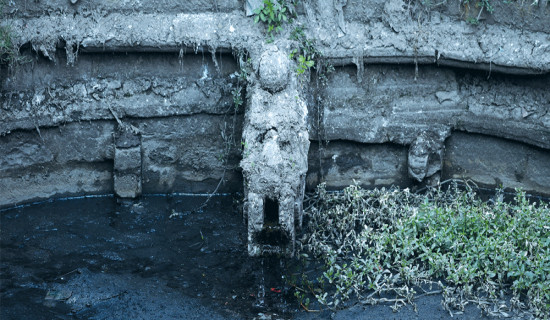
Until a few decades ago, stone water spouts, also called Dhunge Dhara and Hiti in Newari language, used to be the only source of water for many people living in the Kathmandu Valley. But due to rapid and unplanned urbanization, most of them are drying out.
Upper Koshi basin region vulnerable to disasters
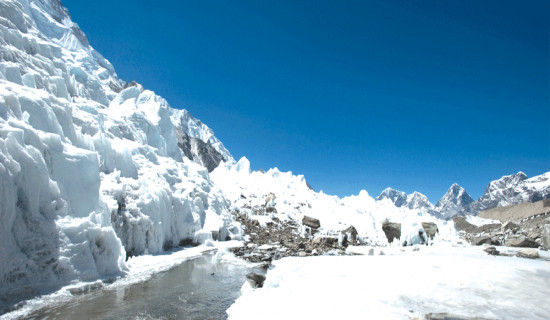
The upper Koshi basin region, where 18 potentially dangerous glacial lakes are located, is highly vulnerable to outburst floods from such lakes located high in the mountains.

Rare Softshell turtle under threat due to conservation neglect
The Narrow-headed Softshell Turtle (Chitra indica), one of the rare and most threatened vertebrates in the world, is facing survival threats due to lack of conservation priority in Nepal.
When a hydropower project displaces natives
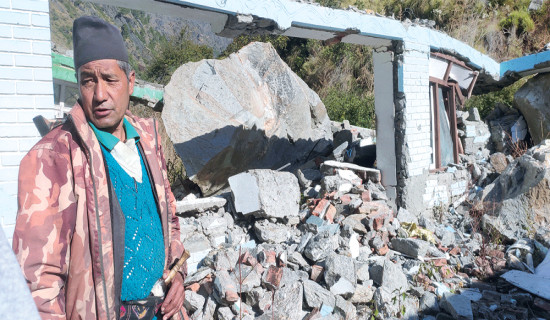
For Khamsung Tamang, leaving his house empty and staying in a single room provided by the local government with his family is like a punishment. Khamsung, 70, of Thulo Syafru of Goshaikunda Rural Municipality-5, in the Rasuwa district, has been staying in a single room for the last 15 months due to a dry landslide that came from the upper part of his house after Langtang Khola Hydropower Project started digging a canal next to Thulo Syafru village.

Global solidarity essential to tame rising temperature
Global leaders, diplomats, climate change experts and youth activists are now gathered at the 27th United Nations Climate Change Conference (COP27) in Sharm el-Sheikh, Egypt. They are lobbying for keeping the global average temperature rise below 1.5 degrees Celsius by the end of this century. But experts are concerned about limiting global temperature to 1.5 degrees Celsius at a time the earth is recording its hottest temperature every passing year.

Nepal to raise mountain-related issues in COP27 in Egypt
The 27th session of the Conference of the Parties (COP27) to the United Nations Framework Convention on Climate Change (UNFCCC) is taking place in Sharm El-Sheikh, Egypt from Sunday.

Nepal to raise mountain-related issues in COP27 in Egypt
The 27th session of the Conference of the Parties (COP27) to the United Nations Framework Convention on Climate Change (UNFCCC) is taking place in Sharm El-Sheikh, Egypt from Sunday.
Increase investment in climate adaptation
By Indira AryalDisasters have become more disastrous in Nepal over the last few years owing to climate change. Rainfall, floods, landslides, droughts and heat waves have all increased in frequency and intensity, inflicting tragic casualties and burdening the economy.Due to its socioeconomic, geographical and political condition, and the impact of climate change, the country ranked one of the most vulnerable countries to the impact of climate change. From 2019 to 2021, landslides killed 567 people and other 106 have gone missing. The country bore the loss of over US$ 163 million during the period, the government data revealed. This year alone, landslides and floods claimed the lives of around 100 people, while some 50 people are missing. The country faces a range of extreme events: floods, droughts, landslides, avalanches, high and low temperatures, and glacier lake outburst floods, and over 80 per cent of its population is exposed to at least one of these hazards, experts claimed.To address the issue, the country has taken bold steps in terms of the formulation of legal frameworks and policies. Nepal is one of the countries which has strong laws and regulations to address the impact of climate change but the question is are the laws and regulations implemented as committed in the international forum?Being a signatory country to the various international conventions and agreements, Nepal also formulated various laws, policies and regulations including the National Climate Change Policy in 2019 and the Second Nationally Determined Contribution in 2020. According to research done by Prakriti Resources Centre (PRC), Nepal’s existing climate change policies and programmes, particularly those dealing with climate change vulnerability and impacts are of great concern to many stakeholders for their proper prioritization and implementation.According to Raju Pandit Chhetri, Executive Director of PRC and author of the research 'Strengthening National Strategies for Financing Adaptation in Nepal' , the country has enough laws and policies to address the cross-cutting issues but already lacks adequate financial resources to address climate change adaptation. Every year more resources are being used from the national budget to handle the increasing climate-induced disasters. Climate-vulnerable people and communities need urgent support to adapt to the impacts of climate change. For Nepal, mobilizing and accessing international finance is key to implementing its national climate change policy, Nationally Determined Contributions and National Adaptation Plan priorities. Without international finance, it will be difficult for Nepal to deliver on its commitments made under the Paris Agreement, Chhetri said. A total of 609 climate-related projects were committed to Nepal in the period 2013-2017. The total climate commitments amounted to 1.92 billion USD, of which 643 million USD was committed in 2017. Even though it is difficult to bring the exact figure of loss and damage, the aggregate economic costs have been increasing over the years. According to Nepal Climate Change Financing Framework (CCFF) prepared by the government, increased variability and more extreme climatic events contribute to a loss of 23 per cent of GDP per year in the water management and agricultural sectors, with much higher losses sustained in extreme years. In monetary terms, the average loss has already nearly doubled from Rs. 1.2 billion per year between 1983 and 2005, to Rs. 2.2 billion between 2010 and 2016. Cumulatively, Rs. 28 billion in losses was recorded between 1983 and 2005, increasing to Rs. 16.8 billion in just seven years between 2010 and 2016. Loss due to floods alone was estimated to be about NRs. 15.5 billion, whereas that was due to landslides was over Rs. 1 billion in that period, CCFF said. With the adoption of the Paris Agreement in 2015, Nepal has raised its climate ambitions to implement low-carbon climate-resilient development pathways. At the event at the United Nations Framework Convention on Climate Change (UNFCCC) 26th Conference of Parties (COP 26) meeting, the Government of Nepal announced its world-leading commitment to remain cumulatively ‘net zero carbon’ from 2022-2045 and halt deforestation and increase forest cover to 45 per cent by 2030 and ensure all vulnerable people are protected from climate change by 2030.Multilateral Development Banks (MDBs -- the World Bank (WB), the Asian Development Bank (ADB) and the European Investment Bank (EIB) are the country’s three largest climate finance providers. The contribution of WB, ADB and EIB to Nepal’s total climate-related finance flow during the period of 2010 to 2016 was about 33 per cent, 29 per cent and 11 per cent respectively.The World Bank’s recent report said mountains are warming faster than the plains, triggering the melting of ice and permafrost and an increase in the risk of landslides. Incidents of dry spells, droughts, forest fires, heat waves, flash floods, and disease outbreaks are increasing along with slow-onset risk. This also shows that Nepal is one of the most vulnerable to climate change as it has a lot of mountains, which are coping with the glacier melting problem in recent years.To compensate for the loss and damage due to climate change, increasing adaptation investments is a priority for the country. Unless more ambitious actions are taken with higher impacts on adoption, climate change will continue to affect all sectors to a greater degree, undermining future development and the gains already achieved to date, Chhetri lamented.According to PRC report, Nepal has had decades of experience in accessing and mobilizing development finance; however, adaptation finance is relatively at an early stage. Many challenges remain to be explored and addressed; however, for Nepal, opportunities also lay ahead in mobilizing development finance for strategic and scaled-up investment in climate adaptation. The government and development partners will have to work in harmony to address the interests of both parties.
Strengthen safe zone for vultures
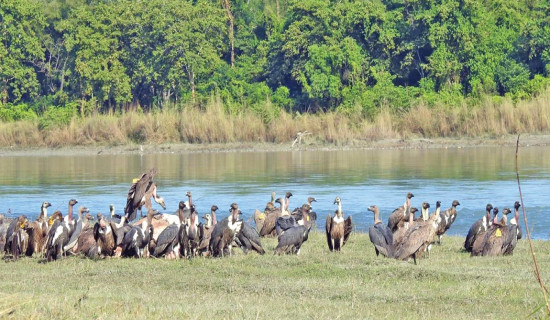
Vultures, the most efficient scavenging birds, play an important ecological role by rapidly consuming animal carcasses. They also have an important cultural role in the consumption of human dead bodies in sky burials within Nepal and Tibet. The ecologically important group of birds are now facing a range of threats in many areas.

Snake species threatened by habitat loss, rampant killing
Out of 84 recorded species of snakes in Nepal, 26 have been recorded in and around Bardiya National Park (BNP) and associated forest corridors. Among the recorded species of snakes, five are fatally venomous. There are two species of common Krait, two species of Russel’s Viper, and one species of King Cobra, said Dr. Rabin Kadariya, Conservation Officer, National Trust for Nature Conservation (NTNC) in Bardiya Conservation Programme. The species were recorded last year in the area, he said.

Terai drought challenges above-normal rain forecast
It has been almost three months since the monsoon of this year started. However, the majority of the rainfall measurement stations in the eastern part of the country have recorded below-average rainfall, resulting in drought. Drought has been recorded in the areas where the above rainfall was predicted. The prediction was made on May 6, just one month before the monsoon started. The Department of Hydrology and Meteorology (DHM) had forecast that there would be above-average rainfall in many parts of the country, including the Terai region of Province 1, north-east of Bagmati province, the southern region of Gandaki province, north-west of Lumbini province, and Karnali province, and the northern region of the Sudhurpaschim region. However, many districts in these provinces recorded below-normal rainfall as of August 25.

Bhaktapur outperforms neighbours in waste management
While Kathmandu stinks and Lalitpur reeks, Bhaktapur’s streets are clean. Heaps of garbage line the streets of the capital, choking its drains, but Bhaktapur Municipality has remained trash-free. And the question is, how?
Tigers multiply, so do challenges to manage them
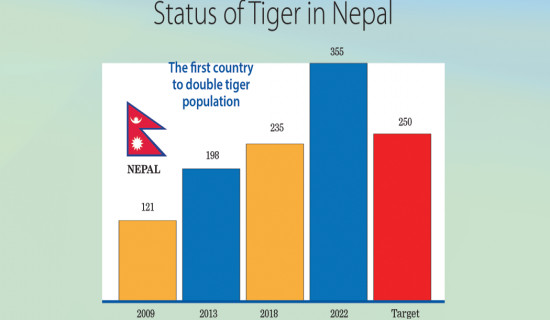
The number of wild tigers in Nepal has reached 355 from 121 in 2010, becoming the first country to achieve the target of doubling the population as per its global commitment made in 2010. Prime Minister and Chairperson of the National Tiger Conservation Committee, Sher Bahadur Deuba unveiled the long-awaited results of the National Tiger Census on Friday amid a programme in Kathmandu. The massive efforts in conservation make the country a success among the 13 tiger range countries that made the same commitment of doubling the population of the wild cat at the same time in St Petersburg, Russia, an international tiger conservation forum. It was not only a success but more than a success as the country almost tripled the tiger’s population from 121 in the last 12 years, conservationists said.
BNP's Conservation Efforts Pay Off
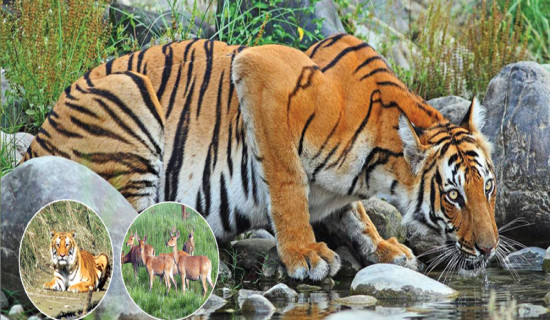
The world is celebrating Global Tiger Day on July 29 (today). Nepal is also celebrating the day with various programmes. The release of the results of the National Tiger Census, conducted in December last year, will be the main attraction of this celebration. Today is the day to feel proud that Nepal achieved successfully the target of doubling its tiger population by fulfilling its commitment made in the Russia Forum in 2010. Nepal is one of 13 tiger range countries that made the commitment to the conservation of tigers and increasing their population.The appreciable growth in the tiger's number is an indicator of the well-being of the ecosystem. The top carnivore or apex predator of the terrestrial ecosystem is known as the umbrella species. In Nepal, the tiger population exists in fragmented locations in the Terai region and the core sub-population is concentrated in the protected areas of Bardia National Park, Chitwan National Park, Parsa National Park, Banke National Park and Shukla Phanta National and the districts of Banke, Bara, Bardia, Chitwan, Dang, Kailali, Kanchanpur, Makawanpur, Nawalparasi, Parsa and Rupandehi. For a decade, the country has been working to double the tiger population as a part of its commitment made in the Russia forum. Expansion of habitats like establishing Banke National Park mainly for tigers and grassland management, increasing prey species and water resource management remain major efforts for doubling the tiger population. We have started witnessing the success of conservation efforts. Bardiya National Park (BNP) has also won this year’s TX2 Award (Conservation Excellence Award) for doubling the population of wild tigers since 2010. Tiger Conservation Excellence will be presented to Khata Forest Conservation Area in Nepal, which secures transboundary connectivity for tigers between Nepal and India. The awards will be given on June 29 (today) at a Tiger Day Celebration event in Kathmandu. The park is the largest national park in the Terai lowland and covers an area of 968 square kilometres. The International Union for the Conservation of Nature (IUCN) categorised tigers as “Endangered” list on the Red List of Threatened Species and conserving them has become a global priority. Recent data from the IUCN also said that the number of endangered tigers around the world is 40 per cent higher than previously thought. With the increase in its population, it has also brought new challenges such as dealing with habitat loss, and human-animal conflict. Challenges An increase in the tiger population has posed a challenge- tiger-human conflict. Kaushi Devi Pal, a local of Kothiyagau in Madhuban Municipality-2 of the Bardiya district is the latest victim of wild animal attacks in Bardiya. Pal, 45, was killed in a Royal Bengal tiger attack when she was grazing her goats in a community forest adjoining Bardiya National park on May 24, 2022. Similarly, Asmita Tharu, 41, of Sonaha in Madhuban-2 of the district was injured when a tiger attacked her while collecting firewood on June 6, 2022. The conflict is said to be for the territory. Mainly, the people from Tharu, Sonaha and Chepang communities have been staying nearby the national parks and community forests for decades and it will be hard for them to leave the settlement. On the other hand, wild animals like tigers are also fighting for their territory and they do not want any disturbance in their habitats.Human-wildlife conflict has continued unabated in Banke and Bardiya districts, resulting in 29 human casualties and several incidents of injuries in the past five years. Among them were 23 casualties from Bardiya National Park, a buffer zone, and community forests.People are asked not to go to the forest without permission but still many locals enter the national park and forest areas and take their livestock for grazing. Sometimes they are attacked by tigers while picking wild plants, collecting animal fodder and firewood in the forest, buffer zones and national park areas, said chief conservation officer of the BNP Bishnu Prasad Shrestha. "None of the incidents happened in their houses or their farmland. Humans are not a tiger's priority, but when they feel insecure, they attack people," he said.The East-West Highway passes through or adjacent to the BNP has resulted in road-killings of wildlife. Human encroachment into forest areas and the construction of physical infrastructures have also continued at a rapid pace. Excessive quarrying of stone, gravel, and sand in the Karnali River towards Kailali and construction of unorganised settlements and population growth are other challenges to wildlife habitats. These are also the reasons for tigers to become aggressive towards humans.With the increase in population, wood, logs, stone, gravel, sand and other materials are in high demand. People living nearby the protected areas are also dependent on forest materials to fulfil their daily needs. Dahan Lal Chaudhary, 54, of Madhuban Municipality, said they are fully dependent on the forest. "We have been staying in this area for decades since our ancestor's time but in the last few years we are living with the fear of tigers and losing our people to conflict."He said, "We support conservation, but we want security from such wild animals." They also demanded the translocation of tigers from the Khata community forest, an adjoining forest of the national park and barbed wire fencing to protect them from possible attacks of wild animals. Locals living near buffer zones have been demanding infrastructures that are friendly to both humans and wildlife.Loss of HabitatAccording to conservationists, wild animals feel intimidated by their surroundings when they see people’s movements. The encroachment near the park area is slimming down the habitat of wild animals such as tigers and rhinos, said Shanta Raj Gyawali, a senior advisor at the World Wide Fund for Nature (WWF). Climate change and global warming pose threats to tigers and force them along with other species to shift their belts and migrate towards colder regions. The construction of infrastructures like roads and canals in the park and forest areas has created more problems for animals as they often encounter humans in such places. Human settlements near forests and protected parks have given rise to threats to people. Some of the experts pointed out that the casualties and destruction of properties have taken place just because of the lack of sufficient habitat and prey species to the wild animals. The animals come out of the reserved areas in search of food. The hungry animals are often angry and are ready to attack whoever comes near them. The authority should therefore focus on habitat expansion and increase the number of prey species to minimise such incidents. But, in the case of BNP, Shrestha said there were enough prey species inside the park. There are 95 individual prey species in one square kilometre for tigers. Following the rise in wildlife attacks on humans, authorities are working on various measures including the relocation of conflict-making tigers. The government recently captured six tigers from Bardiya and one from Banke. They were later translocated to the Central Zoo, Chitwan National Park, and one was put inside a cage in BNP.Recently, the government decided to set up the Prime Minister Human Wildlife Rescue and Relief Fund to conserve tigers and reduce human-wildlife conflicts in buffer zones of national parks and forest areas with the commitment to double the tiger population. Other various measures have also been taken to decrease conflict between humans and wildlife and maintain their co-existence. National parks have for the first time launched a five-year strategic plan in this regard, said Shrestha. This tiger conservation action plan (2016-2020) also focuses on the improvement and restoration of tiger habitat through effective management of waterholes, grassland, corridors and connectivity. It aims to control poaching and illegal trade and resolve tiger-human conflicts through effective law enforcement and engagement of local communities. To control human-tiger conflict and illegal activities on the highway (east-west highway) that passes through the BNP, altogether 38 police check posts have been established at various locations. Since January last year, pedestrians and two-wheel vehicles have not been allowed to use the highway in the Amreni-Chisapani section of the park alone. Speed is limited to 40KM per hour in the Amreni-Chisapani section of the east-west highway. Hoarding boards are placed at various places on the highway, highlighting signs of a wildlife-crossing zone. Vehicles are asked to lower their speed. To prevent tiger attacks, park authorities have placed several restrictions on residents residing near buffer zones.Altogether 76 per cent of the area of the park is covered with forest, 1.47 grassland and 1.63 per cent with water bodies. Around 200 ponds including artificial are conserved inside the park for wild animals. Many of the ponds are artificial, where water is filled with pumps using solar power. The pumps operate automatically on sunny days.CompensationBio fences, electric fences, gabion fences, RCT fences and various other measures are used to prevent wild animals from entering human settlements. The government has also been distributing compensation to the wildlife victims. According to wildlife damage relief guidelines-2069 ( the third amendment 2075), the monetary compensation amount for human casualties is up to Rs. 200,000 per person and a maximum of Rs. 20,000 for a person sustaining a minor injury. In case of the death of victims, they shall provide the family of a victim with 1,000,000.The guidelines have included schemes for the monetary payoff for the loss of domestic animals and property, and the authority has arranged scholarship programmes for the children of victims.The BNP is home to tigers, one-horned rhinoceros, leopards, donkeys, goats, swamp deer, spotted deer, and wild elephants that are among the 61 species of wild mammals, 10 of which are protected mammals. The BNP also shelters more than 513 (6 protected) species of birds, more than 42 (3 protected) species of reptiles and more than 121 species of fish.According to the 2018 census, there are 235 breeding tigers in Nepal and the country is set to become the first of 13 countries to double its tiger population by 2022. In Nepal, the tiger population was 125 in 2010. The conservation efforts saw it jumped to 235 in 2018. According to some estimate, the tiger number in the country should reach around 250 in the current year. The exact data on the tiger population will be made public today.The number of tiger in the BNP was less than 20 in 2009, which multiplied more than three fold to 87 in 2018. On Friday, the exact number of tiger in this national park will be made public.(A journalist at TRN, Indira writes on wildlife and the environment)
Bardiya tigers burning bright for tourists
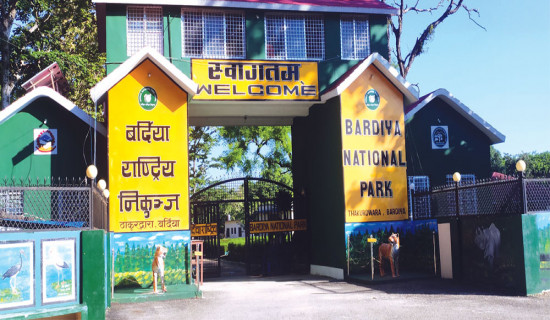
Bardiya National Park is one of the most important destinations to experience wildlife in the midst of thick jungle. The largest national park in the Terai lowland covers an area of 968 square kilometers. It was established for protecting typical ecosystems and conserving the habitat of the Bengal tiger and its prey species. The typical traditional houses and locally grown food are other attractions for both domestic and international tourists. Well-mannered and cooperative people with their positive outlook of life are other unforgettable moments while visiting the national park area.