- Thursday, 11 June 2026


By Indira Aryal
Birds in urban areas getting less shy to humans
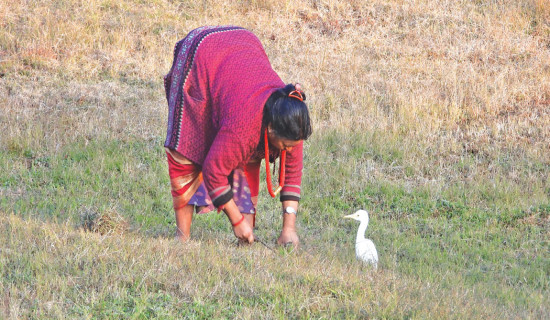
It has been found that birds living in urban areas are more tolerant of human presence and do not feel the need to fly as far as rural birds do. Urban birds tend to flee from humans at shorter distances compared to their rural counterparts.
Shifting Nepali Farms As Men Migrate
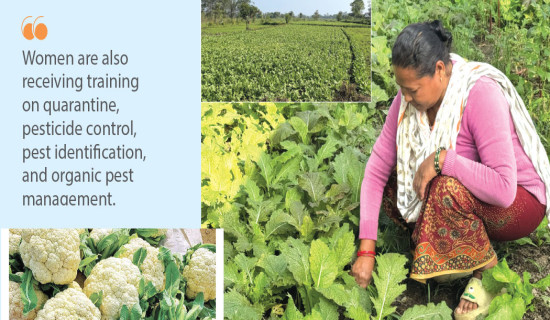
Not long ago, 50-year-old Maya Devi Kandel worked from dawn to dusk on her farm in Sharanpur-16 of Bharatpur Metropolitan City in the Chitwan district. Besides the gruelling farm work, she had to support her two young children, aged two and four.
Rising temperatures pushing treelines up
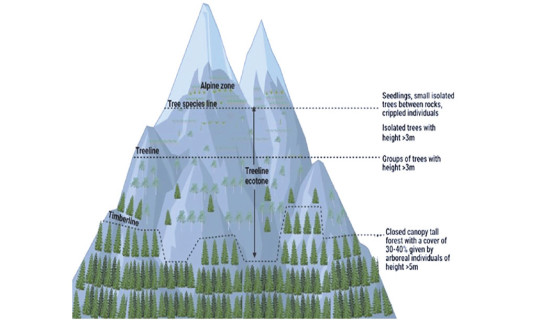
Rising temperatures in the Himalayas are causing significant changes in forests, with fir trees quickly replacing birch trees at alpine treelines. A treeline is the altitude above which trees do not grow.

Experts question Nepal’s capacity to utilise climate fund
The 29th Conference of the Parties (COP29) to the UN Framework Convention on Climate Change (UNFCCC) is underway in Baku, Azerbaijan.

President departs for Azerbaijan to attend COP 29
President Ramchandra Paudel departed for Baku, Azerbaijan, on Sunday leading a delegation to participate in the 29th Conference of the Parties (COP) to the UN Framework Convention on Climate Change (UNFCCC).
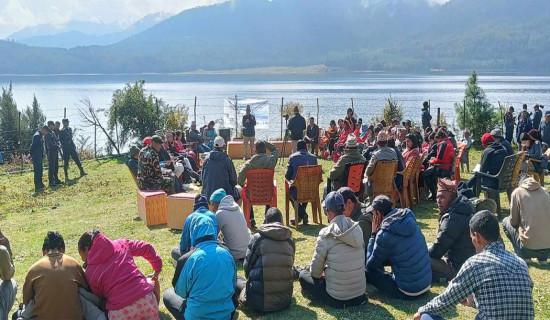
Temperature rise affects food security, water resources in Mugu
Birkha Bahadur Rokaya lost his toes to frostbite in 1988 when heavy snowfall was common in winter. However, with changing climate patterns and reduced snowfall, the region remains mostly dry during winter.
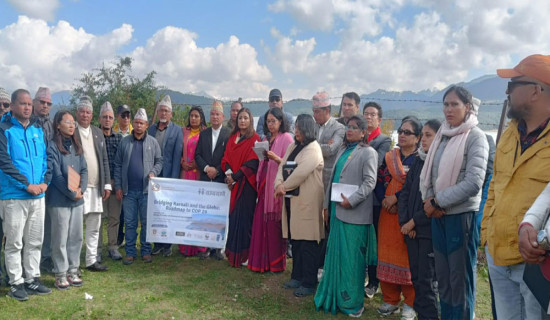
Karnali most vulnerable to climate change effects
Karnali Province in Nepal is regarded as one of the regions most vulnerable to the impacts of climate change due to its mountainous terrain, fragile ecosystems and socioeconomic conditions.
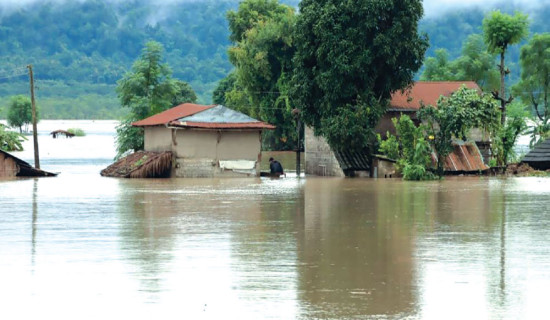
Experts attribute monsoon-end mayhem to climate change
September 28, 2024, turned into a nightmare for Rajan Bohara. The flood that hit early in the morning along the Roshi Khola (river) in the Kavrepalanchowk district that day swept away all his material possessions.
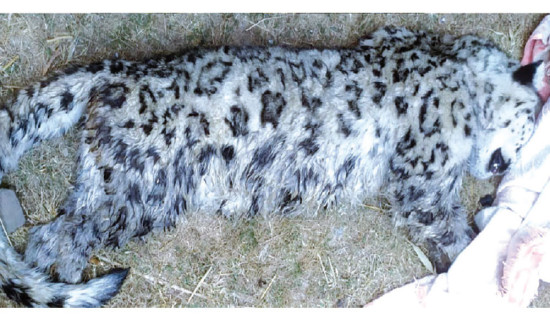
Snow leopard found in Morang was from high mountain, research shows
On January 23, 2024, a snow leopard, usually found in high altitudes, was spotted in Charghare of Urlabari, Morang district, at a very low elevation of just 146 metres. This rare sighting has left wildlife experts and conservationists puzzled.

China: Innovation For Disaster Preparedness
China has long been my travel destination, especially after hearing about my friends' various adventures there. I have been captivated by its impressive achievements in economic, social, and environmental sectors. Learning about the 2012 initiative to integrate ecological civilization into all facets of development has fueled my excitement. I was so elated to experience it firsthand and take in the breathtaking scenes.
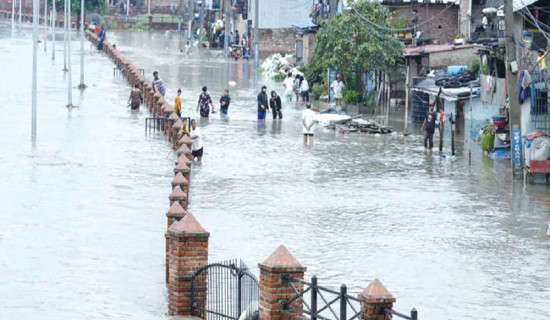
Extreme rain and poor urban plan contributed bigger losses
The monsoon-triggered floods and landslides on September 27 and 28 claimed at least 231 lives (as of October 2) with some individuals still missing. The fatalities were reported from 22 of the most affected districts, with the majority occurring in the Kavre and Lalitpur districts.
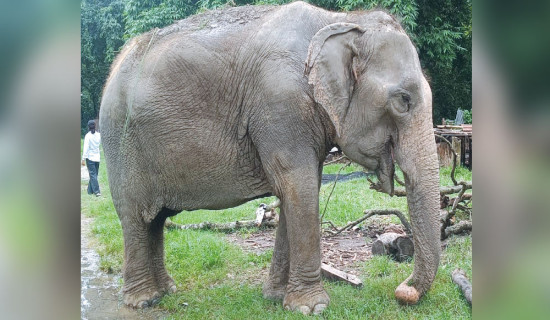
Elephants moving beyond protected areas
Once confined mostly to protected areas, Asian elephants (Elephas maximus) are now increasingly using lands beyond the boundaries of national parks and reserves. A recent study on “Dynamic
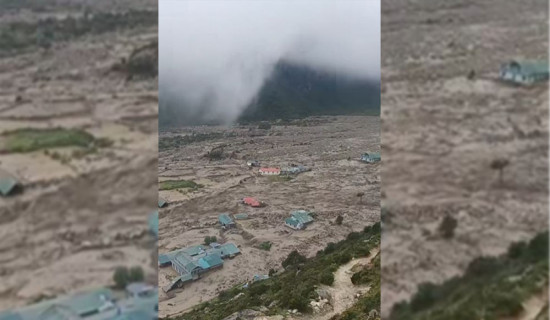
No resumption of communication in Thame village even five days after muddy flood
As of Wednesday, there has been no resumption of communication for the residents of Thame village in Khumbu Pasang Lhamu Rural Municipality. The devastating flash floo
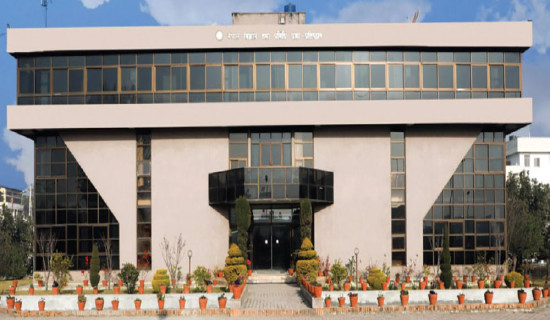
Kathmandu's water unfit for health: Study
Of all the water samples tested in the Kathmandu Valley, 40 per cent were found contaminated with coliform bacteria. A study by the Nepal Academy of Science and Technology (NAST) team revealed the findings regarding antibiotic-resistant bacteria in Kathmandu's drinking water supply.
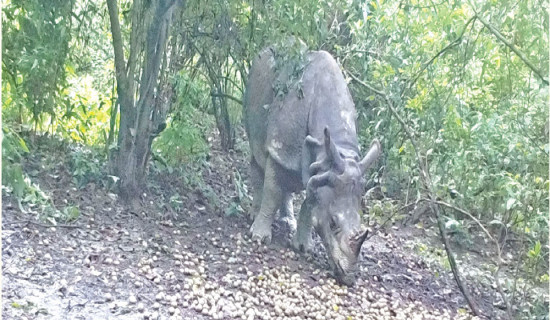
Rhino plays crucial role in forest expansion: Study
The jungles of Chitwan and Shuklaphanta National Parks are home to a variety of wildlife. While these places are threatened by human encroachment, the greater one-horned rhino plays a crucial role in forest regeneration.