- Thursday, 4 June 2026

62-year-old woman living without citizenship in Mugu
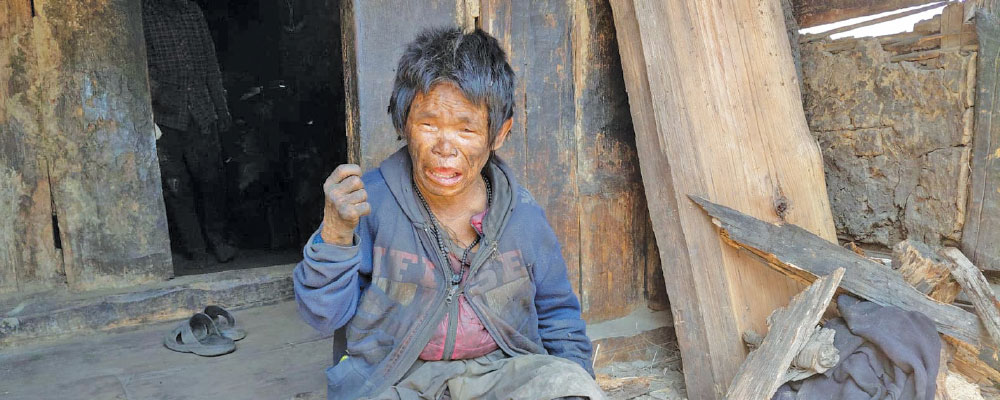
Photo: TRN 62-year-old disabled woman Kunjum Palpu Lama, who has been deprived of citizenship.

By Hari Krishna Aidi, Mugu, June 4: A 62-year-old woman from a remote village in Mugu district has been living without citizenship, being deprived of her access to basic state services and constitutional rights.
Kunjum Palpu Lama, a local of Magri village in of Mugum Karmarong Rural Municipality-8 in northern Mugu, has spent her whole life without a citizenship certificate.
Due to this, she has been unable to access government facilities and services provided by the state to its citizens, including social security allowance, healthcare and disability support.
According to civil society leader Rup Bahadur Malla, Nepal’s Constitution and the Citizenship Act, 2006 guarantee every Nepali citizen the right to citizenship.
Article 10 of the Constitution explicitly states that no Nepali citizen shall be deprived of the right to obtain citizenship.
Malla suggested that the District Administration Office Mugu should visit Lama’s home and issue citizenship there, considering her condition as a physically disabled and single woman.
Due to the lack of citizenship, Lama has remained excluded from basic rights and government services. Physically disabled and dependent on others, she is said to be living under extremely difficult circumstances.
Chairperson of Mugum Karmarong Rural Municipality, Chhiring Kyanpe Lama, said the municipality had repeatedly coordinated efforts to help Lama obtain citizenship, but she had shown little interest in completing the process.
He added that Yangep Lama, Kunjum’s elder brother and caretaker, had also not taken sufficient initiative regarding the matter.
However, Yangep Lama said his sister suffers from both physical and mental disabilities, while he himself is physically weak and unable to provide adequate support.
He said the absence of citizenship remains Kunjum’s greatest problem, preventing her from obtaining a disability identity card and accessing old-age allowance, disability benefits, healthcare and social security services.
The siblings, both physically vulnerable, are currently dependent on one another for survival.
According to Yangep Lama, although the siblings share the same mother, they have different fathers, and no citizenship records of Kunjum’s father have been found, further complicating the process of obtaining citizenship.
Ward secretary Bijay Bhama of Ward-8 said a lack of required documents, illiteracy, limited awareness about the importance of citizenship, the area’s difficult geography and poor access to administrative services have all become major obstacles to securing citizenship for Lama.
Assistant Chief District Officer of Mugu, Dhan Krishna Pandey, said citizenship could technically be issued at Lama’s home, but procedural difficulties arise because official registration records are maintained in a single office ledger, making home delivery of citizenship documents difficult.
Citizenship is not only a form of identification but also the basis for accessing rights guaranteed by the state. Yet despite crossing six decades of life, Kunjum Palpu Lama remains deprived of that right, effectively becoming an “invisible citizen” in legal terms.
Her case highlights the continuing struggle of the poor, disabled and vulnerable people living in remote regions of Nepal to access constitutional rights such as education, healthcare, social security and a dignified life.