- Monday, 25 May 2026

Pedagogy Of Federalism In Madhes

I have had the opportunity to participate in the programmes organised to discuss the issues bearing upon the governance, management, and curriculum development of higher education institutions in Nepal. Of the programmes I had participated in, almost all had their focus on the ill-conceived design of the curriculum and the poor state of university governance to maintain academic standards. I attended the discussion programme on the issues concerning university governance organised by Policy Research Institute (PRI) recently, in which obsolete curricula, poor academic ambience and teaching-learning environment were critically examined.
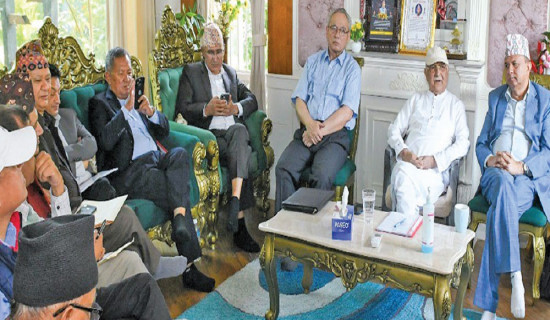
Former vice chancellors and education experts had emphasised the need to restructure and reorganise the university system with particular attention to research and development to ensure that students are adequately engaged in research and innovation. Similarly, during the previous months, I was invited to take part in a deliberation organised under the joint auspices of the Federalisation and Localisation Centre (FLC) and Madhes University (MU), based in Birgunj, to discuss the process and content of the curricula for federalism studies at the higher education level. Former parliamentarian and well-known federalism expert Dr. Khim Lal Devkota, who also heads the Institute of Federalism in the university, was one of the key persons behind the convening of the deliberation.
Evolving context
The event was attended by former vice-chancellors, education experts, civil society stakeholders, and media persons. The experts participating in the deliberation placed emphasis on the need to make the federalism studies curriculum relevant to the evolving context of the country. The appreciable aspect of the programme was that it provided a space for the stakeholders to discuss various social, political, and economic dimensions of curriculum construction. The discussion programme had also emphasised making the teaching-learning environment more practical and attuned to the needs of the contemporary social and political realities of the country.
Setting the tone for the discussion in the programme, Dr. Khim Lal Devkota called for continuing dialogue among the stakeholders to strengthen the basis of cooperation and collaboration to ensure the quality and relevance of the federal studies curriculum. As Madhes Prades is identified with the assertion for the cause of federalism for the reason of its relentless quest to hold the banner of federalism aloft, experts stressed that Madhes University should place sole emphasis on research and development of federal governance in Nepal. Vice Chancellor of the university, Prof. Dr. Dipak Shakya, expressed commitment to organising similar discussion programmes to foster dialogue among experts and stakeholders with a view to seeking and mobilising support for federalism studies in the university.
It is in order to note the fact that the country has more than a dozen universities, and their number has been on the increase. However, these apex-level education institutions have been established without careful planning and meaningful objectives. The provincial governments have launched and set up universities in their respective jurisdictions. The newly instituted higher seats of learning set up under the purview of provincial governments have become a copycat of the traditional universities like TU, where the quality of teaching and learning has been said to be very poor, and also subjected to harsh scrutiny by the academic community.
What is disappointing to note is that the new universities, instead of focusing on research and development in the areas of applied research and innovation, have gradually started to convert themselves into the affiliation-granting outposts. The MU should stay clear and aim at developing itself solely as a centre for excellence in the area of federalism studies. Especially, the Institute of Federalism under the university should gradually evolve as an apex forum where knowledge production and research on democratic governance, fiscal sovereignty, social and political federalism, and so on are undertaken, and its quality research products are shared with the wider world. It should serve as a research and discourse hub for researchers, scholars, and students alike.
The university and its federalism institute need to develop itself into a research and documentation centre on various dimensions of federalism and also serve as a bridge between academia, civil society, and government. The curriculum on federal studies should embrace the innovative pedagogy based on shared scholarship and collaborative intellectual ownership. The curriculum should not be designed by experts and scholars sitting in the ivory tower. It should be co-constructed in such a way that not only disciplinary experts, faculty members, civil society experts, but also political leaders, representatives of the federal, provincial, and local governments are engaged.
Private sector
Moreover, the private sector also have their stakes in federalism studies as a stakeholder in the federal ecosystem. They should be involved in the process. The curriculum should aim to produce policy analysts, researchers, and administrators capable of working across federal-provincial-local levels, endowed with skills in policy drafting, budget analysis, institutional design, conflict resolution, and negotiation. It should produce practice-ready graduates or degree holders who can support federal, provincial and local governments. With a view to ensuring this practical dimension, the curriculum should embed field-based learning through a mandatory placement not only with federal, provincial and local governments but also with civil society organisations and corporate entities.
Undoubtedly, resources and funding will constitute a major constraint and pose impediments to implementing such a robust proposition. This university, especially the Federalism Studies Institute, should be funded by the joint consortium of federal, provincial and local governments as its trustee and beneficiaries as well. It is necessary that engagement of the governments from across three levels at the very conception stage will be important not only to impart ownership but also to ensure that the products are employed and absorbed in the federal entities across them.
(The author is presently associated with Policy Research Institute (PRI) as a senior research fellow. rijalmukti@gmail.com)




-original-thumb.jpg)