- Tuesday, 26 May 2026

Landfills Of Plastic
 Angela Ghising
Angela Ghising
Angela Ghising
Have you noticed that the residents of Kathmandu Valley are increasingly surrounded by moving landfills of plastic and human waste? Every day, thousands of us cross the concrete bridges over the Bagmati River, the Bishnumati River, and the Dhobikhola River. We look out at the water, thick, black, and sluggish, and instinctively quicken our pace, holding our breath to escape the overwhelming stench. But once we reach the other side, we simply return to our lives. We have developed a kind of social or psychological phenomenon known as “environmental amnesia,” where the deterioration of our most sacred rivers is simply background noise we no longer hear or a smell we no longer detect.
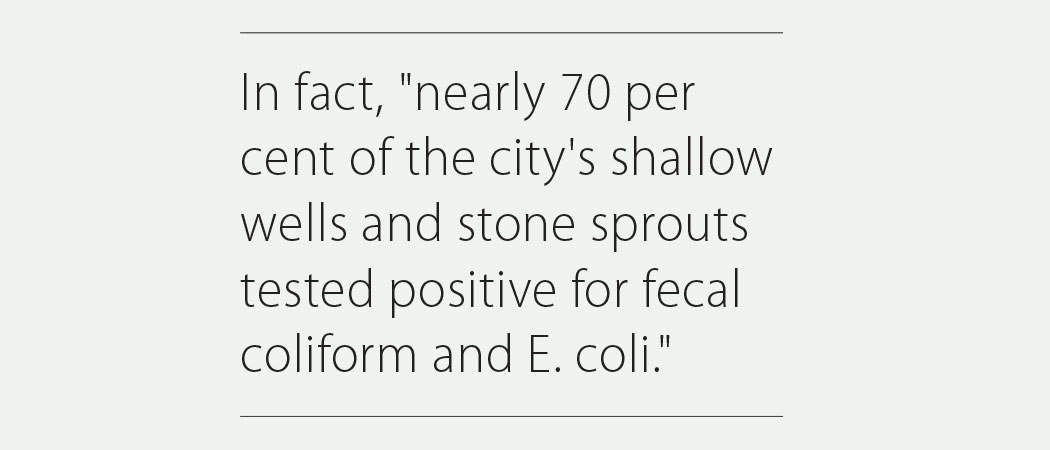
However, in 2026, this amnesia has become a deadly luxury. What was once perceived as an ugly sight has now become a full-scale medical emergency. The rivers, which once defined the life of this valley, are no longer simply "dirty"; they are biologically dead and now represent a source of disease, a threat to the citizens of this valley. In order to understand this crisis, it is necessary to look at the most current public health data. In a report released by health officials and researchers following the monsoon season of 2025 and early 2026, it was discovered that the Kathmandu Valley was experiencing a resurgence of water-borne diseases, which were previously believed to be under control. In fact, "nearly 70 per cent of the city's shallow wells and stone sprouts tested positive for fecal coliform and E. coli."
The crisis reached a breaking point in late 2025 when health officials confirmed several clusters of Cholera in the valley. Perhaps even more concerning is the rise of "superbugs" within our waters. Recent studies at Teku Dobhan, where the Bagmati meets the Bishnumati, identified bacteria that show a 99 per cent resistance to common antibiotics. By allowing our rivers to become open sewers, we have created a laboratory for diseases that modern medicine may soon be unable to cure.
It would be unfair to say that the government has done nothing. We have seen the Bagmati River Basin Improvement Project (BRBIP), which brought us the Dhap Dam to help flush the river during dry seasons. We also saw the upgrade of the Guheswori Wastewater Treatment Plant. On paper, Kathmandu should have a reviving river. The technical failure here is no secret. According to project progress reports from BRBIP, while miles of interceptor sewers have been put in place, the system remains fragmented. 'Right of Way' disputes and technical delays have created huge gaps in the system. Furthermore, the existence of overflow bypasses means that during even light rain, untreated waste is diverted directly into the riverbed.
We are essentially spending millions on 'photo-friendly' surface projects like riverside parks and stone walls, while the fundamental 'plumbing' of our city, the interceptor network, remains incomplete and bypassed. Beyond health and looks, there is a deep economic and cultural loss. Historically, the Bagmati was the centre of our spiritual life. Today, religious rituals are performed in water that is chemically toxic. This also hurts our tourism. As we try to attract visitors to our World Heritage sites, we show them rivers that look like industrial drains. The "smell of Kathmandu" should not be the stench of waste, yet for many tourists, that is the main memory they take home.
Furthermore, the cost of treating illnesses caused by this water puts a massive, hidden tax on our economy. We are spending huge amounts on healthcare for diseases that could be prevented if we simply finished the pipes beneath our feet. If we look at other countries, we see that this is a solvable problem. Singapore’s Kallang River was once a concrete sewage canal, much like ours. Through smart engineering and strong political will, it was turned back into a natural park that filters water and provides a home for wildlife.
While these efforts are kind, they give a false sense of progress. What we truly need is a shift in accountability. We must demand that the High Powered Committee for Integrated Development of the Bagmati Civilisation (HPCIDBC) and the Ministry of Urban Development prioritize a 100 per cent completion of the interceptor sewers. No more excuses and no more delays. A river is the reflection of a city’s soul. If we allow ours to remain a toxic drain, we are admitting that we have given up on the dignity of our capital and the safety of our children. It is time we stop holding our breath and start raising our voices. Our rivers were here long before the concrete; it is our duty to ensure they flow safely long after we are gone.