- Monday, 25 May 2026

Parties Pledge To Prioritise Tourism

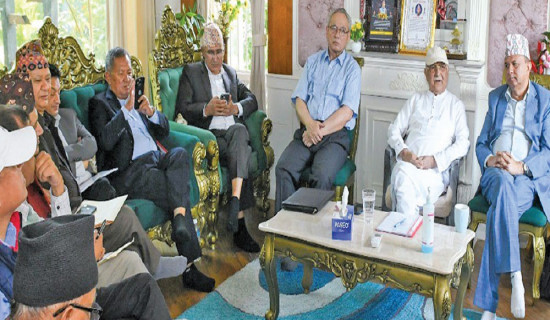
As the much-awaited March 5 elections to the House of Representatives (HoR) are approaching, political parties, their candidates, and independent aspirants have accelerated campaigns for wooing voters. The candidates have now been busy carrying out their ‘door-to-door drives’, making various pledges to the electorate.
As part of their preparations for the impending elections, most political parties made their respective poll manifestos as commitment papers public a couple of days ago. With this ongoing canvassing, much enthusiasm appears to have been generated among people for now. There is no doubt that citizens had been getting fed up with politics as such due to the failure on the part of their elected representatives to deliver on their promises.
Working style
Persistent bad governance, protracted economic slump and worsening problem of unemployment were some of the key factors resulting in an utter frustration among people. The very discontentment led to the September 8-9 Gen Z uprising that witnessed the massacre of scores of youths and destruction of important public structures and private assets. Such unfortunate incidents have tarnished Nepal’s reputation as a peaceful country in the international arena.
However, the forthcoming elections are expected to bring the disrupted politics back on the right track, paving way for the country to advance in the path of political stability and development. The historic youth revolt must have been an important wake-up call for political parties and their leaders to shun irregularities and act responsibly and transparently. They can win the hearts and minds of the people only when they change their working style.
In their election manifestos, political parties have made numerous commitments, ranging from creating peace and stability in the country, ensuring good governance, addressing existing economic issues, utilising human and natural resources and modern technology for national development, and enhancing the country’s international image. Governance experts say that most of the problems facing the country today will be resolved once and for all with the implementation of desired governance reforms. So, efforts must be geared towards reforming governance and ending social and economic inequalities.
Tourism is one of the key sectors in focus for the political parties. Realising the importance of tourism to the nation’s economic development, protection of cultural heritages, foreign exchange earnings, job creation and enhancement of the country’s global image, the constitution accepts this multifaceted industry as a vital means. Nepal boasts unique biodiversity with varied climatic conditions. With her unparalleled scenic beauty, cultural diversity and rich hospitality of the people, the country is considered one of the most appealing tourist destinations globally.
Because of the country’s limitless tourism potential, the tourism industry has seen a huge investment over the years. The country is well-known internationally for adventure activities like mountaineering and trekking, and cultural attractions. The country is also gaining ground as an adventure sports destination. With the availability of better medical facilities and services in various cities, including Kathmandu and Dhulikhel, health tourism also seems to have been growing gradually.
But tourism has not thrived as per its prospects due to numerous internal and external factors. A lack of clarity in tourism-related policies and laws is one of the main reasons for its insignificant growth. Although tourism holds the capacity to directly or indirectly support various other sectors of the national economy, it has been unable to grow in a desired manner. Tourism not only helps boost the local economy and empower women and create jobs for youths, it also can have desired effects on multiple other sectors.
Despite a decades-long history of tourism in Nepal, we still do not have better air and road connectivity with our major tourist source markets. It needs no mention that Tribhuvan International Airport (TIA), based in Kathmandu, has been getting congested, with many domestic and international flights serving this airport. Flights are often delayed for hours due to air traffic congestion, making it inconvenient for passengers.
Keeping this in mind, major political parties—the Nepali Congress (NC), CPN-UML and Rastriya Swatantra Party (RSP)—have announced their pledges to bring Gautam Buddha International Airport (GBIA) and Pokhara International Airport into operation in full swing. Once these aviation facilities come into operation to their full capacity, the country is anticipated to host many more international travellers. They have also assured that they would try their best to get Nepal off the European Union’s air safety list. Since December 2013, Nepali airlines have been stopped from entering the skies of the 27-nation bloc.
Plans
In its manifesto, NC plans to attract 3 million foreign tourists annually in the next 10 years, while UML aims to double the number of international travellers within the next five years. RSP has focused on the utilisation of digital systems and the development of tourism infrastructure. Similarly, the Nepal Communist Party has promised to create a tourist-friendly environment in the country so as to lure more tourists. Meanwhile, the Rastriya Prajatantra Party (RPP) has committed that it will not call for any bandh (blockade).
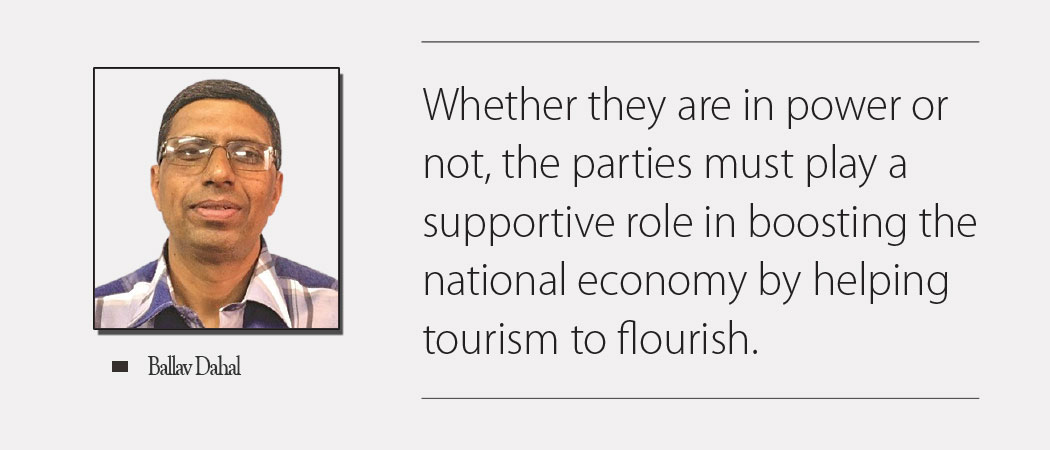
Actually, the parties’ policies can make a huge difference in tourism development, as it is a very sensitive sector. Whether they are in power or not, the parties must play a supportive role in boosting the national economy by helping tourism to flourish. Our tourism will grow by leaps and bounds when connectivity is expanded. Efficient and passenger-friendly services must be made available at the major gateways, like airports, to give a lasting impression to tourists. Instead of the number of tourists, we need to opt for earning dollars and increasing the contribution of tourism receipts to the gross domestic product (GDP).
(The author is a former deputy executive editor of this daily.)