- Wednesday, 15 April 2026

Tharu culture brings income
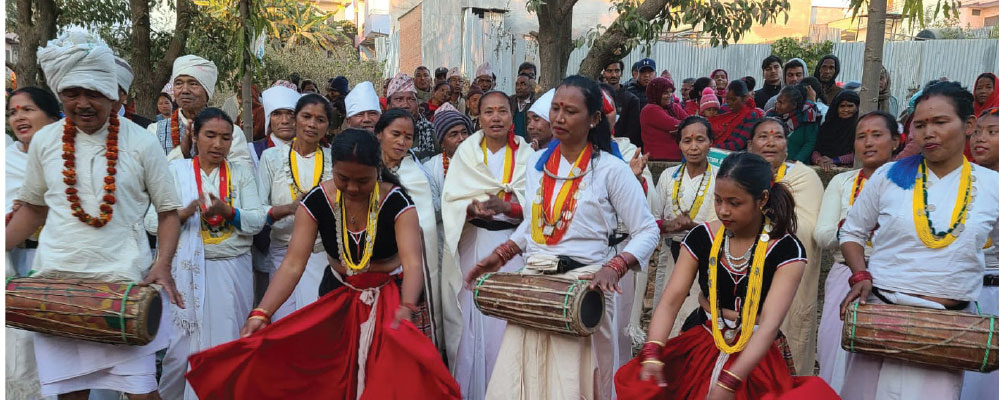
Photo: Santosh Dahit Members of the Tharu community performing the Maghauta dance at a festival held in Tulsipur.

By Santosh Dahit,Dang, Jan. 13: Indigenous Tharu dance and cuisine, which were once limited to villages and festivals, in recent years have become increasingly commercialised.
With the growing exhibition of Tharu culture at various fairs and festivals organised across Dang district, the community has started earning a significant income.
This has not only strengthened their economic condition but has also contributed to the preservation and promotion of their art, culture, and identity.
Padma Chaudhary of Ghorahi-16 said that by performing Tharu dances at fairs and festivals, they now earn a good income every year.
“Earlier, we used to dance only in our villages, but now we also perform at fairs and festivals,” she said. “We charge between Rs. 2,000 to 5,000 per performance, depending on the organiser and the location.”
According to her, the transformation of the Tharu culture from being village-based to becoming commercial is a positive development. “It has not only helped us economically but has also supported the protection of our art and culture,” she added.
Similarly, Shanti Chaudhary of Ghorahi-17 said that she and her group regularly perform at fairs, festivals, and programmes organised by different organisations.
According to her, the income earned from cultural performance is collected within the group and invested in social activities.
Likewise, Srijana Chaudhary, a member of a dance group from Ghorahi-6, said that they charge between Rs. 2,000 and 5,000 for each performance.
“The more fairs and festivals there are, the better it is for us,” she said. “We perform dances like Maghauta, Hurdungya, and Chhokra. Sometimes we participate in competitions as well.
Along with dance and music, traditional Tharu food has also become commercialised.
According to Kulraj Chaudhary of the Five Pandava Group, they often generate more than Rs. 30,000 in sales in a single day. “We earned that amount by selling dhikri, andi (urad dal) bread, pork dishes, meat, and snails,” he said.
Similarly, Bikash Chaudhary, Executive Director of Kabila Resort in Sarra, Ghorahi-16, notes that people are drawn to enjoy Tharu cuisine, which generates a significant income for the resort.
“We have focused on both cultural preservation and commercialisation,” he said. “This has helped in protecting and promoting Tharu art and culture.”
Churna Bahadur Chaudhary, Central Treasurer of the Tharu Welfare Society, said that the commercialisation of traditional Tharu art and culture is a positive development.
According to him, it connects the community to economic prosperity while also helping preserve and promote their unique cultural heritage. He added that the commercial development of Tharu culture and traditional cuisine also contributes to tourism promotion.

-original-thumb.jpg)
-original-thumb.jpg)
