- Friday, 1 May 2026

47 Nepalis rescued from Myanmar, repatriated to Kathmandu
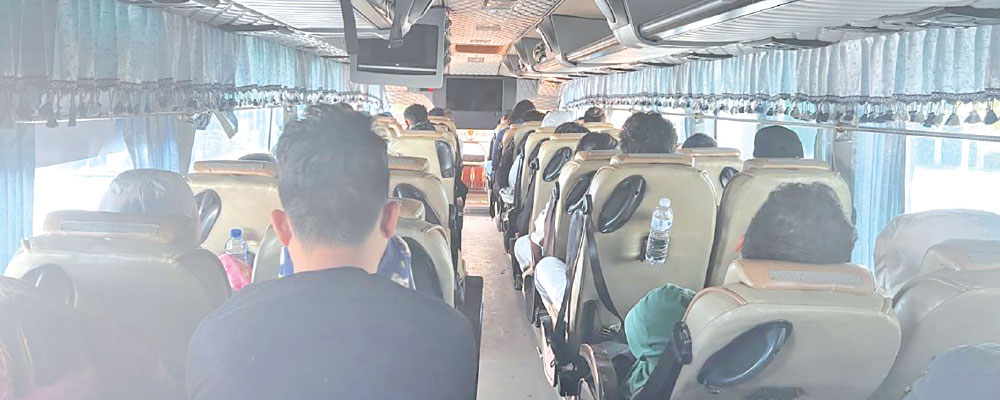

By A Staff Reporter,Kathmandu, Dec. 11: A total of 47 Nepali citizens who had been lured to Myanmar through false employment promises and forced to work in illegal online scamming centres have been rescued and repatriated to Nepal.
The rescue operation was carried out by the Embassy of Nepal in Bangkok with the support and coordination of relevant Thai authorities. The group arrived in Kathmandu on Wednesday on a Nepal Airlines flight.
The Embassy informed in a statement that the rescued individuals are from 26 districts and included 45 men and 2 women.
The duration of their forced employment in the scamming centres ranges from two months to 18 months.
Those repatriated comprised one individual each from Chitwan, Dailekh, Kaski, Kathmandu, Kavre, Palpa, Ramechhap, Rautahat, Salyan, Sarlahi, Sindhuli, Taplejung and Tehrathum; two each from Dang, Mahottari, Morang, Nawalparasi, Nuwakot, Syangja and Tanahun; three each from Dhading, Gorkha, Rupandehi, Sindhupalchok and Udaypur; and five from Jhapa.
"The age group of the rescued ranged widely, including one 17-year-old, 26 individuals aged between 20 and 25, ten aged between 26 and 30, eight aged between 31 and 35, and two individuals aged 40 and 41, respectively," read the statement.
Most had completed 10+2 level education and several had backgrounds in information technology.
The Embassy reported that the victims had been recruited through various channels, including friends, acquaintances, online gaming partners, and social media advertisements.
Interestingly, some had been contacted while studying in India or working abroad in countries such as the UAE. Platforms such as WhatsApp, Viber, Messenger, TikTok and Telegram were commonly used to make job offers, often promising attractive hourly wages in Kathmandu.
"After initial communication, they were persuaded with claims of high-salary opportunities abroad in office work, call centres, computer operation or receptionist roles, leading them eventually to centres operating illegal online dating, casino, gaming, phishing and cryptocurrency scams," according to the Embassy.
The rescued individuals said that once inside these scamming networks, they were initially treated well, but later subjected to pressure through strict performance targets. Failure to meet these targets resulted in accusations of other crimes, severe financial penalties, physical abuse, confinement, extortion, threats of imprisonment, or even violence.
Some were held hostage until they brought in another recruit to replace them.
141 rescued this year
In recent years, citizens of Nepal and several other countries have become stranded in scamming hubs located along the Cambodia–Thailand border, Myanmar–Thailand border, and in Laos.
In response, the Nepali Embassy in Bangkok began issuing travel advisories from August 23, warning Nepali people against travelling to these regions for unverified employment. But Nepali youth are turning deaf ears to such advisories and fallen prey to the scammer schemes that promise foreign employment with high income.
The Embassy has since been working with Thai authorities to rescue Nepalis identified as victims of human trafficking. According to official data, 68 Nepalis were rescued in Fiscal Year 2023/24, 156 in FY 2024/25 and 141 in the current FY 2025/26 so far.
Cooperation with Thai government
According to the Embassy, the latest rescue was carried out under the Standard Operating Procedure (SOP) introduced by the Thai government to facilitate the repatriation of foreign nationals stranded in Myawaddy, Myanmar.
The SOP involves coordination between Myanmar’s military or police authorities, Myanmar’s Ministry of Foreign Affairs, Thailand’s Ministry of Foreign Affairs, and local Thai immigration offices. The Embassy verifies travel documents and issues one-way permits where necessary before arranging repatriation.
It said that the rescued individuals underwent basic health checks, screening for human-trafficking indicators, immigration procedures and baggage inspections before being flown to Nepal.
The Thai government has requested that Nepal investigate the cases fully to identify and prosecute the actual perpetrators behind the trafficking networks.
Suspecting that some returnees may have acted as victims or intermediaries within the trafficking chain, the Embassy has also urged authorities to conduct necessary inquiries.
Meanwhile, the Embassy has once again appealed to Nepali citizens to avoid rushing abroad under dubious employment offers, to verify job claims made through social media or acquaintances, and to seek foreign employment only through official government channels.
-original-thumb.jpg)