- Saturday, 6 June 2026

The Travel Trap

Nandita Ghimire
It is early morning, and a group of friends scrolls through Instagram, booking their next trip before breakfast. The mountains call, the heritage sites beckon, and the hashtags demand it: #TravelGoals, #WeekendEscape, #NepalDiaries. For many Nepali youth today, traveling is no longer optional; it is a ritual, a lifestyle, a badge of belonging. A trip isn’t just about adventure anymore; it is about proving you are “living,” keeping up with friends, and not missing out.
There is beauty in this trend. Domestic tourism is flourishing. The youths are unfolding the hidden gems of the country, trekking remote trails, reconnecting with nature, history and culture. They are making a memory, they are building independence and momentarily escaping the pressures of work, study, and urban life. A weekend retreat can re-set the mind, relax stressed nerves, and get the youngsters to take a break out of their digital and professional rat-race.
Is it really giving them a break from their digital life? Or its just because of the Digital life FOMO, (fear of missing out)?
However, there is a tension under the excitement. Many travel due to an expectation of doing so, because their friends are doing so, because social media takes silence to judge doing nothing. The fear of missing out is a reality. To individuals who have little income, this pressure may require a tightening of their budget, or tapping into savings or even skipping financial planning. Leisure is a performance and the delight of exploration can be replaced by validation. The excitement of adventure is accompanied by stress, debt or guilt about spending money without even caring about what tomorrow will bring.
This raises a question that is rarely asked: Are we traveling for ourselves, or for approval? Are youth engaging with culture and nature, or simply chasing experiences to match peers online? The contrast is stark. For some, travel builds life skills, independence, and personal growth. For others, it is a fleeting escape, a temporary pause from responsibilities, with little long-term gain.
The solution is balance. Travel should be an enriching experience, not a source of anxiety or financial strain. Budgeting, planning and introspection of intent can make the difference between a trip being a must-do social performance and an actual journey of discovery. It can re-link the youth to culture, nature, and self, and will not sacrifice savings or long-term objectives.
The youth in Nepal are redefining exploration, adventure, and how to live life to its fullest. They are being taught to value their country of origin and they are gaining independence and strength. However, as the culture of trips once a year becomes increasingly popular, the necessity to reflect on it increases as well. The trick is to have fun in the moment and to contribute to the tourism, as well as enjoy culture, all the time with looking forward to tomorrow.
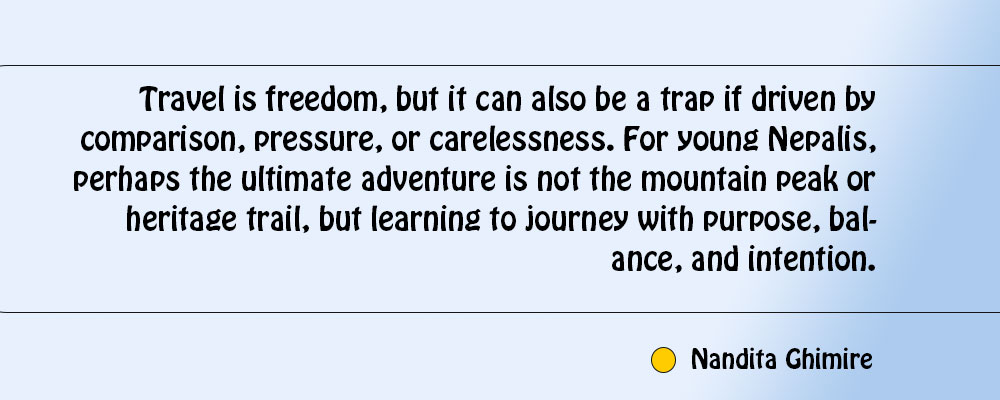
Travel is freedom, but it can also be a trap if driven by comparison, pressure, or carelessness. For young Nepalis, perhaps the ultimate adventure is not the mountain peak or heritage trail, but learning to journey with purpose, balance, and intention.
-original-thumb.jpg)

-square-thumb.jpg)