- Saturday, 6 June 2026

Karnali sickle cell anemia patients forced to travel to Nepaljung for treatment
By Lalit Basel
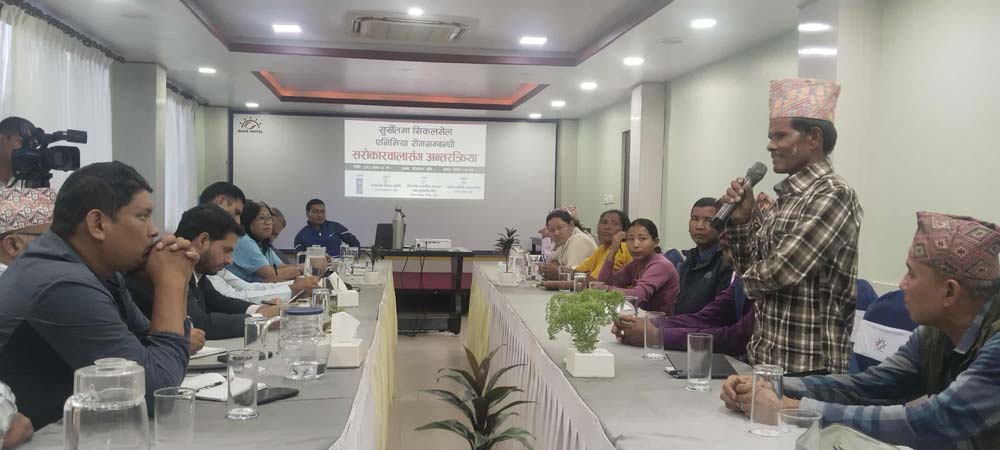
Surkhet, Oct. 19: Patients suffering from sickle cell anaemia in Karnali Province, a condition mostly affecting the Tharu community, are compelled to travel to Banke district in Lumbini Province for treatment and medicine due to the lack of proper facilities in Surkhet.
Despite the disease being prevalent among the Tharu community in Karnali, local hospitals lack both treatment facilities and essential medicines. As a result, patients are compelled to travel to Nepalgunj, often staying for at least two days, which significantly increases their expenses.
Although the monthly cost of the medicine is around Rs. 2,000, patients say they end up spending over Rs 5,000 when including transport, accommodation and food expenses.
Prem Bahadur Chaudhary of Birendranagar Municipality–10 urged authorities to ensure that treatment and medicines are available at the Provincial Hospital in Surkhet, saying he has been compelled to travel to Nepalgunj for medication since 2016. He said the situation adds both financial and mental burdens to patients.
Bimala Chaudhary, another local, requested the provincial government to introduce nutritional allowances for patients.
She emphasised that establishing local treatment services and providing nutrition support would greatly ease the difficulties faced by the Tharu community.
Similarly, Ramkrishna Tharu of Birendranagar Municipality–9, Kalimati, shared that seven members across three generations in his family suffer from sickle cell anaemia.
He said the cost of treatment had drained his family’s finances. “We spend around Rs. 5,000 just to get Rs. 2,000 worth of medicine every month,” he said, demanding that the government issue official identification cards for patients to facilitate access to support schemes.
Although the exact number of patients is unknown, the Tharu community in Surkhet is the only group significantly affected by the disease in the province.
Dr. Surendra Chaudhary, head of the Department of Anatomy at Nepal Sanskrit University and an expert on sickle cell anaemia, said the number of patients in Surkhet is increasing.
He shared findings from his recent surveys in 2023, 70 out of 737 people tested were diagnosed with the disease, and in 2024, 18 out of 201 tested positive.
He explained that since the disease is hereditary, treatment options remain limited.
Meanwhile, the Provincial Health Directorate in Surkhet has announced that it can provide up to Rs. 100,000 in financial support for the treatment of sickle cell anaemia under a special programme covering 12 critical illnesses, with a total budget of Rs.10 million.
Public Health Inspector Kiran Sharma said the programme aims to assist patients facing severe medical and financial challenges.
Dill Bahadur Chaudhary, chairperson of the Sickle Cell Community Hospital and Research Centre in Surkhet, called for the establishment of a dedicated ward for sickle cell patients at the Provincial Hospital if a separate hospital cannot be built.
“Although it may appear mild, this disease is causing immense suffering in the Tharu community,” he said, urging the authorities to act sensitively.
Chairperson of the Social Development Committee of Karnali Province, Purna Bahadur Khatri, assured that the government is aware of the growing crisis and would initiate efforts to make treatment and medicines available within the province itself.