- Monday, 4 May 2026

Jumlakot women become self-reliant through farming
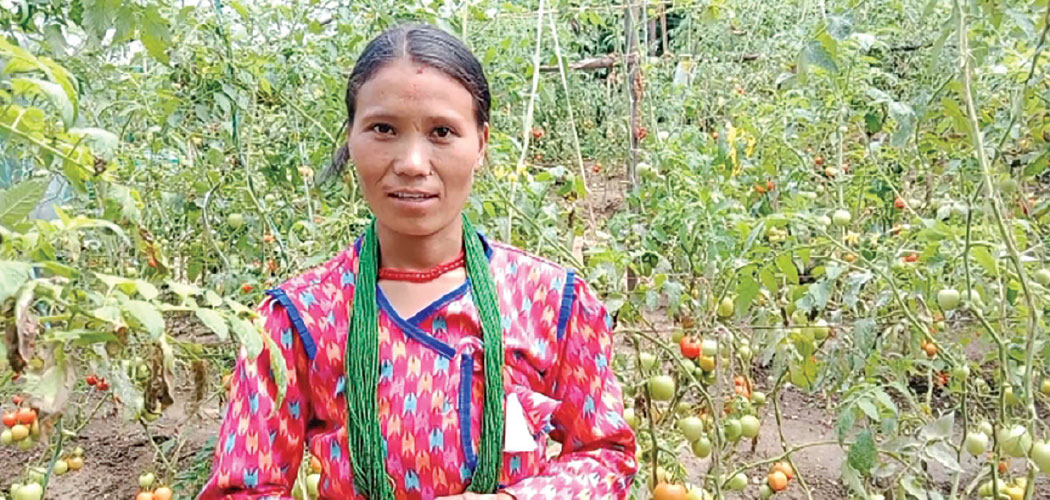

By Naurate Nepali,Jumla, Sept. 9: Women in Jumlakot village of Tila Rural Municipality-8, Jumla, have recently become busy with vegetable farming. Until five years ago, most women here showed little interest in growing vegetables. But after receiving various skill-based training and learning modern farming techniques, they have now embraced vegetable cultivation.
With financial support from World Vision International Nepal, the Karnali Integrated Rural Development and Research Centre (KIRDARC) Jumla has been running the Nutrition and Resilient Livelihood Project, which has helped improve women’s incomes in Jumlakot.
A climate-friendly agricultural school has been set up in the village, enabling women to become self-reliant through vegetable farming. The Sunduski Women Farmers’ Group, with 23 members, has earned hundreds of thousands of rupees by growing seasonal and off-season vegetables.
According to member Shova Rawat, the women are now self-employed through farming and are earning well, which has helped them overcome financial difficulties. Their tomatoes are supplied to the local Raraserimarket, Nagm and Khalanga, the district headquarters. In the village itself, tomatoes sell for Rs. 40 per kilo. Rawat added that the project has also provided hand tractors, which has made fieldwork easier.
Through climate-friendly techniques such as vermicompost, greenhouses, plastic tunnels, liquid fertiliser, compost pits, water ponds and biochar, the project has provided training that has encouraged more professional vegetable farming, said Kaushala Rawat of Tila-8.
Previously, most women had to rely on daily wage labour to meet household expenses. They mainly farmed for subsistence, but KIRDARC’s initiative encouraged them to turn farming into a profession.
In addition to vegetable farming, the women have also been earning over Rs. 100,000 annually by selling vermicompost. They run group savings schemes, and the collected funds are reinvested in agricultural work, said a local woman from Tila-8.
According to local Kamala Basnet, the project has also taught them about meaningful women’s participation, women’s rights, local government responsibilities, community planning and the role of judicial committees, which the women have begun practising in their daily lives. The project run by KIRDARC has not only empowered women but also raised the living standards of rural households.
Deputy Chair of Patarasi Rural Municipality, Janmaya Rokaya, said it has made local women more aware and confident. To reduce the compulsion of migrating abroad for work, many families in Jumlakot and Purugaun have now taken up commercial vegetables and apple farming, becoming more self-reliant.