- Monday, 4 May 2026

From Beijing, Warning To ‘Bullies’

Although Chinese President Xi Jinping and his Russian counterpart Vladimir Putin have met on more than 40 occasions at home and other international forums, their exchange in China last week attracted special attention from friends and foes alike. The ideal platforms for them were the Shanghai Cooperation Organisation’s summit conference in Tianjin, followed by the Beijing event celebrating the 80th anniversary of the War of Resistance Against Japanese Aggression. The extensive coverage by the international media on the duo and, later, also North Korean President Kim Jong Un, highlighted their military strength and growing economic clout consolidated by mutual trust and deepening cooperation.
The war in Ukraine, well into the fourth year, and American President Donald Trump’s political gymnastics and economic somersaults have added to Beijing-Moscow bonding. Both the superpower neighbours share a common stand on many vital issues against their Western opponents, who were until recently united but now show signs of fatigue from Trumpism. For good or less, geopolitics constitutes a significant factor in the conduct of relationships with foreign governments. Some governments have advantages over others, who need to maintain balancing acts that can be an onerous task. It all depends on the rapport struck and the attitude of those in advantageous positions.
Stark reality
Admit it or not, the good, the bad and the evil are on stark display, as the political landscape witnesses an increasing number of nations and regional groupings asserting their stands and airing voices of dissent when faced with agendas detrimental to their interests. International agenda, prepared by a few but designed for universal adherence, can expect to be discussed and dissented by more and louder voices that seek alternative choices or amicable adjustments. In a show of military might befitting a newly emerged superpower, President Xi used the parade at Tiananmen to flaunt its prowess—technological, military and diplomatic prowess. Domestically manufactured, China’s latest generation of awesome weapons on display was the focus of global attention.
In Beijing, three presidents—Xi, Putin and North Korea’s Kim Jong Un—formed the trio showcasing a bonding, and warned “bullies” against dictating terms covering multiple issues to other independent states. Nepal, for instance, participated in the Beijing celebrations in deference to its identity as the only independent country in the world’s most populous region. It fought side by side with the British with valour in various parts of the Asia-Pacific region during World War II. Beijing’s display of military strength at the breathtaking spectacle could not go unappreciated, inspiring awe and grudging respect that shook the shock out of the long-dominant West. Trump reconfirmed the assessment when he accused the China-Russia-North Korea combine of “conspiring against the US”.
But the fact stands: Beijing and Moscow’s records do not produce engagement in engineering regime change in foreign lands, but are emerging as a credible force to counter Western predominance in setting the global agenda. Critics were quick to point out that Washington considered sending troops to other countries and “dropping bombs” legitimate, but wailed over others exhibiting their weaponry in their own territories. Clearly, the international leaders in China were signalling to the world at large that they would not automatically accept what a few traditional powers defined as the ultimate reality.
Xi is drawing the best from the situation Trump’s aggressive policy has created, just as the US-led West takes advantage to the hilt of the docility and submissiveness of many nations, while others stand in helpless silence. Putin thanked the North Korean leader for helping Russia in Ukraine with soldiers who fought “bravely”. Pyongyang maintains the fifth largest troop, and has developed intercontinental ballistic missiles that are of great concern, especially to South Korea and Japan, both among the closest allies of the US.
Call it grapes are sour reaction or a weepy response, the message is clear: the event was massively impressive to the world, and Beijing’s rivals could not but try pouring cold water on the celebrations’ impact. Perhaps as an afterthought, Trump said: “China needs us much more than we need them.” NATO’s key constituents were well aware of China’s advanced military technology. They worried that other countries, too, would see firsthand what they had long estimated. Comparisons are inevitable. Non-NATO countries might have been served an incentive to review their policies for balance or even an about-turn against the traditionally dominant and hegemons.
Perceived threat
The US and its close allies see the emerging new world order as a direct threat to their dominance, monopolised in the post-World War II decades. The 1990s saw a unipolar world dominated by the US, and key American allies in the West basked in reflected pride and wielded extra influence on lesser powers. When in Dec ember 1999, Putin succeeded Boris Yeltsin as acting president, much liked by the West, it took a decade for them to realise how the former KGB chief would restore Russia’s international profile as a superpower to reckon with. Yeltsin appointed Putin prime minister four months before stepping down on the closing day of 1999 to enable him to take over as acting president until elections were held that spring.
The US is still distinctly ahead of China, Russia and others. It has a runaway lead over them in both economic and military spheres. But the strength is clearly cracking. China is closing the gap fast and furious. The Sino-Russian combine offers a formidable force that the US cannot ignore. As strategic partners, Beijing will supply strategic weapons of range and lethal power not available to others. For instance, the Chinese-supplied fighter jets that Pakistan deployed were priced at one-fourth of the price tag that their French counterparts carried. They proved highly effective for Islamabad in the brief exchanges after a terrorist attack in Kashmir in April.
The two latest back-to-back events in China were a Sino-Russian message of defiance against the US in particular. This will, however, not deter Washington from going for new strategies to checkmate the deepening Beijing-Moscow partnership.
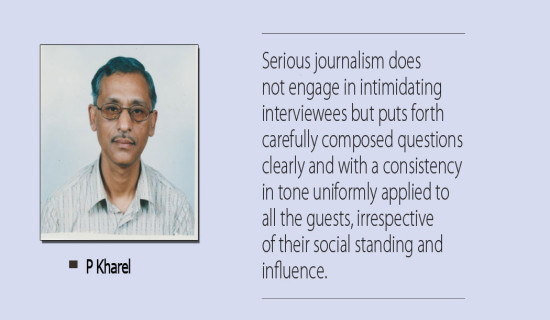
(Professor Kharel specialises in political communication.)