- Monday, 8 June 2026

Diplomacy To Solve Border Issues

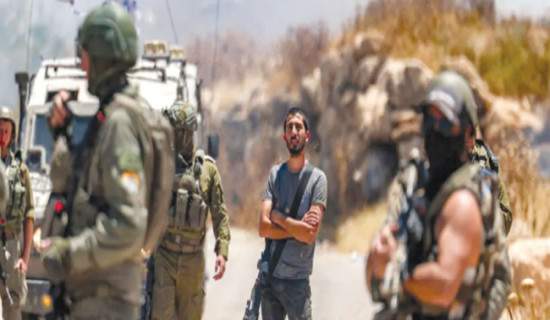
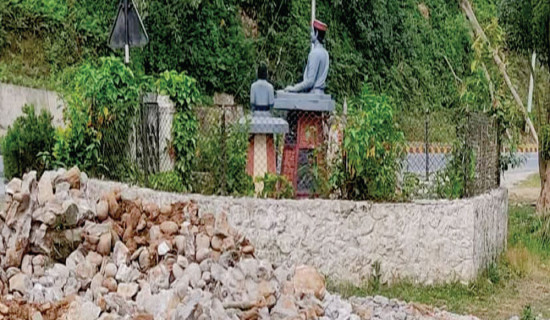
Lipulek Pass has been the hot issue in Nepal after China and India reached an agreement to reopen it for cross-border trade. Nepal has already lodged its protest through diplomatic notes to both China and India, stating that this territory belongs to Nepal. Nepal objects that the 1916 Sugauli Treaty has already established that all lands to the east of the Mahakali River fall into the sovereign nation of Nepal, which cannot be utilised by India and China without the consent of Nepal.
While visiting China to attend the Shanghai Cooperation Organisation (SCO) Summit, Prime Minister KP Sharma Oli raised this issue with Chinese President Xi Jinping. Nepali official press statement said that although it was not in the Chinese official press note, China has reiterated that it is always in support of Nepal´s position. China wants Nepal and India to settle their bilateral differences. We knew that it had always been the official position of China since the days of Chairman Mao Zedong.
The fault-line
It is an established fact that the Sugauli Treaty defined the Mahakali River as the border demarcation of Nepal and India. The finalisation of the exact position of the border is the job of the Nepal-India Boundary Working Group (BWG). Hence, the border issue needs to be resolved through the established institutional channel. The fault line, however, lies in the manner and language in which Nepal is conveying its message. India, as an emerging world power, aspiring to be a developed nation by 2047, may not like to hear harsh language like “Indian occupied”, “encroached”, or “disputed land” by a small neighbour like Nepal.
Similarly, if it is true that there was a verbal or written understanding between King Mahendra and India's Prime Minister Jawaharlal Nehru to keep the remaining security check post in 1962 (there were 18 security check posts of India along the Nepal-China border until then), then there is a security issue involved, which Nepal cannot undermine. Further, requesting Chinese help on this very sensitive issue might aggravate the negotiating position of Nepal.
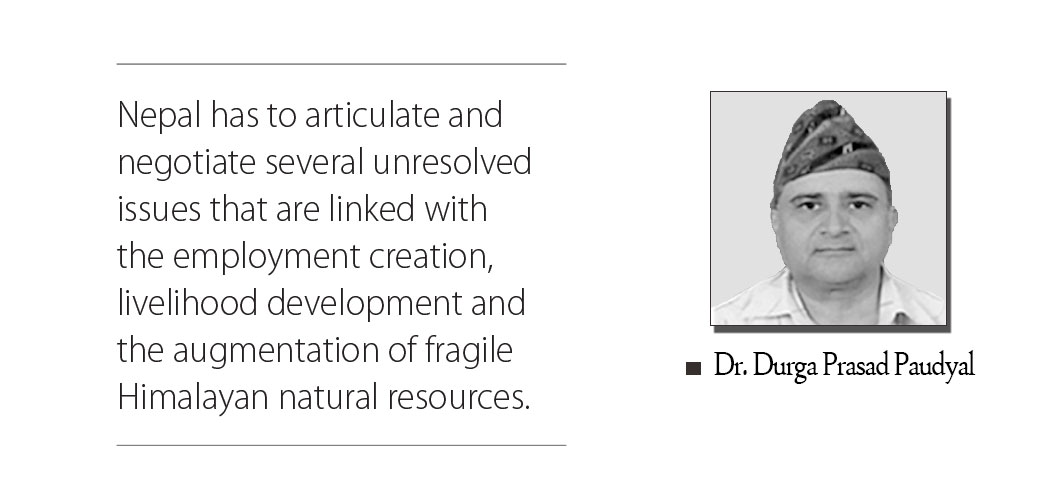
As Nepal is encircled three sides of its economically important border by India, its political and policy support makes a fundamental difference to the political stability and economic progress of Nepal. Thus, Nepal has to articulate and negotiate several unresolved issues that are linked with the employment creation, livelihood development and the augmentation of fragile Himalayan natural resources.
For example, it is an unwritten truth that the Indian market is somewhat restricted for Nepali goods at a competitive price, while the Indian sub-standard goods are flooded in the Nepali market. The border control is almost non-functional. As a result, the trade deficit with India is ballooning, the livelihoods of agriculture-dependent middle-class are in crisis and the youth population is migrating to India and overseas in search of employment. This vicious cycle has knock-on effects on the economy of Nepal.
Similarly, due to the political upheaval of the past three decades, the checks and balances of the state apparatus have broken down; corruption has been institutionalised; professionals have migrated; and the trust and credibility of the state have diminished. One would not be surprised that the very existence of a 300-year-old sovereign state could be in trouble if corrections were not made in the contemporary state of affairs.
In 2014, Indian Prime Minister Narendra Modi articulated a vision for the stability and prosperity of Nepal while addressing the Constituent Assembly in Kathmandu. He said that writing a constitution is a lifetime achievement, which should ensure a stable and prosperous future for the country. As the birthplace of Lord Buddha, Nepal is the right place for bringing warring forces into the mainstream political process.
Similarly, in order to distribute prosperity to all citizens of Nepal, he articulated a model called HIT: hydro power development, development of information technology, and building cross-border transmissions of power. Similarly, he advised herbal farming in the Himalayan region while promoting organic agriculture all over Nepal, like in Sikkim. He said that India will open its market for all these products. He pledged Rs. 10,000 cores of subsidised credit for initiating these projects.
Several cracks
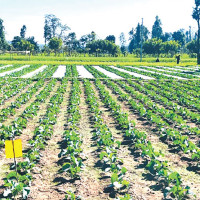
Within a period of 10 years, several cracks are already surfacing in establishing a stable political framework. For example, the lack of checks and balances among the vital institutions has given rise to impunity and corruption. Industries established earlier are closed, while no new industries come into existence. More and more youths are migrating overseas for employment. A big chunk of fertile land is left barren. The effect of climate change has exacerbated disastrous floods during summer and drought during winter.
Similarly, Nepal´s ambition to enter into America-supported MCC and China-supported BRI projects seems to have suffered setbacks in the diplomatic front. Nepal should develop a comprehensive multi-sectoral package for negotiation with India. A serious diplomatic effort needs to be made for a package deal. The border issue, including Lipulek Pass, should also come within the purview of the package deal.
(The author is a former Director General of the Centre on Integrated Rural Development for Asia and the Pacific, Bangladesh. durga.paudyal2@gmail.com)


-original-thumb.jpg)