- Friday, 24 April 2026

Physical Activity Boosts Personal Health
Physical inactivity is a major risk factor for non-communicable diseases (NCDs) such as cardiovascular disease, diabetes, and cancer. According to the World Health Organisation (WHO, 2022), physical inactivity is the fourth leading risk factor for global mortality, accounting for an estimated 3.2 million deaths annually. Despite the well-established health benefits of physical activity, a large proportion of the global population remains physically inactive. In this background, let us discuss the risks of physical inactivity on NCDs and the importance of promoting physical activity as a preventive measure.
According to the WHO, one in four adults and around 81 per cent of adolescents globally do not meet the recommended amount of physical activity. A recent study in Nepal revealed that about 8 per cent of males and 31 per cent of females had low physical activity. The same study depicted that about 31 per cent of adolescents and 14 per cent of young adults did not meet the WHO recommendations for physical activity.
Epidemics
Global mortality data revealed that cardiovascular disease (CVD) is the leading cause of death globally, accounting for 17.9 million deaths in 2019. Physical inactivity is a major risk factor for CVD, increasing the risk of developing hypertension, dyslipidemia, and obesity. Regular physical activity can reduce the risk of CVD by improving cardiovascular health, reducing blood pressure, and improving lipid profiles. A meta-analysis of randomised controlled trials found that physical activity interventions resulted in a significant reduction in the risk of CVD events and a reduction in the risk of CVD mortality. In addition, physical activity can improve the management of CVD risk factors such as diabetes and obesity.
People who perform a moderate level of physical activity have reduced chances of many cancers such as breast, bladder, stomach, lung, colon, and kidney, etc. It also helps in improving physical fitness, well-being, and quality of life among cancer survivors.
Increased sedentary behaviour and spending more time sitting in chairs with computers are destined to be associated with increased risks for weight gain, heart disease, type 2 diabetes, and premature death, to name a few. The effects of physical inactivity start shortly within as early as 3 to 4 weeks. Obesity and physical activity are interlinked. The risk of obesity is four times higher among physically inactive individuals.
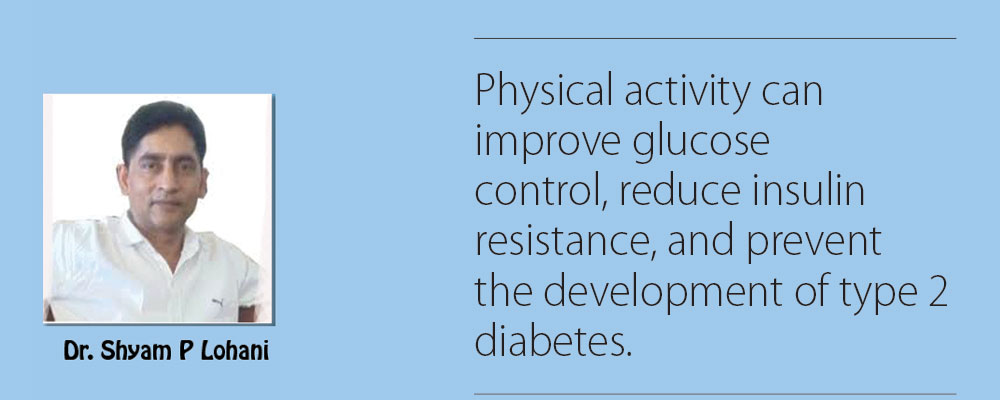
Physical inactivity is associated with insulin resistance which is accountable for the development of type 2 diabetes. Therefore, a moderate level of physical activity greatly reduces the chances of type 2 diabetes and it also helps maintain blood sugar levels in patients with type 2 diabetes. Diabetes is a major public health concern, affecting an estimated 463 million people globally. Physical inactivity is a significant risk factor for type 2 diabetes, increasing the risk by up to 50 per cent. Physical activity can improve glucose control, reduce insulin resistance, and prevent the development of type 2 diabetes.
Cancer is the second leading cause of death globally, accounting for 9.6 million deaths in 2018. Physical inactivity is a significant risk factor for several types of cancer, including breast, colon, and lung cancer. Physical activity can reduce the risk of cancer by improving immune function, reducing inflammation, and regulating hormone levels.
Physical inactivity is also a significant risk factor for mental health disorders such as depression and anxiety. Regular physical activity has been associated with improvement of mood, reduction of stress, and better cognitive function. It has been found that physical activity interventions resulted in a significant reduction in symptoms of depression and anxiety. In addition, physical activity can improve the management of mental health disorders by reducing the need for medication and improving overall quality of life.
Despite the well-established health benefits of physical activity, a large proportion of the global population remains physically inactive. According to the WHO, 1 in 4 adults worldwide do not meet the recommended levels of physical activity. In addition, physical inactivity is more prevalent in low- and middle-income countries, where the burden of NCDs is highest. The COVID-19 pandemic has further exacerbated the problem of physical inactivity, with lockdowns and social distancing measures limiting opportunities for physical activity.
Promoting physical activity as a preventive measure for NCDs is crucial for reducing the global burden of disease. The WHO recommends that adults aged 18-64 should engage in at least 150 minutes of moderate-intensity aerobic physical activity per week, or at least 75 minutes of vigorous-intensity aerobic physical activity per week. Moreover, muscle-strengthening activities have been recommended at least twice per week. Children and adolescents should engage in at least 60 minutes of moderate-to-vigorous physical activity per day.
Approaches
To promote physical activity, a multi-sectoral approach is needed, involving governments, healthcare providers, schools, workplaces, and the community. Governments can implement policies to create supportive environments for physical activity, such as building safe and accessible infrastructure for walking and cycling and promoting physical activity in schools and workplaces. Healthcare providers can provide physical activity counselling and referrals to exercise programmes. Schools can provide physical education classes and opportunities for physical activity during recess and after-school programmes. Workplaces can provide opportunities for physical activity during breaks and lunchtime. The community can organise physical activity events and promote active transportation.
Thus, physical inactivity is a major risk factor for NCDs, causing significant morbidity and mortality worldwide. Promoting physical activity as a preventive measure is crucial for reducing the global burden of disease. A multi-sectoral approach is needed to create supportive environments for physical activity and promote physical activity at the individual, community, and population levels. By promoting physical activity, we can improve the health and well-being of individuals and communities worldwide.
(Dr. Lohani is the executive director at the Health Concern, Nepal. lohanis@gmail.com)










-original-thumb.jpg)