- Thursday, 28 May 2026

Government's policy is to reduce 'digital divide': PM Prachanda
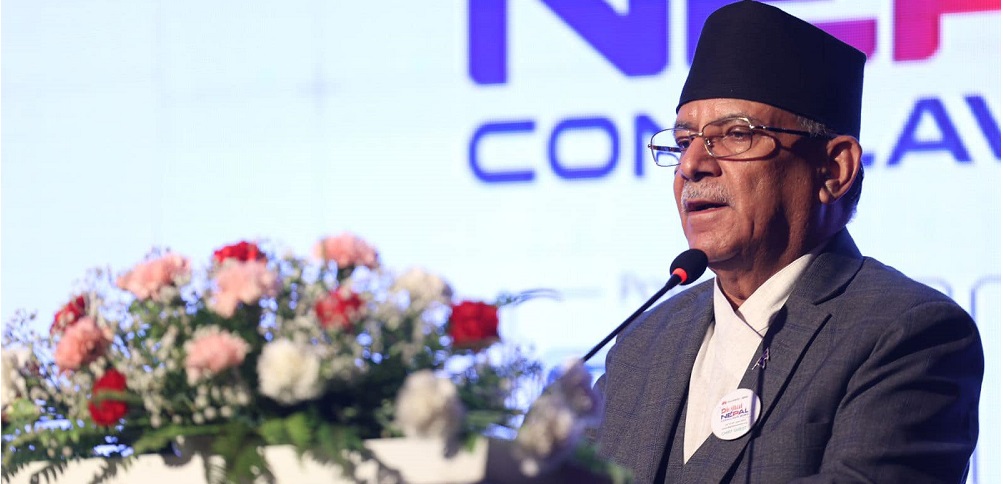
Kathmandu, June 23: Prime Minister Pushpa Kamal Dahal 'Prachanda' has said the government has been making preparation to bring laws related to information technology into implementation after passing them from the parliament.
Addressing the 'Huawei MNC Digital Nepal Conclave 2023' organised by ICT Foundation Nepal and Huawei here today, Prime Minister Prachanda shared that the government's attention has been focused to pass the acts and laws related to information technology, including the cyber security policy.
"The government is effortful
to conclude the process of passing the required laws and policies including the
bill related to information and communication technology, cyber security policy
and startup policy, e-governance and e-commerce acts as soon as possible and bring
them into implementation," he mentioned.
PM Prachanda laid emphasis on the need
of making public service delivery effective, easy and smooth by taking
information and communication technology to the access of the people.
He further said he has directed the
concerned bodies to pay special attention to the implementation of
policies, rules and laws related to this as soon as possible.
There would be the government's
initiative in making the roadmap of Digital Nepal worthy making it better and
timely by revising the Digital Nepal Framework, he shared.
Prime Minister Prachanda added that
information and communication technology have high importance in the goals set
by the government to achieve prosperity through social justice and good
governance by building a self-reliant economy.
Stating that the government has
stressed on development of infrastructures required for Digital Nepal, he
mentioned necessary initiatives have been taken to uplift the lifestyle of the
people of remote areas.
"Government's aim is to
reduce the digital divide and to stress on the digital economy", he viewed,
adding the country has not been able to make development as per the expectation
due to Nepal's geographical condition, lack of resources and capabilities and skilled
human resources and some policy-level complexities.
PM Prachanda mentioned, "Though
our expectation and thinking are as fast as 'artificial intelligence',
resources, structures and working style are not according to it. It is
necessary to make the country developed towards digital capability by paying
special attention towards it."
Producing capable human resources in the country in the ICT sector in the recent period was a strong point, he shared
that this step has opened the door of possibility to end dependency on
software.
The government in the budget has made
arrangements of using technology invented at home though it is 20 per cent
expensive, the Prime Minister said, adding he was aware of the brain drain
of human resources of the ICT sector in the lack of jobs and opportunities in the
country.
One per cent budget of the total
budget for the coming fiscal year has been allocated for the invention startup
and innovation sector, he added.
Stating that technology had been
playing a major role in different periods of human development, PM Dahal
asserted that the technologies that were developed at different stages of
social changes had been playing a decisive role in transforming human society
into an advanced one. "It is necessary to leverage information and
communication technology (ICT) to deliver on development and to bring about
changes in the country."
According to him, the unprecedented
development in the field of ICT had influenced all sides of society at
present, the PM viewed that information technology had determined our
behaviour, social ties, production system, knowledge and political intelligence
and had and controlled them in some sense.
Therefore, the PM said that the
right usage of ICT was important to attain the goals of development and
prosperity, good governance and social justice and social transformation. Underscoring innovation,
development and right usage of the ICT, the Head of the Government said,
"Acknowledging this fact deeply, the government has emphasized the implementation of the concept of Digital Nepal.
To make the public service delivery
prompt and swift and to provide hassle-free services to the public, he also
shared that he took the lead to digitize essential services like the printing of
passports, issuance of national identity cards and other documents as he assumed
the leadership of the government.
He informed that Social Networking
Procedure was revised for the public offices to ensure easy access of the
public to public services and information.
"The government," he
added, "had taken necessary steps for permanent solutions to put an end to
concerns related to cyber security and other risks that lurk in the government
data centres and serve."
He observed that until public
service delivery was delivered digitally switching from 'manually' as in the
present, good governance would barely be realized
"The incumbent government's
efforts are centred on the further developing relationship between government and
public and ensure transparency in public service delivery as well as to ensure
everyone's access to public services."
Stating that digital technology was
important for achieving transparency, accountability and good governance, he
spoke of the need to systematically optimize information technology to make the government's role more effective in accordance with the public's expectations in
the sector such as education, health, employment and social awareness.
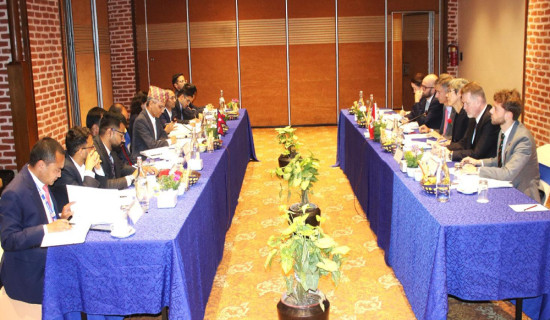
Participants in the two-day
conference include ICT experts from South Korea, Japan, Singapore, India and
Bangladesh among others. Prior to this, such event 'Digital Dialogue" had
earlier been organized in all other six provinces, and it was shared. (RSS)