- Tuesday, 26 May 2026

World Cup 2022 A Battle Ground For Top Brands
Namrata Khatri
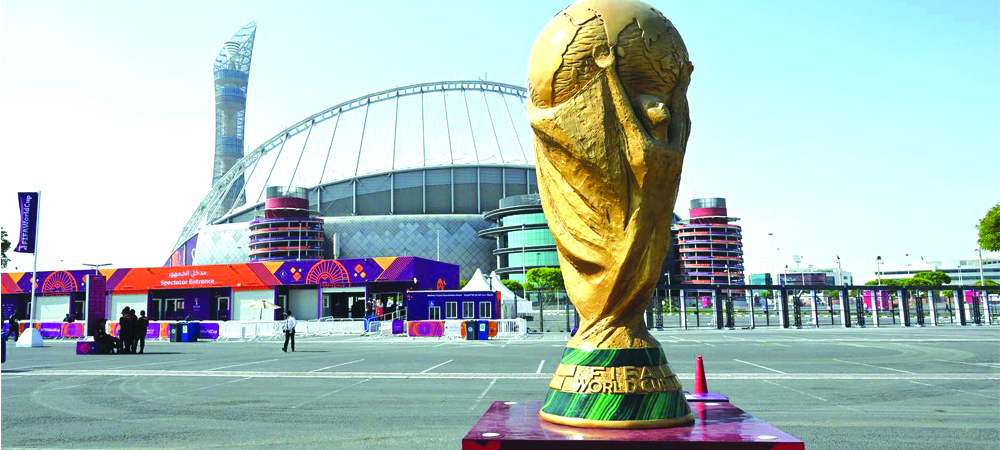
With the narration of American actor Morgan Freeman, the FIFA World Cup 2022 opening ceremony kicked off in Qatar on November 20. Since Qatar is the first Middle Eastern country to host this spectacular football festival, it has been embroiled in countless controversies, ranging from allegations of bribery to winning the World Cup bid to the exploitation of migrant workers.
The Qatar World Cup has been organised in the winter this year due to Qatar's scorching summer heat. No doubt, the FIFA World Cup is the most-watched sporting event as millions of football fans across the globe will follow the month long fiesta. Along with this, massive opportunities for brands are on offer, which indicates the marketability of the World Cup is very high.
The international reach of football is enormous, allowing brands to access multiple market segments. Over the course of four weeks, brands can experience tremendous touch-points with their audience. In 2018, the World Cup garnered over 3.5 billion viewers, almost half the global population.
So far, in 2022, the excitement for the tournament is more significant than in previous years. According to Google, YouTube searches for this year's tournament surpassed those of 2018 by 80 percent.
Besides the sturdy reach brought about by the World Cup, the tournament has a proven track record of escalating consumer spending. The football World Cup has always been a centre of attraction for big brands like Coca-Cola, Adidas, Nike, and Puma, among many others.
Instead of just claiming these brands are top-notch, there's an unbelievable opportunity to showcase on the field that they are, in fact, the best in the world through jerseys and other outfits worn by iconic players such as Lionel Messi or the football boots used by Neymar.
FIFA and Big Brands
If we look around the virtual billboards during this Qatar edition of the World Cup matches, big partners like Budweiser, Coca-Cola, Visa, Qatar Airways, Wanda Group, Hyundai, Kia, and Qatar Energy are associated with FIFA. Hosting an event on such a large scale, with the support of commercial affiliates, offering vital services and product support for the overall event's operation, is crucial. Sports apparel and footwear brands like Adidas, Puma, and Nike are the official sponsors, boasting more than one team deal.
Nike has associations with 13 countries, namely France, Croatia, Qatar, the Netherlands, South Korea, Canada, Portugal, Australia, England, Brazil, the USA, Poland, and Saudi Arabia. As a result, Nike logos are emblazoned on the jerseys of these 13 national teams, exhibiting maximum visibility across the football matches.

As per the analytics of Global Data, Nike's annual tournament budget spend for the current World Cup is worth USD 147.75 million. Likewise, another sports brand, Adidas, sponsors seven teams: Germany, Belgium, Spain, Argentina, Japan, Mexico, and Wales. At the same time, Puma's logo is seen on the national jerseys of Serbia, Switzerland, Uruguay, Ghana, Morocco, and Senegal.
However, the most significant non-sporting brands like Budweiser and Mastercard are also reaping the marketing rewards of the World Cup. A few days before the match, beer was officially banned from the World Cup. Despite denying it, Budweiser, as FIFA's primary sponsor, has still come up with a creative solution to be part of the football celebration. Budweiser's official tweet is "New Day, New Tweet."
The winning country gets the buds. Who will get them?" has indicated that the winner of this World Cup will not only get the trophy, but fans will also get to celebrate with a shipment of the unsold beer. After all, marketing can be carried out in any form.
Ambush Marketing
Ambush marketing is primarily about the strategy that rival companies adopt to associate their products and services with more prominent events that already have official sponsors. In the 2010 World Cup, UK headlines were covered up with ambush marketing. Further, the 2014 World Cup in Brazil witnessed a "social" ambush with numerous companies. This marketing practice is more common in the sports industry.
Continuing from the 2010 edition, the FIFA marketing team's main concern is the risk of ambush marketing. According to FIFA guidelines, third parties are not permitted to use official trademarks to associate themselves with the games unless they have paid FIFA for the right to do so. At every world cup, ambush marketing takes the form of using FIFA's intellectual property without legal authorization.
Advertising revenues are the most important source of income for FIFA organisers. From hosting the tournament to welcoming the world with what Qatar is doing, they are partly premised on the ability to properly market broadcast rights, corporate sponsorship packages, and merchandising opportunities. Ambush marketing can compromise the value proposition of more prominent brands.
The practice of ambush marketing jeopardises the investment of the big brands directly associated with FIFA. Unchecked, this enfeebles the product by diluting its value and ultimately lessening an event's ability to attract future sponsors.
Hence, commercial sponsors are entitled to legal protection of their vital investment. While FIFA, in collaboration with Qatar's Supreme Committee, is working for proper delivery and legacy to ensure appropriate statutory provisions are promulgated, significant sponsors are taking proactive steps to protect their substantial investment from the risks of ambush marketing.
"Football Is Emotion"
The ongoing matches have proven that "football is emotion." Everyone may not love football, but the entire world will be witnessing the significant celebration of watching their favourite country lift the prestigious trophy.
Despite the numerous criticisms levelled at Qatar recently, the tournament's marketing platform is extremely effective. Without a doubt, World Cup marketing benefits the brand.
Whether sports companies are attempting to differentiate themselves or storytelling battles accompany non-sporting brands, every commercial affiliate is attempting to exploit the marketing benefit.
Focusing on plenty of positive effects With the Qatar edition of the World Cup in 2022, it's safe to say that this football event is worth keeping an eye on. As Alan Shearer said, "Football's not just about scoring goals—it's about winning," and so is marketing. More than good marketing plans are needed; how the programmes are executed matters most to attaining the goals.
(The author is an assistant manager at operation department at Nepal Bank Limited)