- Tuesday, 26 May 2026

As COP27 makes halfway, decisive negotiation is left to the political level
File
Narayan Prasad Ghimire
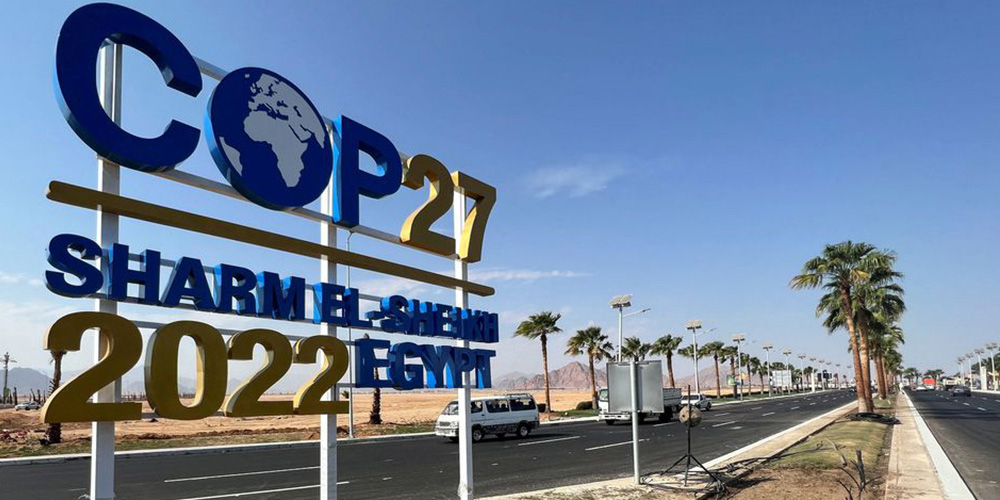
Kathmandu, Nov 14 : As the UN climate change conference, COP27, has come a halfway to the two-week-long event in Sharma El Sheikh city of Egypt, the world leaders have repeated the warning of 'climate hell', while decisive negotiations are now transferred to the political table.
Similarly, as in
the previous years, the poor and least developed countries (LDCs) are univocal
to remind the historic responsibility of the industrially developed and rich
countries behind growing greenhouse gas emission and the brunt being borne by
the small and under-resourced ones.
Since the
beginning of the conference, various world leaders including UN Secretary
General Antonio Guterres and world climate champion Al Gore addressed the
event. Both Al Gore and the US President Joe Biden seconded the warning made by
the Secretary General that the world was making headway to 'climate hell'. It
evidently shows a global urgency on climate change.
Similarly, other
experts, observers and researchers have so far shared both hope and despair over
the event delivery. Some positive campaigns and best practices shared in the
conference and side events have built hope while the prospect of tough
negotiation ahead to deal with climate crisis is likely to shake trust.
Expert on
climate change adaptation and development, Dr Lisa Schipper, mentions in tweet,
"Half the events I’ve attended at #COP27 are bubbling with positive
examples of local action to address climate change. The other half warn against
the absolutely massive scale and severity of the challenge. What’s being done
is NOT ENOUGH without government commitments."
Similarly,
reviewing the first week of the COP27, a PhD candidate of geography at
Cambridge University, Friederike Hartz, shared her observation with Rastriya
Samachar Samiti (RSS) this way: "COP27 started out with a lot of hope,
especially in the context of loss and damage. Getting a sub-agenda item on loss
and damage finance was a historic success. Week two will now show what this was
actually worth. A lot of work remains to do for negotiators."
Nepal has shared
best practices of locally-led climate change adaptation. The officials from the
Ministry of Forests and Environment claimed that Nepal is the champion on
climate change adaptation. Nepal is vibrantly raising the issues of loss and
damage and impact on mountain ecosystem this time.
The second week
is awaited to see how effectively and convincingly Nepal and LDCs raise their
concern.
In this regard,
climate change specialist Bimal Regmi shared from Egypt, "The Nepali
delegation has been very active in lobbying for additional financial resources
for scaling out locally led adaptation and direct access to international
finance.
We aren’t arguing that current financial instrument within UN Framework Convention on Climate Change (UNFCCC) has failed to provide fast track financing to adequately support impacted and vulnerable communities." He however suggested that it is time to reform these institutions.
Moreover,
climate change negotiator for LDC, Manjeet Dhakal, shared from Egypt that the
negotiations have now moved to the second week, where the ministers would take
over and try to resolve divergence at political level.
When asked
whether there was any significant achievement in the first week in the global
climate event, Dhakal observed, "The progress on the first week was slow
and many political differences are still to be resolved."
According to
him, the major topics are reducing emissions to limit global warming to 1.5°C,
doubling support for adaptation, and establishment of dedicated funding for
loss and damage. He commented that the negotiating texts are lengthy with
multiple options that would require political breakthrough.
Meanwhile,
climate expert Ngamindra Dahal said, “Major emitters intend to shift debate
beyond 1.5 degree centigrade target which will kill hope of the most vulnerable
countries from the global south.”
A week to go,
let's see how the COP27, regarded as the implementation summit, will be able to
act on fostering the common global agenda of ensuring safe future to entire
humanity and planet. (RSS)









-original-thumb.jpg)