- Tuesday, 26 May 2026

Government-private sector cooperation stressed for biogas promotion
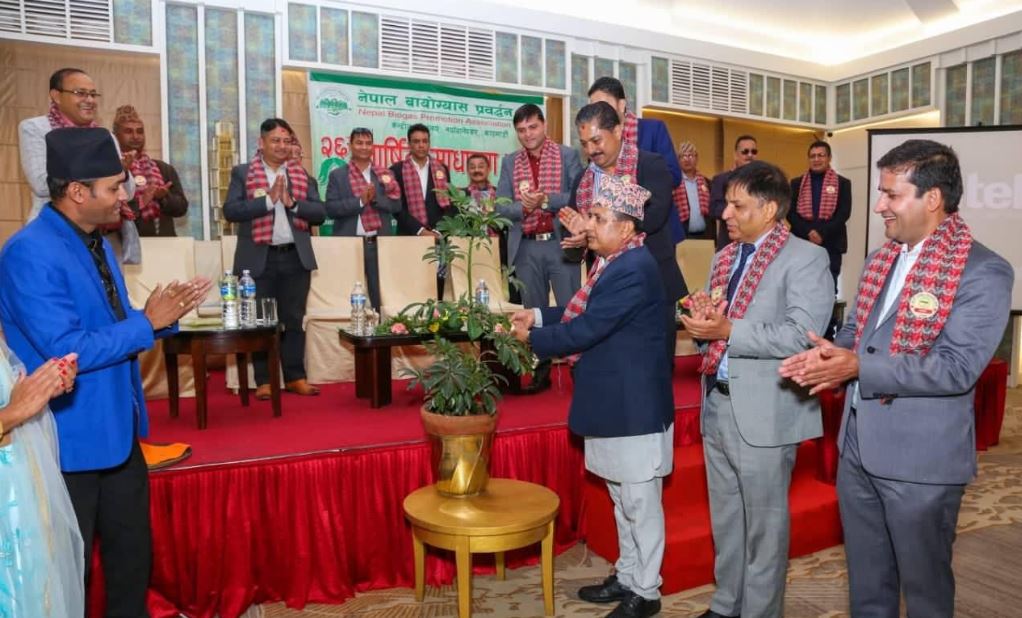

Kathmandu, Oct 8 : The promotion of biogas in the country is not encouraging due to lack of friendly policies and working procedures.
Though the
private sector has its leading role in the promotion of biogas technology in
the country, it faces hurdles to deliver expected results in absence of
revisions in the grant polices compatible with the time and absence private
sector –friendly policies and working procedures, stakeholders claimed.
Taking part in a
programme organised on the occasion of the 26th AGM of Nepal Biogas Promotion
Association (NBPA) here recently, the participants echoed the need of
government priority to the private sector as to make biogas accessible to
indigent, marginalized and backward communities.
Around 450
thousands biogas plants for the domestic use has been installed so far in the
country and around 15 thousand people have been directly employed here while
its creates indirect and part-time jobs for 20 thousands.
The participants
at the programme said the use of biogas for domestic purposes had not been only
a reliable and safe source of cooking fuel, but it had been a good source of
income through carbon trade.
Secretary at the
Ministry of Energy, Water Resources and Irrigation, Dinesh Ghimire, said biogas
carried a long history as the source of renewable energy in Nepal and it had
contributed to the environment protection and reduction of the dependency on
fuel imports.
According to
him, the government is ready to collaborating with the private sector for
further promotion of biogas technology.
Alternative
Energy Promotion Centre’s executive director Dr Madhusudan Adhikari said the
government ensured grants and soft loan for poor to have access to biogas
technology. The government’s focus is on the use of clean energy for reducing
the greenhouse gas effect and global warming. Nepal has already started carbon
trade through the biogas technology and its market is getting expanded,
according to him.
Association
president Prakash Chandra Subedi said although the private companies working in
the biogas sector have the capacity to install more than 50 thousand biogas
plants annually, this number of plants have not been installed as the
government has not made provisions for subsidies and paid attention to
producing additional biogas technicians in place of those who have gone
abroad.
He expressed his
displeasure over the government making provisions in this fiscal year's budget
for subsidy to only 10 thousand biogas plants, urging it to provide additional
grants and collateral-free loans for increasing the access of the impoverished
section of the population to this technology. Subedi also called for adopting
appropriate technology.
Renewable Energy
Confederation of Nepal's president Gunaraj Dhakal highlighted the significance
of the biogas technology, saying it helps reduce the dependence on imported
fuel by producing clean energy and contributes to producing organic fertiliser.
He stressed that the State should focus on its expansion and development.
Federation of
Nepalese Chambers of Commerce and Industry (FNCCI) Vice-president, Anjan
Shrestha said the State should provide special incentives and subsidies to
clean energy technologies as biogas in the context of the growing significance
of green economy throughout the world to combat climate change impact.
There is
possibility of retaining millions from going abroad if the dependency on LP Gas
could be reduced by promoting the biogas technology which is considered as an
easy solution to the global energy crisis.
It was informed
on the occasion that the use of biogas has contributed to reducing the
dependency on chemical fertiliser to some extent as nearly two tonnes of
organic fertiliser can be produced per every single biogas plant annually.
There are
currently over 150 companies and workshops working in the production of biogas
technology and its installation in the country at present. The Biogas and
Agricultural Implements Development Pvt Ltd was established in Fiscal Year
2033/34 BS. (RSS)





-original-thumb.jpg)