- Thursday, 28 May 2026

Dr. Mathe laments inertia blocking education reform in Nepal
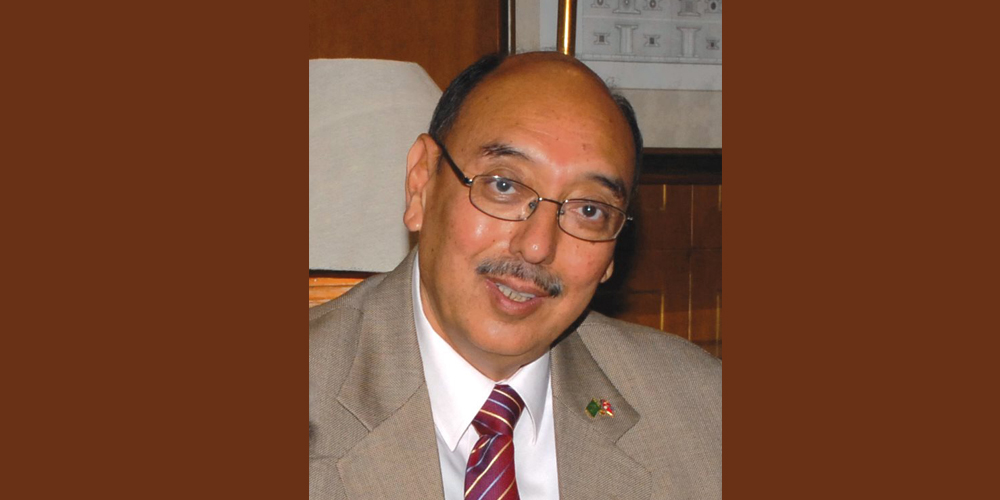

By Aashish Mishra
Kathmandu, Aug 26 : Professor Dr. Sriram Bhagut Mathe, who has worked for more than four decades in the field of education, is frustrated about the current state of higher education in the country.
The educationist, who has served as the dean of Tribhuvan University’s Institute of Engineering (IOE), been the founding Principal of St. Xavier's College, worked as the team leader of multiple Asian Development Bank and World Bank projects in Cambodia, and involved in a number of programs in several Southeast Asian and East African countries, worries that Nepal is lagging behind.
“We desperately need reform,” Mathe, who is currently the executive chairman of the Nepal Education Foundation-Consortium of Colleges Nepal (NEF-CCN), said in a chat with Rising Nepal on Tuesday. “Our institutions of higher education cannot continue like this.”
He feels that Nepal’s universities have been crippled by bureaucracy and politics and sees the establishment of private alternatives as the only way out.
“In a world that changes every day, our curriculums stay the same for 10-15 years. Academic calendars are almost non-existent and it is tragic how politics has seeped into every level of academia,” the educationist said, implying, in no uncertain terms, that he thinks the present institutions and the structures they operate in are beyond repair.
“We need private universities to give our students fair options.”
Mathe himself has been working for the better part of a decade to establish one – Sagarmatha University. But it has not been easy. The government apparatus holds education should be a prerogative of the state and is antagonistic to efforts it perceives are against that.
Public opinion is also not on Mathe’s side as many rightfully worry that the entry of private enterprises will commercialize university-level education, just as it has the school level. But this need not be the case, the holder of a Ph.D. in Building Science from the University of Strathclyde, UK, stressed.
“The state can set standards, regulate fees and check to see if the prices private academies charge are commensurate with the facilities they offer.”
Also, it is not that the present public institutions have prevented commercialization, he said. “They [public universities] thrive on the money they receive from affiliations,” he said. “And the affiliated colleges, many of which are already privately-owned and for-profit, charge exorbitant fees to students with little to no oversight.”
Strictly-regulated private universities would help improve quality by creating an environment of competition and help retain thousands of young people who currently leave the country to pursue education abroad, the recipient of two medals for friendship and cooperation from the Government of Cambodia for their contribution to the development of the country’s technical and vocational education claimed.
But Mathe is under no illusions. He knows none of what he seeks is possible without a change in the current laws and at the age of 73, he knows he does not have much fight left in him. “I shall continue advocating reform and working to establish Sagarmatha University as long as I can but that may not be more than seven or eight years.”
For now, though, he is off to Cambodia in a few days, to do the work he desires to do for the educational sector at home.