- Thursday, 28 May 2026

Drive to donate Buddha who preached donation

Kathmandu, Aug. 5: King Sarvananda of Deepawati (possibly present-day Dupat in Lalitpur) was a meritorious ruler who greatly believed in the virtues of donation. No man, woman or child would ever return empty-handed from his palace. He considered the accumulation of physical wealth futile and sought to give as much as he could to the needy.
One day, the king wanted to make an offering to Dipankar Buddha, who was roaming his kingdom at the time. Venerated as the fourth among 28 Buddhas, Sarvananda went with his greatest Brahmins and monks to meet Lord Dipankar and humbly invited him to his palace. The enlightened one agreed and an auspicious date was fixed for the king to offer alms to the great holiness known for giving Niyatha Vivaran (prediction of future Buddhahood) to Sumedha (future Gautam Buddha).
The set day arrived but Dipankar Buddha did not. The king had made elaborate preparations to host the Buddha but he never entered the palace. Instead, he chose to go to a nearby hut and receive paddy straw from an old woman.
This puzzled Sarvananda who asked Dipankar why he chose to receive the woman’s donation and not his. The Buddha replied with a smile on his face, “Everything you have and have to offer comes from the people. What you seek to give was given to you by your subjects in the form of taxes. They do not belong to you. But the straw the old woman gave was her property. She earned it through hard work and yet chose to part with it. Her donation is more valuable than yours.”
This pierced Sarvananda’s heart. Everything he had ever prided himself on giving did not belong to him. He had been donating what was not his.
This haunted him day and night and ultimately prompted him to leave his palace, renounce his status and work as a blacksmith. To mould metal is hard, especially for someone like a king who has never worked a day in his life, but he persisted – through health and sickness and pain and pleasure – until he earned a few bucks he could finally call his own. He took this money, went to Dipankar Buddha, and offered it all to him. Dipankar, too, accepted because this time, the king was giving what he had truly made through his labour.
Dipankar Buddha always preached the importance of alms-giving and is closely associated with donation. He is the one worshipped during the Panchadaan festival of Kathmandu Valley. And this makes what Purna Siddhi Shakya has been doing for the last nine years relevant and significant.
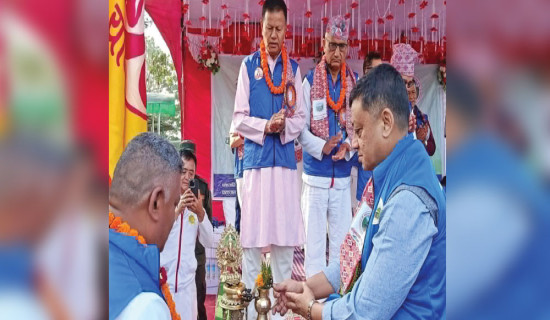
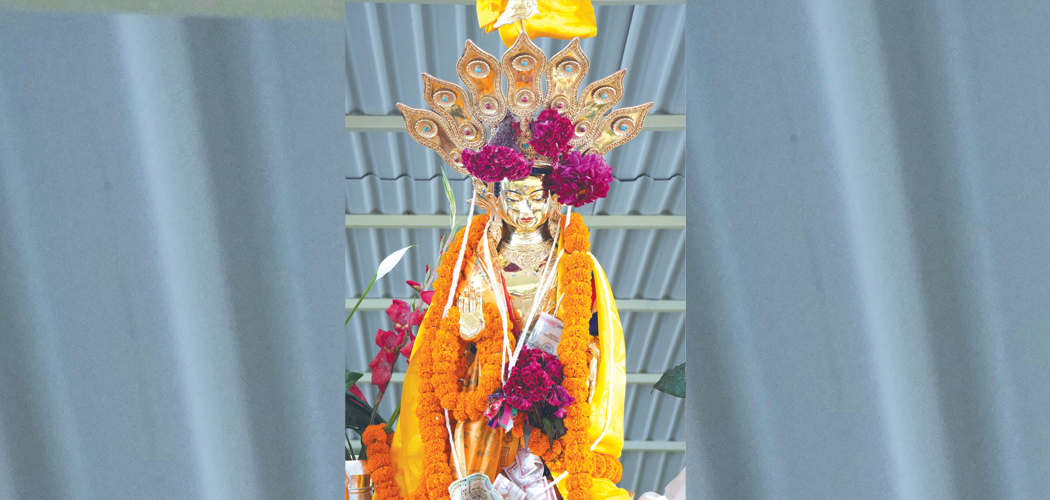
Purna is a handicraft trader from Boudha, Kathmandu, who has been donating three-foot standing Dipankar Buddha statues to different monasteries of the country almost every year since 2013. This year, he donated to Gunakar Mahavihar, Chhusyabahal, Kathmandu.
“This is the eighth statue he has donated,” informed Sugindra Shakya, Purna’s friend. Sugindra, who is from Lalitpur, has been coordinating the donations for Purna since the very beginning and is the one who determines which monastery gets the statue based on a set of criteria.
“The monastery must have been organising the Panchadaan festival collectively, it must have a communal prayer space to place the Dipankar Buddha idol and it must have adequate provisions for daily worship,” he explained.
The first statue they ever provided was to the monastery in Guitole (Lalitpur). The second one was to Nabahal (Lalitpur), third to Natole (Lalitpur), fourth to Pulchowk (Lalitpur), fifth to Badegaun (Lalitpur), sixth to Ikhachhen (Lalitpur) and seventh to Butwal. In the coming years, they plan to give Buddha sculptures to Vihars in Hetauda and Palpa.
They have already “been booked” till 2029, Sugindra informed. “So, in addition to meeting the three requirements, any new monastery wishing to receive the idol will also have to wait till at least 2030.”
Before finalising any donation, Sugindra travels to the monasteries to see their condition for himself and verify if they meet their standards. He manages these visits at his own cost. Then, once Sugindra is satisfied, Purna commissions the making of the statues and holds the donation programme with money from his own pocket.
And they do this out of a sense of duty. “Donation is a virtue that, unfortunately, we seem to have forgotten,” Sugindra said. “Panchadaan, for instance, is something our community has practised since the time of Dipankar Buddha. But it now risks disappearing due to a lack of interest among youths. So, this is our way of contributing to the preservation of our culture and civilisation.”
The donations also stemmed from the great desire Purna felt nine years ago to do something for society. He wished to donate idols to monasteries that did not have them, due to theft or other reasons, and contacted his friend Sugindra for it. After much pondering, Sugindra devised the framework and mechanism they follow now.
What the two Shakyas are doing is an act of generosity for sure but culture activist Alok Siddhi Tuladhar feels it is also an act of heritage creation. “The gilded image donated on Saturday shall now remain in the sanctum of Gunakar Mahavihar permanently. It shall become a monument for future generations to see, study and preserve.”
“This is how heritage is created!”