- Sunday, 26 April 2026

TRN Online
Capacity Development For Local Government
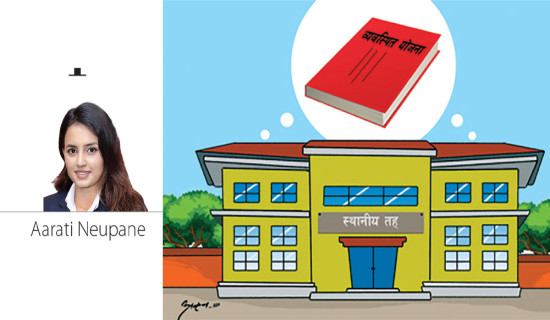
Capability is the combination of a person's or a group’s knowledge, skills, mindsets, and competence as a whole that enables them to perform their tasks successfully. At the local level, Capacity Development (CD) ensures that government institutions and entities function effectively.

Journey From Seattle To Salt Lake City
Notable among them are the 605-foot-tall Space Needle Spire at the Seattle Centre with an observation deck and rotating restaurant, the public market known as Pike Place Market, which is the farmers’ original market, the Climate Pledge Arena, and Seattle downtown. Unlike the towers in other cities in the USA, the new experience in the Space Needle was walking in a revolving observatory and revolving glass floor from where we can view the city directly downwards with a risk of dizziness and fainting.
Power Of Meditation
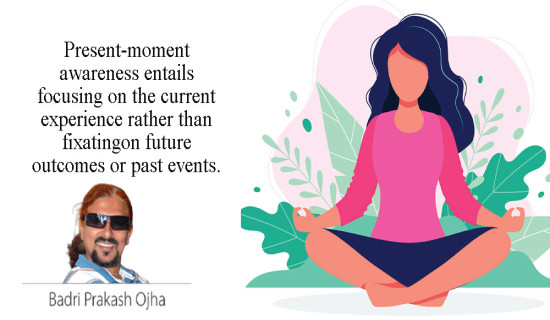
Meditation, as defined by the US Department of Health and Human Services, is a mind-body practice with diverse benefits. It promotes calmness, relaxation, psychological balance, and overall well-being. It involves the interaction of the brain, mind, body, and behavior. Meditation has ancient roots, spanning various cultures and religions. Though techniques and goals vary, its core aims for heightened awareness, mindfulness (Chetana), inner peace (Samadhi), and ultimately salvation (Moksha). Regular practice improves cognitive functions like attention and concentration. Scientifically proven, meditation effectively reduces stress.Harvard University, School of Medical Science, defines stress as a set of physiological and psychological reactions that the body and the brain have when facing a threat or a challenge, known as the fight or flight response, a term coined by Dr. Walter Bradford Cannon, a professor at Harvard Medical School. The fight or flight response prepares our body to either confront or escape the danger. It reflects the two primary choices our ancestors faced when confronted with a threat: confront the danger head-on, fight, or flee to escape from it—flight.According to Dr. Cannon, the stress response releases hormones such as cortisol and adrenaline. These hormones increase the heart rate, blood pressure, breathing rate, and muscle tension, among other effects. The stress response can be helpful in short-term situations, but if it is prolonged or repeated, it can have negative impacts on health and well-being. Whenever we receive a life-threatening situation, a part of the brain called the amygdala becomes active. It is a region of the brain that is involved in processing emotions, particularly fear.Our emotions guide our actions by reflecting our environment. They alert us to potential dangers, prompting protective responses. However, emotions aren't always reliable indicators of threats, sometimes leading to unnecessary anxiety and stress.Susan Spinks, a meditation teacher at the Sydney Institute of Meditation, states that, as we evolved, a rustle in the grass could be a dangerous wild animal or a hostile person from another tribe. The stress response is what has kept mankind alive; it has been key to our survival.Today, most of us do not usually face these situations. However, the evolution of our brain has not kept pace with the rate at which our lives are changing. The amygdala is constantly misinterpreting information entering the brain as well as what we are thinking. It detects threats that are not there. This can arise during relationship problems, money worries, difficult living conditions, work issues, or certain events. Even a difference of opinion with someone is enough to trigger it.While the fight-or-flight response is crucial for survival in certain situations, chronic activation of this stress response, especially in response to non-life-threatening stressors, can have negative health consequences. Prolonged exposure to stress hormones can contribute to various health issues, including cardiovascular problems, weakened immune function, and mental health disorders. Techniques such as meditation and relaxation exercises are often employed to help counteract the effects of chronic stress and promote overall well-being.According to Spinks, within a few meditation practices, the physiological response of the body is the opposite of the stress response. The levels of cortisol and adrenaline in the body reduce, breathing slows and becomes deeper, the heart rate reduces, and the intelligent part of the brain has a better chance of working to its optimal capacity. The amygdala also shrinks over time with regular meditation. This means that when the stress response is triggered, it is less intense and much shorter-lived.Meditation teachers, neuroscientists, and psychiatricians administer various techniques to heal the traumatic states of people. Out of such many techniques, mindfulness-based interventions (MBIs) are a type. These are a combination of psycho-therapeutic techniques like meditation, relaxation, and others to promote mindfulness, which is the practice of paying attention to the present moment in a non-judgmental way. MBIs have been shown to be effective in treating a variety of mental health conditions, including depression, anxiety, and stress.A recent review of studies published in the Journal of the American Medical Association's (JAMA) Internal Medicine found that MBIs were effective in reducing symptoms of depression and anxiety in adults. The review also found that MBIs were more effective than other types of psychotherapy, such as cognitive-behavioural therapy (CBT), in reducing symptoms of depression.A study in JAMA Psychiatry revealed that mindfulness-based interventions (MBIs) effectively prevent depression relapse post-treatment. Participants in MBI programmes showed lower relapse rates compared to non-participants. MBIs offer a safe and efficient approach for various mental health conditions, often conducted in group settings or individually at home. The American Psychological Association endorses mindfulness meditation for its dual benefits for mental and physical health. Mindfulness-Based Stress Reduction (MBSR) and Mindfulness-Based Cognitive Therapy (MBCT) are notable interventions. MBSR involves weekly and daily mindfulness practices, including yoga and meditation, while MBCT combines MBSR and cognitive-behavioural therapy for depression treatment.Researchers reviewed more than two hundred studies of mindfulness among healthy people and found mindfulness-based therapy was especially effective for reducing stress, anxiety, and depression. Mindfulness can also help treat people with specific problems, including depression, pain, smoking, and addiction. Some of the most promising research has looked at people with depression. Several studies have found that MBCT can significantly reduce relapse in people who have had previous episodes of major depression. Mindfulness-based interventions can improve physical health, too. For example, mindfulness may reduce pain, fatigue, and stress in people with chronic pain. Other studies have found preliminary evidence that mindfulness might boost the immune system and help people recover more quickly from a cold or flu.Chronic stress can impair the body's immune system and make many other health problems worse. By lowering the stress response, mindfulness may have downstream effects throughout the body.Psychological researchers have discovered that mindfulness affects two distinct stress pathways in the brain, altering brain structures and activity in areas linked to attention and emotional regulation. Through a review of meditation studies, they identified the specific components of mindfulness responsible for its positive effects. Findings indicate that individuals undergoing Mindfulness-Based Cognitive Therapy (MBCT) exhibited reduced tendencies for negative thoughts or unhelpful emotional reactions durin g stressful situations. Moreover, participants in MBCT, or Mindfulness-Based Stress Reduction (MBSR), demonstrated enhanced present-moment focus and reduced repetitive negative thinking.Mindfulness meditation changes our brain and biology in positive ways, improving mental and physical health. This meditation involves training our attention to focus on the present moment and observing our thoughts and feelings without judgment. This can help interrupt the stress cycle and allow us to respond more calmly and effectively to stressful situations.Strategies such as ignoring or denying stress, though momentarily effective, can detrimentally impact long-term health and happiness. Research from the Journal of Research in Personality reveals that mindfulness, particularly present-moment awareness, enhances stress resilience and coping skills. Present-moment awareness entails focusing on the current experience rather than fixating on future outcomes or past events. Studies suggest that individuals embracing present moment living enjoy various health advantages, such as reduced stress, anxiety, and depression, elevated mood, and enhanced overall well-being.(Ojha, a PhD in communication, is a meditation teacher.)
Second Memoirs Of A Seasoned Administrator
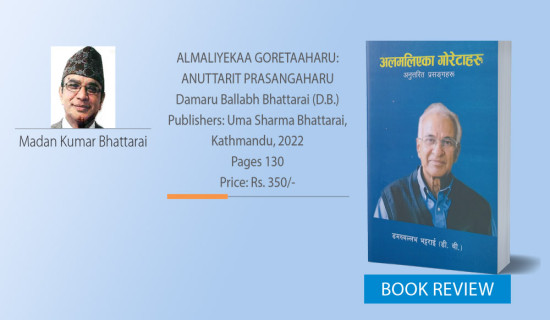
Autobiographies and memoirs have started to attain frequency among Nepali writers. However, there are few instances when people write memoirs more than once. Civil servants are possible exceptions to this convention, as they probably feel that they have more to share after coming out with the first publication, along with a bureaucrat's sense of discretion and reservation.Sir Walter Crocker, the first Australian Ambassador to Nepal, though a diplomat enjoying all privileges and immunities, was unknowingly held a virtual captive inside the precincts of the Singha Durbar Secretariat for several hours on the fateful day of December 15, 1960. He thought it prudent to have two memoirs. However, it seems editors, in their efforts to prune the lengths, probably thought it not worthwhile to include Nepali experience in the books.The prolific Australian diplomat completed his centenary before his death in 2002. The same is the case with at least two top Indian diplomats, K.P.S. Menon and T.N. Kaul, who have penned more than one memoir to share their long careers in bureaucracy, including their experience in Nepal.In the second memoir of Damaru Ballabh Bhattarai (D.B.), Secretary and Election Commissioner, the author spent the early part of his civil service as Chief District Officer for 12 years, covering seven districts ranging from the Himalayan hills to Terai and even Kathmandu. D.B. also holds the unique experience of serving as Secretary to as many as six Prime Ministers, which is not that surprising in a country where political transition is a rule rather than an exception, irrespective of any form of government, monarchical, parliamentary, constitutional, or republican. But the element of surprise is his retention in the Prime Minister's Office, as there is a feeling of being left out or kicked out in this posting for our civil servants.The new book entitled ALMALIYEKAA GORETAAHARU: ANUTTARIT PRASANGAHARU, which can roughly be translated as Confused Pathways: Unanswered Contexts, is quite reflective of the saying that autobiography is a wound where the blood of history does not dry. Three senior administrators, Khem Raj Nepal, Hem Raj Paudel, and Jayamukunda Khanal, have commented on the content and context of the book.D.B., in his characteristically simple and clearly flowing language, has succinctly shared the experience of his life in 32 chapters on what he calls the thought process, internal conflict, and tension. He portrays negative trends prevalent in the Nepali administrative milieu, as there is a tendency to brand people with various accusations, including those of political colour.The first chapter is basically a prologue with the writer's list of people who inspired, helped, and assisted him in his long bureaucratic journey, including people who egged him to write the second memoir. His first book, ANUBHAV RA CHINTAN (Experiences and Reflections), was published more than two years ago. The author also names two recent publications penned by former Prime Minister Surya Bahadur Thapa and top cardiologist Dr. Bhagwan Koirala as having inspired him.While making a free and frank assessment of people he encountered during his long stint in administration, D.B. has thought it appropriate to appreciate the roles of some administrators. Those falling under his positive evaluation include Balaram Singh Malla, Mohan Dev Pant, Padam Prasad Pokhrel, Hiranya Lal Regmi, Vidya Nath Nepal, Mangal Krishna Shrestha, Ram Chandra Malhotra, Shankar Raj Pathak, Dr. Suresh Raj Sharma, Ranjan Singh Shah, and Arjun Mani Dixit.This work can also be taken as a study of Nepal's administrative culture. It truly unravels anomalies of Nepali bureaucracy that can be described as an exercise in administrative mess where rules and regulations are more breached than observed and policy-level corruption reigns supreme. The author portrays a sharp depletion in the standards of constitutional organs that have badly been politicised over the years. The writer has poor impressions of political class and defines political changes as attempts as if to rob the country of its originality and perpetuate the influence of corrupt elements trying to deny the rule of law for their vested interests.Chapters three and four are important in the sense that the writer has the best appreciation for King Birendra, who not only encouraged him to fulfil his duty as Chief District Officer of Kathmandu but also showed sympathy for his summary dismissal from the service. There is, however, a context in which one senior official was quite familiar with the author prior to his induction into palace service, having metamorphosed into an unwieldy and bullying personality.Incidentally, chapter three detailing his experience as CDO of Kathmandu, entitled Chaarkhaalmaa Haraundaa (disappearing in the whirlpool of Chaarkhaal), is also reproduced as article 7 in Raastrasevak magazine (Vol. 26. No. 1, September 2022), published by the Council of Former Public Servants of Nepal. D.B. makes particular reference to the observation of Chief Justice Ratna Bahadur Bista that the judiciary was not favourably inclined to accept the system of Thaado Aadesh (direct order without recourse to courts as practiced by administrators) during a workshop of chief district officers.The author points fingers at the actions and possible intentions of Prime Minister Girija Prasad Koirala. He blames Koirala for injecting politicisation into the bureaucracy. He has also given context to Koirala's indirect confessions of what he calls sanctions given by the Indian Foreign Secretary to hijack Nepali Airlines with the intention of robbing three million rupees of Nepal's central bank after his overtures to get money from an Indian intelligence outfit failed. Incidentally, Kewal Singh was India's Foreign Secretary at the time and has not mentioned this aspect in his memoirs.While the book is quite interesting, there are some negative points. The first lacuna is that presentations are not systematic but random. Second, there are mistakes in names and descriptions. As Shankar Raj Pathak is a professor and Zonal Commissioner, apart from several other functions he discharged, he is not a doctor. Likewise, Chandra Shekhar, who later became Prime Minister of India and visited Nepal to take part in the meetings of the then political formations, was a senior politician but never an academic.Despite such minor shortcomings, D.B.'s second memoir is an admirable work depicting a true picture of the Nepali bureaucracy that was already on a downward slide and probably fell to the bottom after the perfunctory and arbitrary decision of Girija Prasad Koirala to dismiss a large number of civil servants. I congratulate the author on his tenacious efforts to bring out the second book. (Dr. Bhattarai is a former foreign secretary, ambassador, and author.)
A Global Call For Climate Justice
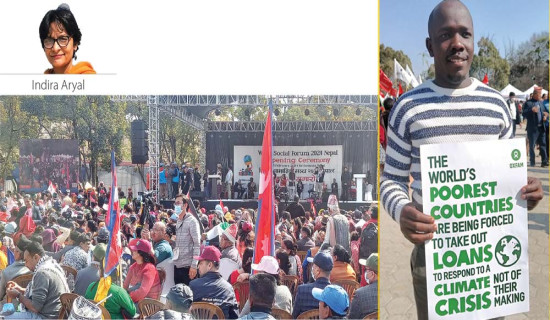
Kiprotich Peter, a youth activist from Kenya, believes that taking loans to combat the climate crisis is not the solution. Instead, he advocates for developed nations to assist developing countries in finding sustainable solutions. Peter conveyed this message during his participation in the World Social Forum in Kathmandu, Nepal, held from February 15 to 19, 2024. He used the platform to highlight the climate crisis, recognising Nepal's own struggles with its impacts.Holding a placard that reads, “The world’s poorest countries are being forced to take out loans to respond to a climate crisis, not of their making,” Peter emphasises the need for grants, not loans, for countries like Kenya and Nepal. Despite contributing little to greenhouse gas emissions, they suffer the worst impacts of climate change, including droughts and floods. Peter's message resonates as a call for climate justice and solidarity among nations. Calls for climate justice echoed resoundingly amidst the gatherings of activists from 92 countries.Mausami, from Bangladesh, working with a global platform in her country, brought attention to the severe challenges faced due to climate change. She described Bangladesh as disaster-prone and shared the unbearable suffering experienced, especially by those in coastal areas. "The situation in the coastal belt, particularly for minority groups and women, is extremely distressing," Mausami expressed during the WSF. She emphasised the difficult journey women undertake, walking three to five kilometres to collect safe drinking water, often encountering harassment from men or boys along the way. This struggle leads to women experiencing vaginal infections and complications during childbirth from using salty water for hygiene during menstruation.Mausami pointed out the frequent natural disasters, like two to three cyclones, that worsen the already tough conditions. She passionately called for justice, stressing the importance of everyone receiving fair treatment in the face of the climate crisis. She emphasised the urgent need for collective action to address the significant injustices experienced by her country and its people.Harjeet Singh, a climate change activist from India, used the side forum of the Global Climate Justice Assembly, “Mountain in Peril: Together for People and Planet,” at the WSF to shed light on the detrimental effects of climate change and the alarming proliferation of fossil fuel plants by developed nations. "We must persist in our fight for climate justice," he asserted.Singh addressed the audience from the perspective of a mountainous country, emphasising the direct link between melting glaciers and the continued use of fossil fuels. "The impacts you're seeing are a direct result of these actions," he said. Singh stressed the importance of holding accountable those countries responsible for exacerbating climate change. He urged for a collective effort to address the consequences and ensure accountability for the well-being of all communities affected by the impacts of climate change.Why WSFSince its establishment in 2001, the WSF has served as a guiding light for social movements, trade unions, and activists worldwide to unite, exchange experiences, and forge strategies for transformation. The convening of the Kathmandu Forum marks a momentous milestone, highlighting the enduring resilience and rich diversity inherent within global solidarity movements.Over 1,252 organisations from 92 countries actively participated, both in person and virtually, in the five-day forum. This event showcased thematic panels, self-organised activities, and cultural programmes and provided ample opportunities for networking and collaborative action.The Forum encompassed a diverse array of thematic panels, assemblies, and activities spanning 13 distinct themes. These include critical topics such as climate change, economic inequality and the global financial system, gender equality and women's rights, labour rights and migration, as well as peace, justice, and human rights.Kathmandu declarationThe civil society organisations working in Nepal on climate change issues crafted the Kathmandu Declaration, ‘Together for Climate Justice’. This declaration stresses that actions to tackle climate change, like reducing emissions and adapting to its effects, must be fair and just. It highlights the importance of considering the needs of marginalised groups, such as women, children, people with disabilities, and indigenous peoples. These groups should have a say in decision-making about climate issues. The declaration also calls for sharing the responsibilities and benefits of climate action fairly among countries, considering their historical contributions and future impacts.The declaration raises concerns about the rapid melting of the Himalayan glaciers due to climate change, which affects billions of people who rely on them for water. It urges international efforts to prioritise action and investments in mountain regions to address this threat.The declaration also criticises the current global financial system for not adequately supporting developing countries in their efforts to address climate change. It calls for urgent reforms to ensure that money flows transparently and fairly to help these countries transition to sustainable development and cope with climate-related damage.Moreover, the Kathmandu Declaration emphasises the need for immediate action to reduce greenhouse gas emissions and mitigate the effects of climate change. It stresses the importance of using scientific evidence to guide decision-making and urges all countries, businesses, and individuals to speed up their efforts to cut emissions. The declaration also emphasises the importance of global cooperation and solidarity in addressing the climate crisis, protecting vulnerable communities, and preserving the environment for future generations.Geeta Pandey, Director of Policy Advocacy and Research at the Karnali Integrated Rural Development and Research Centre (KIRDARC) in Nepal, expressed the opportunity to join forces in confronting the dire impacts of climate change. Their work in Nepal mirrors the challenges experienced by regions worldwide, highlighting the shared struggle against these devastating consequences.The far-reaching impacts of the climate crisis stress that its effects span from the highlands of Nepal to lowlands across the globe. She underscored the importance of safeguarding not only islands and mountains but also the interconnected ecosystems in between. However, Pandey lamented that, despite global commitments, many states, influenced by industry pressures and corporate interests, have yet to fulfil their obligations. This failure to act effectively leaves humanity vulnerable to catastrophic temperature rises.In light of this urgency, Pandey called for collective action and decisive measures. She highlighted how this WSF has amplified the voices of affected communities and advocated for concrete steps to address the injustices perpetuated by climate change. Pandey pledged to continue advocating for accountability from governments and corporations while striving for more just and sustainable solutions that benefit all, particularly the poor, marginalised, women, girls, and individuals of all genders.Climate actions must not reinforce existing social inequalities but instead create opportunities for access to information, resources, and opportunities for all. Pandey critiqued the modern economic system for prioritising private ownership and profit, which often leads to extreme extraction of natural resources and environmental degradation. Addressing climate justice requires not only systemic change but also a fundamental reevaluation of humanity's relationship with the planet and with each other.(Aryal is a journalist at The Rising Nepal.)
Snowfall occurs in Dasharath Chand, Jaya Prithvi highways
Spokesperson of District Police office Police Inspector Nandaraj Joshi said that snowfall has taken place in Khodpe, Anarkholi, Harichan, Dudilakhan, Dholyamode, Bithad and other areas. Vehicular movement along the highways was disrupted for some time on Thursday due to heavy snow.
Performance Report
The latest report of performance-based evaluation by the National Natural Resources and Fiscal Commission (NNRFC) for the fiscal year 2079/2080 BS has been made public. The evaluation was carried out on the basis of 17 indicators for the purpose of the financial equalisation grant to be provided by the federal government to the provinces and local levels in the new fiscal year 2081/82. As shown by the report, Bharatpur Metropolitan City of Chitwan district and Sandhikharka Municipality of Arghakhachi district have topped the performance list. This is the second time in a row that the metropolis has been able to secure the top spot.
Adaptability Key To Democratic Resilience
Progressive social movements often carry contemporary and eternal elements in them. Contemporary elements become irrelevant when society progresses to embrace new social realities while eternal element provides interface to these movements helping them to connect with new value systems and ensure continuity, growth and change. The ideals and values of the movements intertwine to create a symbol of social virtues which fire the imagination of people toward sacrificing for the creation of liberal, free, equal and inclusive societies. But the history shows that the complexities and challenges of democratic movements extend far beyond the romantic notions o
Get Tough With The Corrupt
It was definitely encouraging to hear the commitment of Prime Minister Pushpa Kamal Dahal Prachanda that he would ensure a corruption free administration. The Prime Minister made this commitment while speaking at the question and answer session of the House of Representatives on Sunday. According to a news report published in this daily, responding to concerns raised by MPs about the slow progress in corruption investigation involving influential figures, the Prime Minister affirmed that investigations have commenced dismissing any fear of governmental failure while reiterating his determination to maintain a corruption free administration.
Prevent Homicide
February has not ended yet, and within this month, we have heard two very gruesome stories of individuals murdering their family members and committing suicide afterwards. Termed correctly as homicide-suicide or murder-suicide, researches highlight that these type of incidents are rare in nature. However, we do hear about them at times. Just three days ago, a man was reported to have killed his wife, eight-year-old daughter and his three-year-old granddaughter. After committing the crime, he had made his fifteen-year-old son record clips. In the videos he basically admitted to the crime and explained his reasons. The father wanted the clip to be sent to his wife’s first-born, his stepson, who is working in Saudi Arabia. He then went on to commit suicide, leaving the young teenage boy alone. The boy is now in a situation where in the blink of an eye, he has lost all of his family members. The amount of mental trauma and suffering is indescribable. What is even more terrible is that he had to witness all of these matters and had to even record the video. In another incident, a few weeks ago, a woman jumped from the thi
Peace training centre in Panchkhal now equipped with solar power
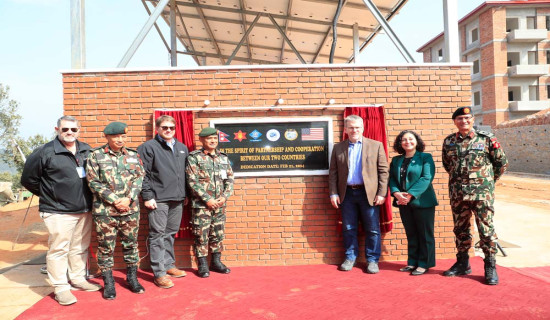
The Birendra Peace Operation Training Centre (BPOTC), Panchkhal, Kavrepalchowk, of the Nepali Army has been installed with a 185 kVA hybrid solar power system. Funded under the security programme of the Global Peace Operation Initiative (GPOI) of the Department of State of America, the hybrid solar power panels were installed and brought into use at the BPOTC, Panchkhal, on Wednesday. Visiting Deputy Assistant Secretary Rachel Schiller for the Programmes and Operations in the Bureau of Political-Military Affairs' (PM) of the Department of State, inaugurated the newly installed hybrid solar power plant at a special function held at the premises of BPOTC on Wednesday, the only training centre for the Nepali Army peacekeepers and peacekeepers who arrived from different other nations.

'Nepali Army deserves taking leadership in peacekeeping task'
Rachel Schiller is the Deputy Assistant Secretary for Programmes and Operations in the Bureau of Political-Military Affairs of the US Department of State. In this capacity, she oversees the Office of Global Programme and Initiatives and the Office of Weapons Removal and Abatement (WRA). She has served as an advisor to the United Nations and the World Bank. Schiller also worked intensively on the Aceh peace process in Indonesia. Rachel is a 2020-2021 International Women’s Forum Fellow as well. Schiller spoke to Purushottam P. Khatri of The Rising Nepal on Wednesday upon her arrival in Kathmandu for the opening of Ex-Shanti Prayas-IV, the multinational peace drills, and the inauguration of 185 kVA solar power project. Excerpts:
NCC urges envoy Paudyal to promote exports in Canada
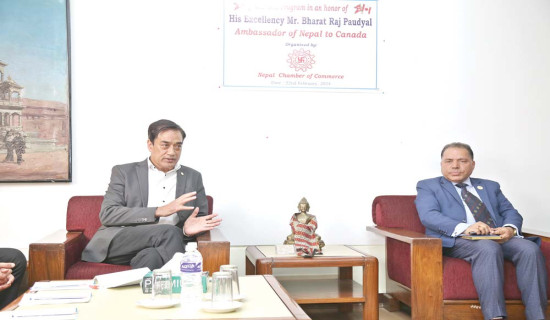
Nepal Chamber of Commerce (NCC) has requested the newly appointed Ambassador of Nepal to Canada, Bharat Raj Paudyal, to take initiatives for the promotion of the export of Nepali goods in Canada. President of NCC Rajendra Malla asked Ambassador Paudyal to facilitate the export promotion of the country during a meeting held at the Chamber Building in Jamal, Kathmandu, on Thursday. He said, "Canada can be a good market for the export of Nepali goods. If the export of jewellery, pashmina, carpet, chhurpi and ghee items can be facilitated, the existing trade deficit can be reduced to some extent.” Malla said that the Nepal House concept should be used for the integrated sale of goods exported from Nepal.
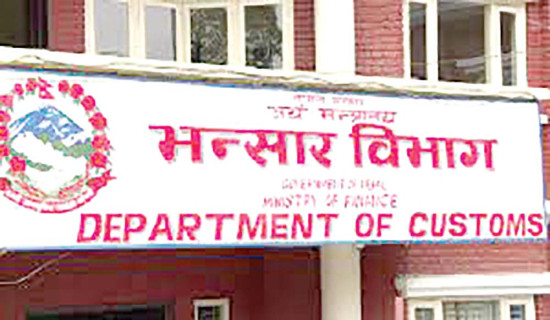
Foreign trade drops by 2.75% in seven months of FY 2023/24
The country's foreign trade has decreased marginally during the first seven months of the current fiscal year 2023/24. According to the foreign trade statistics of the Department of Customs, foreign trade has decreased by 2.75 per cent to Rs. 984.77 billion during the first seven months of the current fiscal year. Decline in both exports and imports have contributed to a fall in foreign trade during the review period. Imports have decreased by 2.31 per cent during the first seven months of the current fiscal year. Goods worth Rs. 897.94 billion were imported in the review period. The country imported goods worth Rs. 919.16 billion in the same period last fiscal year.
-original-thumb.jpg)
Breakthrough made in Rahughat Hydro tunnel
The tunnel connecting the second and third adit, which is considered to be the longest in the 40 MW Rahughat hydropower project, has seen a breakthrough. With the breakthrough of the adit connecting the tunnel on Wednesday evening, construction of 5,917 metres of tunnel has been completed in the project so far. A total of 6,270 meters of tunnel should be constructed in the Rahughat hydropower project which is under construction in Raghuganga Rural Municiplaity of Myagdi district. The tunnel was connected in the presence of chairman of Raghuganga Rural Municipality Bhaba Bahadur Bhandari, people representatives and representatives from projects, construction companies and consultants.