- Monday, 4 May 2026

Acharya earns from cow farming
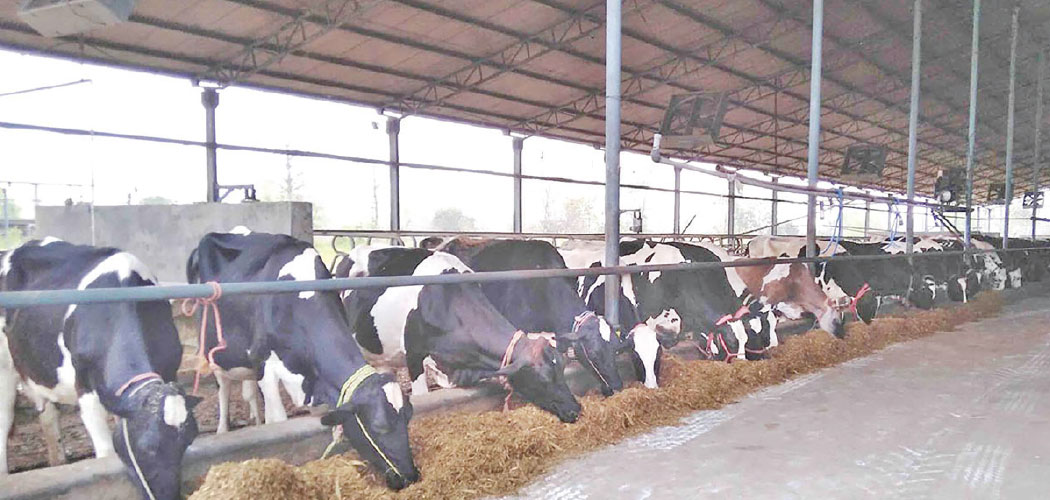

By Prem Adhikari,Pashupatinagar (Ilam), Aug. 16: Gopal Acharya, a resident of Suryodaya Municipality-3 in Ilam, has been earning over Rs. 300,000 per month through modern, commercial cattle farming.
While cattle rearing remains a traditional occupation in rural areas, Acharya has turned it into a profitable business by adopting systematic and professional farming practices.
Operating the Panchamrit Cow Farm on both his own and leased land, Acharya has built a thriving enterprise that stands as a model for aspiring livestock entrepreneurs.
According to Acharya, the farm currently produces 160 to 200 litres of milk daily, which he sells to a nearby dairy at Rs. 60 per litre. From milk sales alone, he earns up to Rs. 360,000 monthly. After deducting all expenses, his net monthly income is around Rs. 300,000.
Acharya's journey began in 2070 BS, when he took a loan of Rs. 1 million from Rastriya Banijya Bank to register and establish the farm. Since then, he has invested over Rs. 4 million, including infrastructure such as cowsheds and machinery. He estimates the current value of his farm to be more than Rs. 10 million.
The farm provides employment to three people, including his wife Sarada. Additionally, two workers and a pickup truck driver have been hired, with a monthly salary expense of Rs. 42,000. Acharya has purchased a pickup truck from his earnings to facilitate the transport of milk, fodder, and straw.
To ensure a consistent supply of fodder, he has expanded grass cultivation to 200 ropanis of land. This includes 20 ropanis of super napier, 40 ropanis of amliso, and local grass varieties on the remaining land. Despite this, the fodder produced is insufficient, leading him to import 40–50 truckloads of straw annually from Jhapa at Rs. 12,000 per truck.
Modern equipment such as a grass-cutting machine and a vacuum milking machine have been installed to enhance efficiency on the farm.
Apart from milk, Acharya also earns an additional Rs. 100,000 annually from the sale of organic manure made from cow dung. The manure is bought by local tea cooperatives and farmers, and any unsold portion is used in his own farming.
He received a Rs. 250,000 grant from the Koshi Province government two years ago for purchasing milking equipment and Rs. 20,000 from Suryodaya Municipality for cowshed improvement. However, when 14 of his cows died from lumpy skin disease, he received only Rs. 40,000 in compensation through insurance.
“Government grants and support are mostly for those with access. We don't have that access,” said Acharya, highlighting the disparities in agricultural support systems.