- Tuesday, 26 May 2026

'Control your blood pressure to prevent fatal hypertension'
By
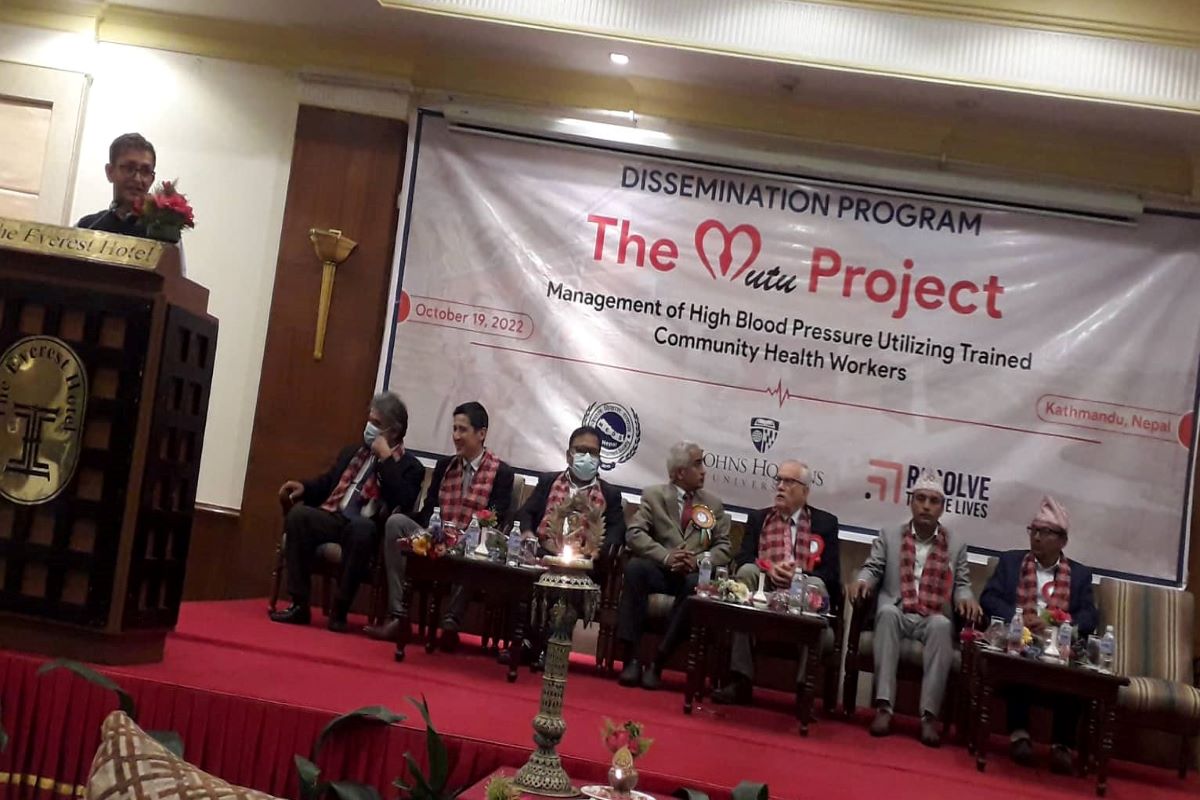
Mahima Devkota, Kathmandu, Oct. 19: The mortality rate from
hypertension can be reduced by 57 per cent if the blood pressure is controlled.
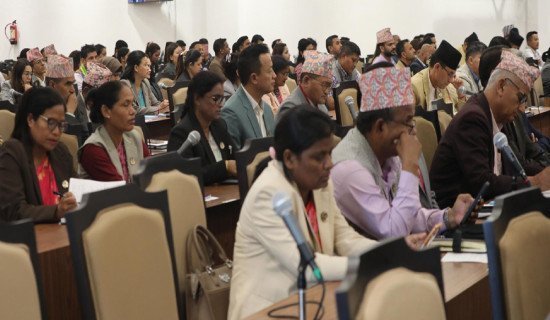
In a programme entitled Management of High Blood Pressure Utilizing
Trained Community Health Workers, organized by Nepal Development Society, JOHNS
HOPKINS University and Resolve to solve lives today, Dr. Abhinav Vaidya,
Professor of the Kathmandu Medical College said that hypertension needs immediate medical intervention and most of the times, medicine, however, many
people in Nepal are not aware that they have hypertension. As a result, many do not
seek the necessary treatment, which leads to a high risk of developing chronic
diseases and mortality as high as 57 per cent more than patients with controlled
blood pressure.
He said that around 2.4 million Nepali are not aware
that they have hypertension, 3.8 million are not untreated and 3.58 Nepali
people have uncontrolled hypertension.
There is a lack of screening and medical
diagnosis is still not in access for many Nepalese, due to which, the high
pressure gets entreated and becomes severe with time. Also, in most cases of hypertension,
there is a need for long-term medicine use however, there is part of negligence
from patients in medicine use, that is, many people do not use medicine timely,
discontinue using them without consulting a doctor and sometimes, even medical
doctors are hesitant in prescribing medicine, therefore, hypertension is not
controlled.
The mortality from hypertension can be reduced only
if each and every people are aware that there is a need to take medicine to
control hypertension.
Dr. Larry J Appel, director of the Welch Center for
Prevention, Epidemiology and Clinical Research, said that elevated blood
pressure is the leading cause of preventable deaths worldwide. Around 10.5
million people die from hypertension followed by smoking (6.3 million), high plasma
glucose (5.6 million), High BMI (4.5 million), and Cholesterol (4.4 million).
1
in 4 adults have hypertension in Nepal
Dr. Sweta Koirala, Executive Director of the Nepal
Development Society said that one in four people above 18 years in Nepal has
developed hypertension, and to prevent high pressure there is a need for mass
outreach. For that, a medical diagnosis should be held by health workers and non-medicals need to be
equipped with training for screening hypertension and giving them enough
medicine to keep it in check.
Hypertension can be controlled with a proper
awareness of the disease and an understanding of the role of medicine in
controlling it, making it accessible to each doorstep and mobilizing and
equipping non-medical health workers, she said,