- Thursday, 28 May 2026

TRN Online
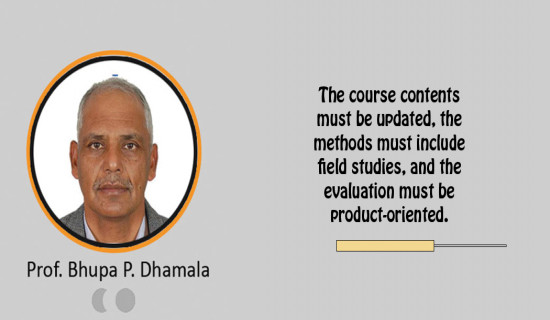
Reorienting Social Science Education
It is deplorable that social science education, which once was hailed as the backbone of society, has now been neglected, both by the state and society. It is not that the budget has been cut – it is not even possible – but the educational authorities do not explain the value of social science education well. Nor do the parents bother to listen to understand its worth, let alone the children. Surprisingly, some think the national human/social science education investment is a waste. One of several reasons for indifference to social science education is that our education policy is chiefly to produce job-oriented graduates. Consequently, education has been lopsided, and national development has lagged behind. This is more than unfortunate. Two major streams
Need To Upgrade Tourism Infrastructure
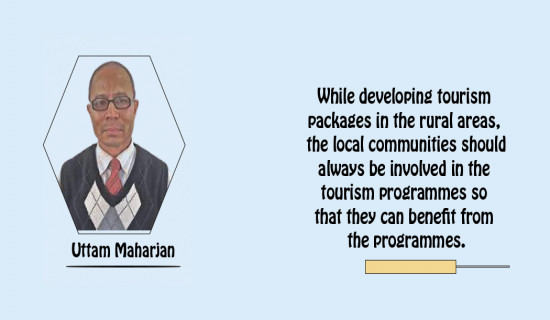
The tourism industry is an important contributor to the economy of Nepal. There is no doubt that the country has many prospects for the development of tourism. But it is an irony that the country has not been able to take advantage of this. The doors to tourism were opened in the country in 1951. The first Tourism Master Plan was launched in 1972. The government committed itself to develop the tourism industry on a massive scale. Accordingly, the private sector assumed the operational lead, while the government undertook to formulate tourism policies and take reform measures. In 1995, the government announced the Tourism Policy to develop tourism as a priority sector. Nepal was planning to celebrate the Visit Nepal Year 2020 with the aim of attracting as many as two million tourists when COVID-19 struck the country. The almost world-wide spread of the disease forced the country to shelve the ambitious programme, resulting in a big loss in touro-dollars. The pandemic has impacted the economy on an unprecedented scale. However, the tourism industry is gradually bouncing back with a remission of infections. In 2020, the country was able to receive just 238,000 tourists. In 2021, the figure of tourist arrivals shrank to 151,000. The tourist arrivals were 712,000 in 2017, 740,000 in 2018 and 801,000 in 2019. Encouraging signThese figures speak volumes for the dwindling number of tourists in the pandemic-affected years of 2020 and 2021. However, the country welcomed over 600,000 tourists in 2022, an encouraging sign of the tourism industry. Nepal has potential for becoming a tourist hub. It has fascinating natural beauty and features. The country boasts eight out of the 10 highest mountains in the world. There are 20 protected areas in the country. They include 10 national parks, three wildlife reserves, six conservation areas and one hunting area. These protected areas cover 20 per cent of the land area of the country. It is surmised that 45 per cent of the tourists visiting Nepal are eco-tourists. The country is rich in natural features. The country abounds in mountains, hills, rivers, lakes, waterfalls, subtropical forests and the like. There are also trekking routes for nature-loving tourists in the country. In 2019, the tourism industry supported over one million direct or indirect jobs, which constituted 6.7 per cent of the total employment. There are ample opportunities for developing the tourism industry in Nepal. But unfortunately, the country has not been able to reap benefits. Tourist hubs are confined to the Kathmandu Valley, Pokhara, the Annapurna area and some other places. The Deuba-led government announced the 2023-2032 decade a tourism decade while going out of power. But just announcing such ambitious programmes is not enough. Where is the infrastructure? Tourists want variety. They want to visit new places. Nepal is offering them the same old tourist places and products. Although the government says time and again that it will diversify the tourist products, nothing of that sort has happened. Yes, the government can offer new and charming products to tourists. But the sticking point is lack of infrastructure. Even in Kathmandu, the capital city, road infrastructure is inadequate. The existing road infrastructure is also dilapidated. In the summer, roads become muddy, while in the winter they become dusty, giving rise to dust pollution. There are local governments. They should at least take the initiative in constructing pitched roads or converting dirt roads into pitched ones in their jurisdictions. Further, they should pay heed to sanitation. The drainage problem is a chronic in the Kathmandu Valley. Many tourists take delight in rural settings. Nepal is a country of villages. However, the rural areas are undeveloped and lack even basic facilities. As such, there is an increasing trend of migration from the rural areas to the city areas. The government should take steps to develop the rural areas. Quality hotels are concentrated in the Kathmandu Valley and some other city areas. Such hotels also need to be developed in the rural areas having the potential to attract tourists. The government should also design new products such as canopy walks in Chitwan and other national parks. Jungle safaris are already there. The addition of such new products will attract even more tourists. There are other challenges to overcome as well. There is lack of promotion and publicity. Nepal’s tourist products are not sufficiently promoted and publicised abroad. There are many tourist destinations in the country but these destinations remain unexplored for various reasons, including lack of road transport. Lack of proper provision for tourism centres and security is another challenge. Tourism hubsIn similar fashion, tourism hubs exist in a few locations. Tourism hubs offer a variety of services for tourists such as giving direction to scenic locations, providing tourist maps, offering money exchange facilities, providing tourists with security and providing services in emergencies such as during disasters. Nepal is rich in natural, historical and cultural heritages. The government should design tourist products and commercial services in collaboration with tourist entrepreneurs and other stakeholders. The most important thing is the development of infrastructure, including transport infrastructure. The initiative should come from the government. Tourism entrepreneurs and the stakeholders concerned are always ready to help the government. Moreover, while developing tourism packages in the rural areas, the local communities should always be involved in the tourism programmes so that they can benefit from the programmes. This will help in uplifting their economic condition. On the other hand, the government can also earn more revenue. (Maharjan has been regularly writing on contemporary issues for this daily since 2000. uttam.maharjan1964@gmail.com)

Kids With Heart Disease Suffer A Tough Life
Children born with heart conditions have a tough life in Zimbabwe. The country lacks adequate medical treatment. Statistics from the Zimbabwean government show that one in every 100 births is a child being born with a congenital heart disease. This means an estimated 4,550 children are born annually with a heart condition. Zimbabwean heart specialist Reginald Musengi says that these children “may not live up to half a decade if nothing is done to save their lives”. Families of sick children face several challenges ranging from emotional to economic hardships. One example is Bernard Mutambu. From birth, the nine-year-old has battled a severe heart ailment which has forced him to be out of school. The boy suffers with abnormal heart rhythms, shortness of breath and swollen body tissue organs – which are precisely signs of a heart condition.
-original-thumb.jpg)
50 units electricity for free
The government is to provide 50 units of free electricity to domestic consumers
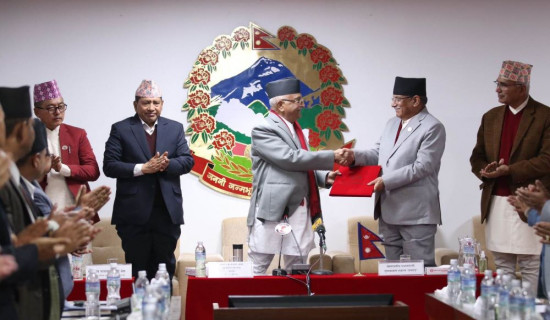
Green Economy to be developed, as CMP outlines
The incumbent government has taken up the intiaitive to develop a green economy so as to protect environment and to reduce the risks emanating from climate change.
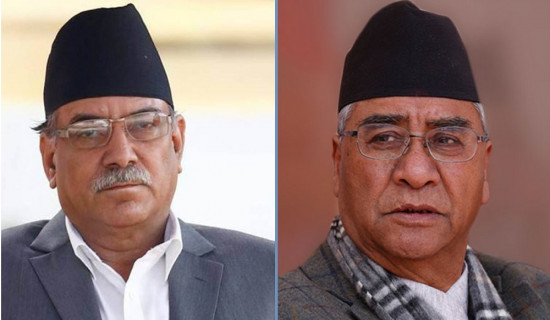
NC President assures vote of confidence to PM Prachanda
Nepali Congress President Sher Bahadur Deuba has assured Prime Minister Pushpa Kamal Dahal 'Prachanda' of a vote of confidence.

Govt to take country's economic growth rate close to double digit
The government through its common minimum programme has unveiled an ambitious plan for taking the country's economic growth rate close to double digit within the next five years.
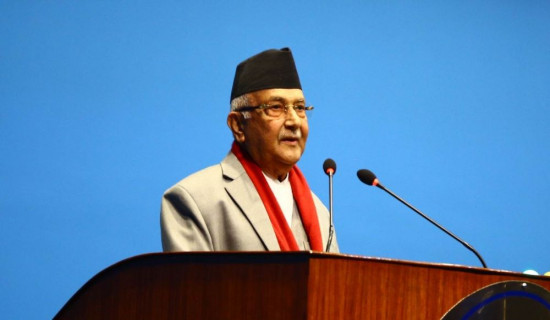
Chair Oli calls for collaboration, nat’l consensus
Responding to the queries of journalists while emerging out after today's House of Representatives (HoR) meeting, Chairperson Oli, clarified that he has not yet broached the matter relating to formation of the national consensus government.
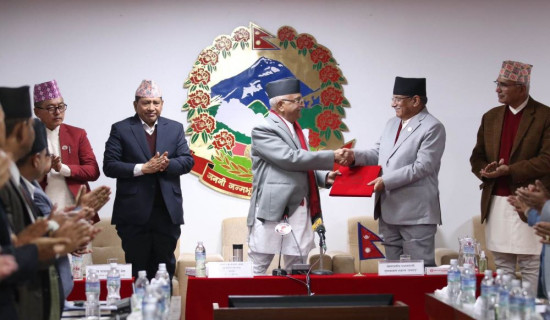
Govt. aims policy reforms thru common minimum programme
The announcement also includes professional and accountable civil administration and security agencies in place through their massive reforms as per the recommendations made by an expert-led high-level taskforce.
Common minimum program made public
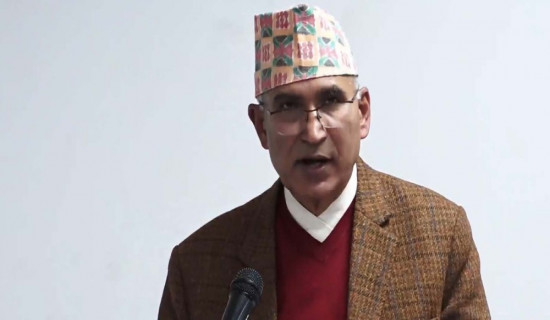
The common minimum program was announced in the presence of Prime Minister Pushpa Kamal Dahal 'Prachanda' at a program held today at the Office of the Prime Minister and Council of Ministers. The document brings together the policy priorities and minimum programs of the ruling parties.
Regional assembly of the Travel Agent Association of India to be held in Nepal
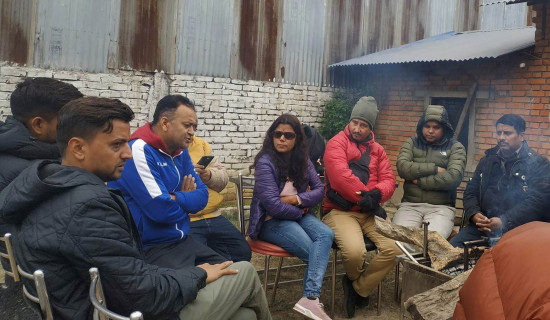
The regional chaptered assembly of the Travel Agent Association of India, an umbrella organization of Indian businessmen, is scheduled for next month.
I am confident about getting vote of confidence: PM Prachanda
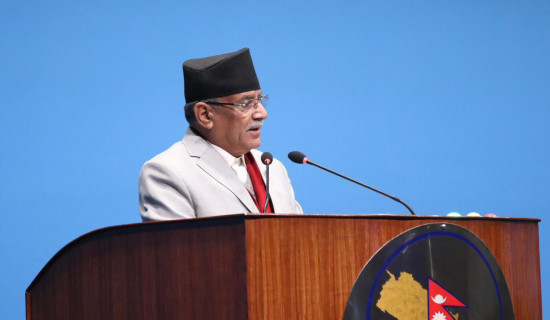
Prime Minister Pushpa Kamal Dahal 'Prachanda' said he was assured of getting a vote of confidence from the House of Representatives (HoR).

11 injured in Dhankuta jeep accident
Laxmi Raj Adhikari, Superintendent of Police (SP), also, Chief of the District Police Office, Dhankuta said that seven of the injured are receiving treatment in the B.P. Koirala Institute of Health Sciences (BPKIHS) while four others are undergoing treatment in District Hospital Dhankuta.
Safeguarding constitution is present priority: Leaders of various parties
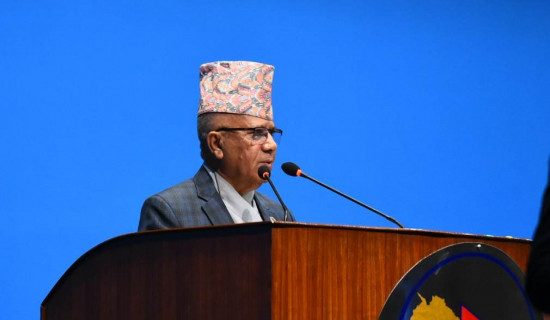
CPN (Unified Socialist) Chair and former Prime Minister Madhav Kumar Nepal has called for unity among all in protecting the Constitution and the democratic republic.
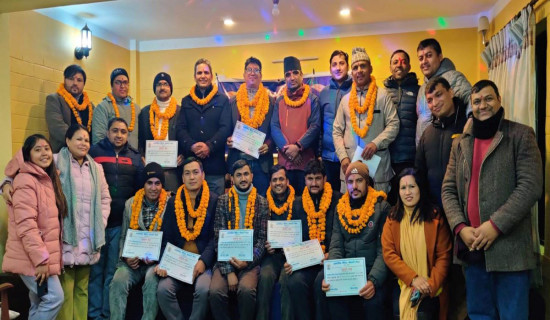
New Working Committee in Economic Media Society
Somnath Bastola of Bizshala and Lochan Khatiwada of Bizpati have been elected as vice-presidents of the organization, Narayan Poudel of Singhadarbar is elected as general secretary, Him Bista of Taksar magazine as secretary, Bishnu Jamktel (Taruke) of Arthapath as joint-secretary, and Keshav Bhandari of Insurance Khabar as treasurer.