- Monday, 4 May 2026


The Rising Nepal
Social Media Regulation
Social media has been a tool for positive transformation in unparalleled ways, revolutionising communication and expanding access to information. It has also been an indispensable platform to empower marginalised communities, social
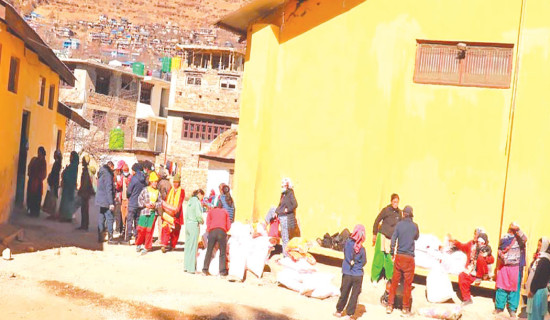
Sarkegad locals face acute iodised salt shortage
By Rajan Rawat Humla, Aug. 28 Residents of Sarkegad Rural Municipality in Humla district are facing a severe shortage of iodized salt, being forced to purchase salt at exorbitant prices from local markets. Locals are currently paying as much as Rs. 55 per kilogram for iodized salt, a stark contrast to the Rs. 9 per kg price offered under the government's transportation subsidy programme. Basanti Shahi, a local of Sarkegad Rural Municipality, said that she has been purchasing iodized salt brought by traders in the market for Rs. 55 per kg and consuming it. She said that she had previously received little salt under the transportation subsidy and after that ended, she had been purchasing and consuming expensive salt for the past seven months. Stating that even though it has been reported that salt is being consumed cheaply across the district, she has been consuming expensive salt every year. She demanded that the government should fix the salt quota in the district and municipality as well according to the requirement. Dhan Bahadur Chhantyal, Ward Chairman of Sarkegad Rural Municipality-4, said that there is currently a shortage of salt as the quota set by Salt Trading Corporation Limited for one year is insufficient. He said that although the STC has been providing salt to Humla district under transportation subsidy, it is not enough for local consumption. The price of salt supplied by the STC under the transportation subsidy is Rs. 9 per kg. Currently, consumers have to buy the salt that is being sold at the market price by paying five times more. He informed that in the last fiscal year, as per the quota of 900 quintals of salt set by the STC for Sarkegad Rural Municipality, all the salt arrived and it was distributed to each ward according to the population from 47 to 55 quintals. He said that the salt received by the ward was sold at the rate of 15 kg to all the households. This amount of salt is not enough for a household annually, he said. Akil Karki, Ward Chairman of Sarkegad Rural Municipality-3, said that consumers were forced to purchase salt at a high price after they did not receive salt distributed by the Corporation. Karki said that it is sad that the Corproation provided salt under transportation subsidy, but when the salt was insufficient, consumers had to purchase it at a high price and use it. According to the population, although the quota set by the STC is correct, in practice there is a shortage of salt, said Raj Bahadur Lama, chief of the STC branch office in Humla. The population of Sarkegad Rural Municipality is 10,688. He said that the shortage of salt is natural as not only humans consume the salt but also livestock and sheep and goats.
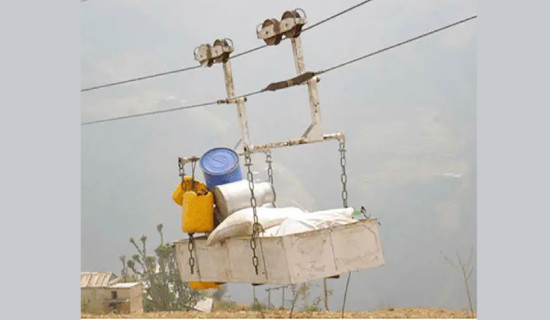
Local body to operate ropeway to transport vegetables
Gandaki Rural Municipality is set to operate an electric ropeway to make it easier to transport locally grown vegetables. The project is being operated at a total bu
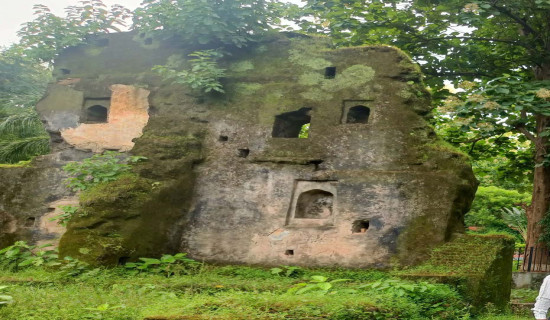
Manimukunda Sen's palace to be developed into museum
The historical palace of Sen king Manimukunda Sen built in 1518 at Manimukunda Sen Garden (Fulbari) of Butwal is now in ruins, with only parts of it standing now. There have been complaints that the conce
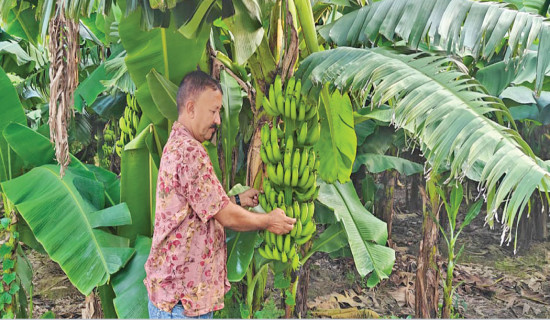
Increased banana farming substitutes import
Banana production in Bardiya has increased significantly, resulting in a decline in imports from India. Following the declaration of three local units as 'Banana Zones' in the fiscal year 2021/22, farmers’ interest has grown, and with rising local production, import of Indian bananas has been completely replaced. The programme which was initially launched
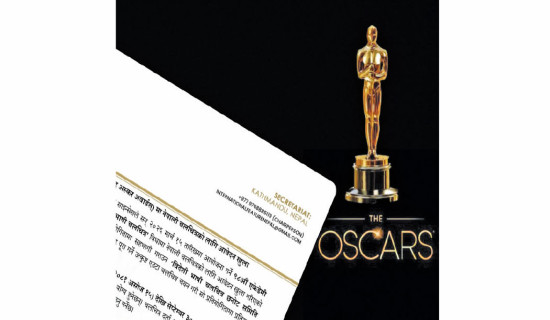
Oscar applications open for Nepali films
Applications have officially opened for the selection of Nepali films to participate in the 98th Academy Awards (Oscars), the most prestigious film awards of the world. The Foreign Language Film Selection Comm
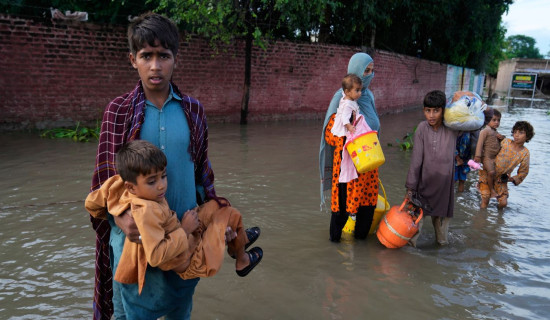
Flash floods kill 34 in Kashmir
Intense rains have lashed parts of Pakistan and India and triggered flash floods and landslides in Indian-controlled Kashmir's Jammu region, leaving at least 34 people dead, officials said Wednesday. A section of a mountainside in Jammu collapsed and hit a popular Hindu pilgrimage route following heavy rains in the Katra area late Tuesday. Devotees were trekking on foot to reach the hilltop temple, which is one of the most visited shrines in northern India, officials said.

Liverpool face Isak dilemma ahead of Arsenal visit to Anfield
Liverpool and Arsenal have combined to spend nearly £550 million ($742 million) in a transfer arms race, yet the future of Newcastle forward Alexander Isak still hangs over Sunday's showdown between the Premier League title rivals.
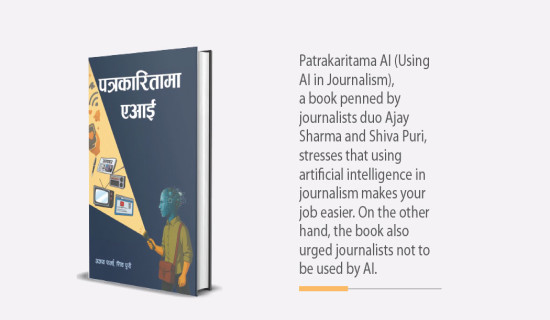
'Not to be used by AI'
Artificial intelligence has created a stir in the field of science and technology nowadays. By giving instructions to AI, it has now become possible to accelerate production processes without human labour.
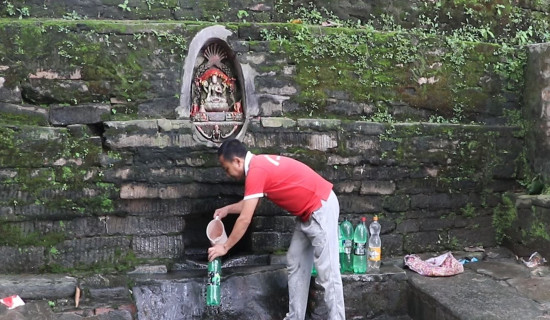
Water sources drying up in Dhankuta
Recent data show that water sources in Dhankuta Municipality are steadily drying up. A survey carried out by the municip
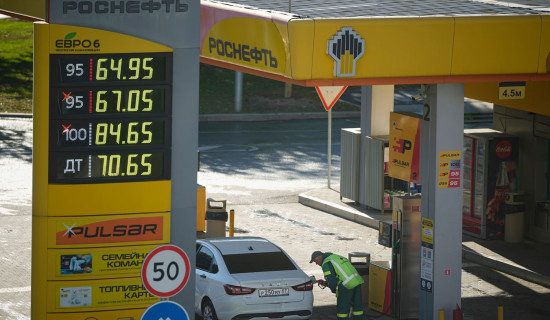
Russian refineries running on empty after Ukrainian attack
Gas stations have run dry in some regions of Russia after Ukrainian drones struck refineries and other oil infrastructure in recent weeks, with motorists waiting in long lines and officials resorting to rationing or cutting off sales altogether.
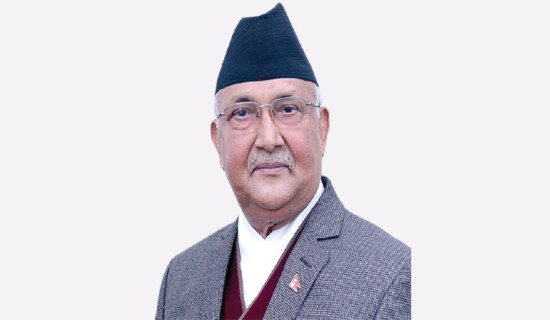
PM Oli to address SCO Summit on September 1
Prime Minister KP Sharma Oli is embarking on a visit to China from August 30 to September 3 to attend Shanghai Cooperation Organisation (SCO) Summit 2025 and the commemoration of the 80th anniversary of the Victory of the Chi
Poverty Lines Versus The Poor
Conceptualising and measuring poverty is a daunting task. Without proper measurement, the existing poverty status and progress over time cannot be figured out. To track progress on Sustainable Development Goal 1 (SDG 1) on ending
Assessing Resilience Of Corridor Bridges
River corridor roads have been essential in the urban development of the Kathmandu Valley over the past two decades. While conservationists and river experts criticise such roads for encroaching on the floodplains, they have certainly he

Relish Fleeting Moments
We all understand that life is fleeting and that this is the ultimate truth, yet we seldom pause to truly acknowledge it. One moment, we are enjoying our life, laughing and talking. Next, an unexpected accident, tumble down the stairs, or a