- Tuesday, 9 June 2026

493 children found malnourished in Jajarkot
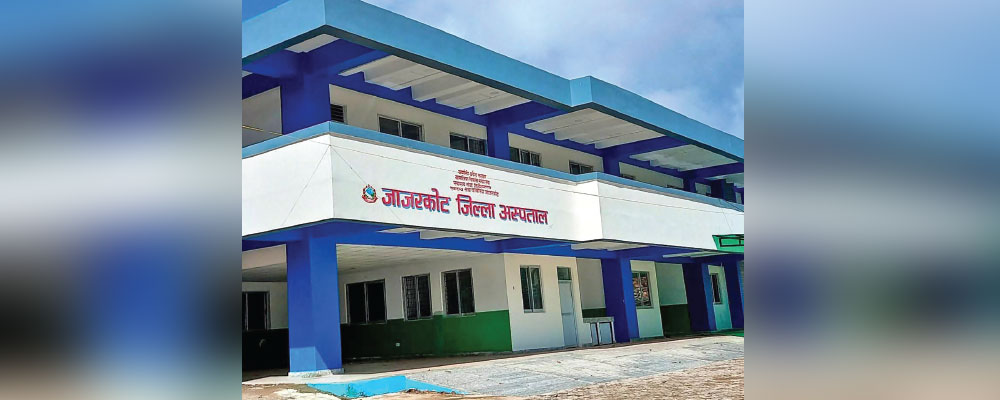

By Basudev Sharma, Jajarkot, June 9: The cases of malnutrition are increasing in Jajarkot district. The Health Services Office has reported that 493 children were found to be malnourished during a survey conducted across seven local levels.
According to the office, a total of 9,241 children were assessed under the National Nutrition Assessment Campaign carried out in seven local levels of the district.
The assessment, aimed at identifying the nutritional status of children, found 493 children suffering from malnutrition.
Public Health Officer Ramesh Karki of the Health Services Office stated that among the 493 malnourished children, 378 were found to be moderately acutely malnourished, while 115 were suffering from severe acute malnutrition.
He explained that under the Z-score method, health workers measured the weight-for-height ratio of children aged between 6 and 59 months.
The distribution of the assessment shows that 1,600 children were examined in Barekot Rural Municipality, 1,210 in Kushe Rural Municipality, 1,619 in Junichaande Rural Municipality, 2,411 in Chhedagad Municipality, 399 in Shibalaya Rural Municipality, 1,363 in Bheri Municipality, and 630 in Nalgad Municipality. According to Officer Karki, in Barekot, 50 were moderately malnourished and 11 were severely malnourished; in Kushe, 66 were moderately malnorished and 23 were severely malnourished, in Junichaande, 63 were moderately malnorished and 19 were severely malnourished, in Chhedagad, 89 were moderately malnourished, and 33 were severely malnourished, in Shibalaya, 13 were moderately malnorished and 2 were severely malnourished, in Bheri, 77 were moderately and 20 were severely malnourished, and in Nalgad, 20 were moderately malnorished and seven were severely malnourished, He said that mothers of malnourished children have been advised to ensure adequate breastfeeding, and when breast milk alone is insufficient, to provide nutritious supplementary food.
He emphasised that mothers must pay close attention to children’s diet to reduce malnutrition. He further stated that children’s weight should be regularly monitored at local health facilities and treatment should be provided based on health workers’ advice to reduce malnutrition rates.
He also highlighted that breastfeeding is essential and mothers should be guided on appropriate complementary feeding when necessary.
According to him, local health institutions and health posts under local governments must take the initiative to reduce malnutrition.
He stressed the need for local authorities and health branches to conduct awareness programmes, parental interaction sessions, and improve nutrition practices to bring down malnutrition rates.